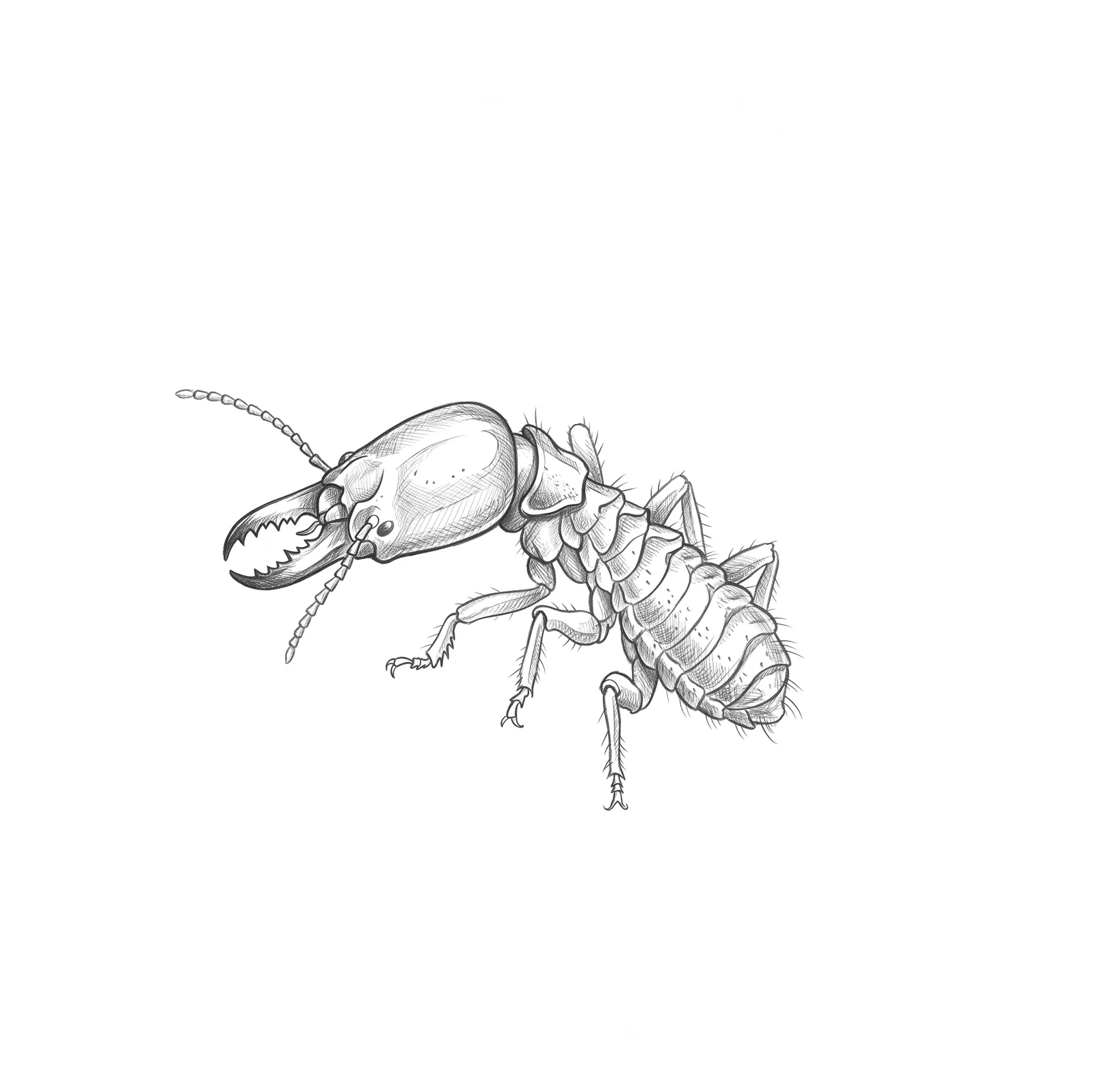
Termites
Isoptera
How do you get rid of termites in a Southern California home?
Start by identifying the type: mud tubes on the foundation point to subterranean termites, while seed-like frass pellets beneath infested wood point to drywood termites, and shed swarmer wings near windows can signal either. Reduce risk by keeping a 6-inch soil-to-wood gap, fixing leaks, and clearing wood-to-soil contact. Because termites work hidden inside wood, a licensed technician should inspect and treat, using soil barriers or baiting for subterranean termites and targeted wood injections for drywood termites.
What are Termites?
Often called the "silent destroyers," termites eat cellulose (found in wood) from the inside out. Since they rarely come into the open, a colony can thrive for years before any visible damage is detected.
Key Takeaways
- Both drywood and subterranean termites are active across Southern California, and both eat cellulose in wood from the inside out, which is why they are called the silent destroyers.
- Subterranean termites nest in soil and build mud tubes for moisture, while drywood termites live entirely inside sound, dry wood such as attic rafters and window frames.
- The most common attractant locally is direct wood-to-soil contact and excess moisture around the foundation, drainage, and damp attic spots.
- Warning signs include mud tubes, discarded wings near windows after swarming, hollow-sounding wood when tapped, and small wood-colored frass pellets from drywood termites.
- Because a colony can thrive hidden for years, lasting control depends on professional inspection, the right treatment for the species, and ongoing monitoring rather than a one-time fix.
Identification & Signs
- Mud tubes leading from soil to wood
- Discarded wings near windows or doors (from "swarming")
- Hollow-sounding wood when tapped
- Small, wood-colored droppings (frass) from Drywood termites
Why are they a problem?
Subterranean termites need moisture and access to soil, while Drywood termites can infest sound, dry wood. Both are attracted to any direct wood-to-soil contact around your home.
Prevention and Home Tips
Maintain a 6-inch gap between soil and wood siding
Ensure proper drainage away from the foundation
Fix roof leaks and damp spots in attics
Store firewood well away from the house
How Xtermicon Treats for Termites
Our termite solutions are custom-fit. For Subterranean termites, we establish a liquid soil barrier or baiting system. For Drywood termites, we offer localized spot treatments and wood injections to handle infestations without always needing full structural fumigation.
Frequently Asked Questions
What are the first signs of a termite infestation?
The earliest signs are often easy to miss. Watch for mud tubes running from soil up the foundation, piles of discarded wings near windows and doors after a swarm, and wood that sounds hollow when tapped. Drywood termites leave small, seed-like fecal pellets called frass beneath infested wood. Because termites stay hidden inside the wood, visible damage usually means the colony has been active for a while, so an early professional inspection matters.
How much structural damage can termites actually cause?
A great deal, and usually before you notice. Termites eat cellulose in wood from the inside out, so a colony can quietly weaken attic rafters, window frames, and structural beams for years. Subterranean termites in particular form large colonies and can cause rapid damage by tunneling through wood that touches soil. The danger is structural rather than medical, since termites do not bite or sting people, but left untreated they can compromise the wood that holds your home together.
Can I treat termites myself, or do I need a professional?
Termites are not a do-it-yourself pest. Store-bought sprays only reach surface insects, while the colony stays deep inside walls, wood, or soil and keeps working. Effective control depends on correctly identifying the species and applying the right approach, a liquid soil barrier or baiting system for subterranean termites, or targeted wood injections and spot treatments for drywood. A licensed technician can locate hidden galleries, treat them, and provide ongoing monitoring so the colony does not return.
Explore Specific Termites Species
Insights about Termites
Specialists you
can count on.
Xtermicon was founded in 2015 with one focus: protect Southern California homes and businesses from the pests that threaten them. The name says it all — eXterminate TERmites & pest CONtrol — and that's exactly what we do. We're a family-owned team specializing in termite control, pest control, and rodent exclusion. From West LA and East LA to the beach cities and Orange County, we're local neighbors who treat your property like our own.