What is the difference between Section 1 and Section 2 on a California termite report?
Section 1 covers infestation or infection that is evident right now — live termites, active fungus (dry rot), or the damage they are currently causing. Section 2 covers conditions that are present and deemed likely to lead to infestation or infection later, such as earth-to-wood contact, plumbing leaks, or cellulose debris in the subarea. Both appear on the same state-approved report, but a standard termite clearance is based on Section 1 items being corrected. Who pays for which section is negotiated in the purchase contract, not fixed by law.
Service Overview
In California, almost every home sale runs through a wood-destroying pests and organisms inspection — the document most people just call "the termite report." It is not a home inspection and it is not optional paperwork: it is a state-regulated report, filed with the Structural Pest Control Board, that separates what is actively eating the structure from what will invite something to eat it later. Xtermicon writes these reports for buyers, sellers, agents, and escrow officers who need findings that are accurate the first time, delivered on a timeline that does not hold up a closing.
Key Takeaways
- A California WDO report is a state-regulated document filed with the Structural Pest Control Board, not an informal quote — reports on file are searchable by property address for two years.
- Section 1 = infestation or infection that is evident. Section 2 = conditions likely to lead to infestation. "Further Inspection" flags areas that could not be reached and still need to be opened and looked at.
- Findings can include subterranean termites, drywood termites, fungus and dry rot, wood-boring beetles, and carpenter ants — the report covers organisms that damage wood, not general pests.
- A clearance (certification) is issued after the required corrective work is completed and verified — not at the time of the original inspection.
- Escrow timing is the real constraint: get the inspection ordered early, because Section 1 corrections and the re-inspection both take calendar days.
Key Benefits
- ✓A clear, itemized report you can hand straight to escrow
- ✓Findings separated correctly into Section 1 and Section 2 so nothing gets over- or under-called
- ✓Corrective work scoped with the transaction timeline in mind
- ✓One company for the inspection, the correction, and the follow-up verification
Findings Called Correctly
We document what the evidence supports, with photos and a structural diagram, and we can walk any line item back to what we actually observed.
Inspection and Correction Together
Because we perform the corrective work as well as the inspection, there is no handoff gap and no second company disputing the original scope before escrow closes.
Localized Treatment Where It Fits
Whole-structure fumigation is sometimes the right call, but not always. We scope high-precision localized treatment wherever the infestation pattern supports it, which usually means less displacement and a shorter timeline.
Our Decisive Process
Schedule & Access
We confirm access to the attic, subarea, garage, and exterior up front — inaccessible areas become "Further Inspection" items and slow the file down.
Full WDO Inspection
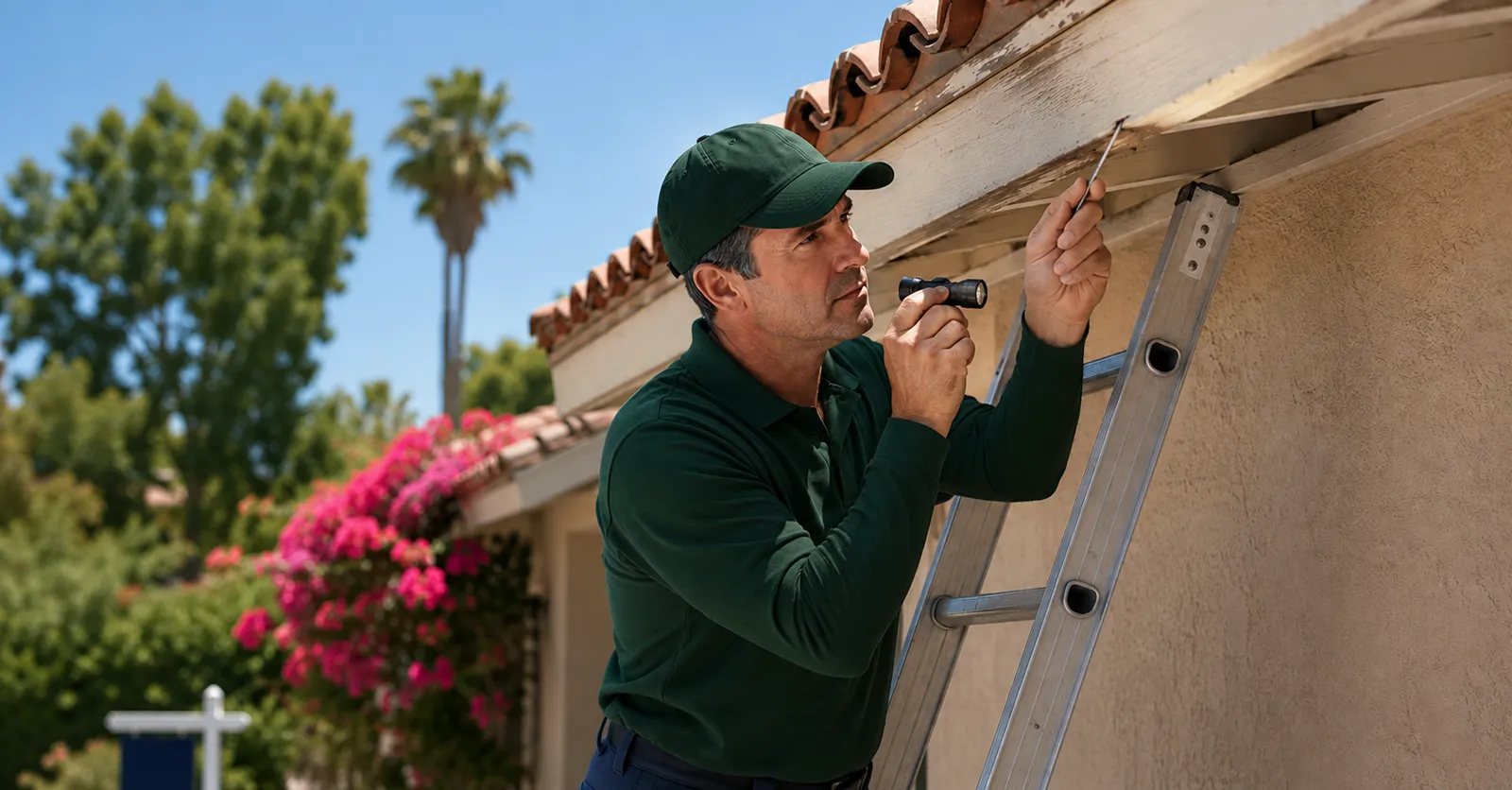
A licensed inspector documents evidence of termites, fungus, dry rot, and other wood-destroying organisms, along with the conditions that invite them.
Report & Diagram
You receive the state-approved report with a structural diagram, findings split into Section 1 and Section 2, and a line-item scope for each recommendation.
Correction & Clearance
We complete the agreed corrective work, then verify and document it so escrow gets the completion notice and certification it is waiting on.
What the report actually covers
A WDO report is narrower than most buyers expect. It addresses organisms that destroy wood and the conditions that support them — nothing else. Ants on the kitchen counter, rodents in the attic, and roaches under the sink are real problems, but they belong on a general pest service, not this report.
- ✓Subterranean termites — soil-based colonies reaching the structure through mud tubes
- ✓Drywood termites — airborne swarmers infesting eaves, fascia, framing, and trim
- ✓Fungus and dry rot — moisture-driven decay, very common in coastal Southern California
- ✓Wood-boring beetles and carpenter ants
- ✓Conditions: earth-wood contact, leaks, poor drainage, subarea debris, ventilation problems
- ✓Inaccessible areas, listed explicitly so nobody assumes they were cleared
How this fits the escrow timeline
The inspection itself is quick. Everything after it is not. Section 1 corrections have to be scheduled, performed, and then verified before a certification can be issued, and fumigation adds tenting and re-entry time on top of that. Ordering the report during the inspection contingency period — rather than at the end of it — is the single biggest thing that keeps a closing on schedule.
- ✓Order early: the report is the input to the negotiation, not the last step of it
- ✓Confirm attic and subarea access before the appointment to avoid Further Inspection items
- ✓Expect a second visit: corrective work and verification are separate from the inspection
- ✓Build in extra days if fumigation is on the table
For agents, escrow officers, and property managers
If you move transactions for a living, you know how important these reports are to each deal. We are accustomed to working within tight timeframes, and our deep experience yields accurate reports. Repeat referral relationships are a real part of our business, and we treat them that way.
Verify any report — including ours
Xtermicon is registered with the California Structural Pest Control Board under registration number PR 10100. WDO reports are filed with the Board and remain searchable by property address for two years, which is a genuinely useful consumer protection: before you accept any report, you can check both the company that wrote it and what has already been filed on the property — including reports from prior transactions that may show recurring findings a current seller has not mentioned. Look us up, and look up whoever else you are considering.
Section 1 vs. Section 2 — What Each One Means for Your Deal
Both sections come from the same inspection and appear on the same report. The distinction matters because it drives which items must be corrected for a clearance and which are negotiable between buyer and seller.
| Section 1 — Active | Section 2 — Preventive | |
|---|---|---|
| Definition | Infestation or infection that is evident at the time of inspection. | Conditions present that are deemed likely to lead to infestation or infection. |
| Typical findings | Live subterranean or drywood termites, active fungus and dry rot, wood-boring beetle activity, and damaged members. | Earth-to-wood contact, faulty grade, plumbing or shower leaks, cellulose debris in the subarea, inadequate subarea ventilation. |
| Effect on clearance | Must be corrected before a standard clearance or certification can be issued. | Does not block a Section 1 clearance, but stays on the report as a documented condition. |
| Who usually handles it | Commonly assigned to the seller in Southern California purchase contracts — but it is negotiated, not automatic. | Frequently left to the buyer, deferred, or credited. Also negotiated. |
| Cost profile | Varies widely with method — localized treatment and repairs versus whole-structure fumigation. | Usually lower, and often overlaps with ordinary deferred maintenance. |
Service FAQs
"Is a termite inspection required to sell a house in California?"
State law does not require one for every sale. In practice most Southern California transactions include one, because purchase contracts commonly call for it and lenders or appraisers frequently ask for a clearance. VA loans in particular tend to require a wood-destroying insect report — confirm the specific requirement with your lender rather than assuming.
"Who pays for the termite report and the repairs?"
It is negotiated in the purchase contract, not set by law. The common Southern California pattern is the seller covering Section 1 corrections while Section 2 items get deferred, credited, or taken on by the buyer — but every deal is different, and we write the report the same way regardless of who is paying.
"How long does a termite clearance take?"
The inspection is the first visit. After that it depends on the findings: localized treatment and minor repairs can often be completed and verified within a week or two, while whole-structure fumigation needs scheduling, tenting, and re-entry time. Order the inspection early in the contingency period so the corrective work is not what delays your closing.
"What does a "Further Inspection" item mean on my report?"
It means an area could not be inspected — a sealed subarea, a blocked attic access, a finished basement wall — and it has to be opened and looked at before anyone can say what is behind it. These are not findings, they are gaps. Confirming access before the appointment is the easiest way to avoid them.
"Does the report cover ants, roaches, or rodents?"
No. A WDO report is limited to wood-destroying organisms and the conditions that support them. If the inspection turns up rodent activity in the attic or an ant problem in the kitchen, we will tell you, but it belongs on a general pest or rodent service rather than the termite report.
"Can I get a copy of a report filed on a property by someone else?"
Yes. WDO reports are filed with the Structural Pest Control Board and are searchable by property address for two years. It is worth checking before you buy — a report from a prior transaction can reveal recurring findings that are not in the current disclosure packet.
"Are you licensed to write termite reports in California?"
Yes. Xtermicon is registered with the California Structural Pest Control Board under registration number PR 10100. Any company writing a WDO report has to be registered with the Board, and both the registration and the reports themselves are publicly verifiable. If a company will not give you a number, that is your answer.
Identify What You're Dealing With
Treatment starts with correct identification. These pest library entries cover the species we target with this service.
Specialists you
can count on.
Xtermicon was founded in 2015 with one focus: protect Southern California homes and businesses from the pests that threaten them. The name says it all — eXterminate TERmites & pest CONtrol — and that's exactly what we do. We're a family-owned team specializing in termite control, pest control, and rodent exclusion. From West LA and East LA to the beach cities and Orange County, we're local neighbors who treat your property like our own.