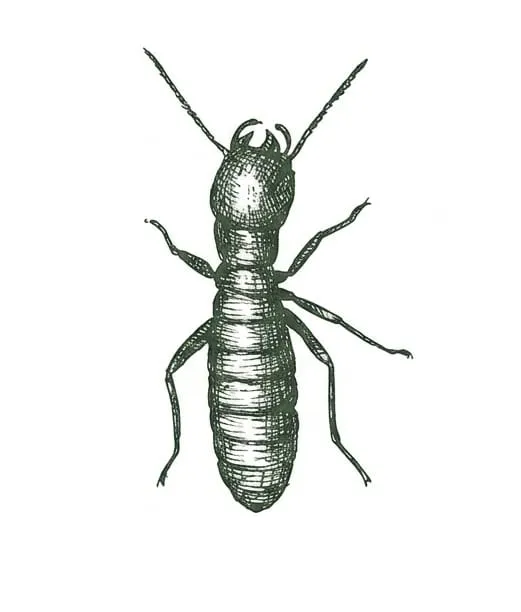
Drywood Termite
Incisitermes minor
How do you get rid of drywood termites in a Southern California home?
Start by confirming the infestation: look for hard, seed-like fecal pellets (frass), small kick-out holes, hollow-sounding wood, and shed wings near windows. Note where the activity is, but don't drill or open the wood yourself. Because drywood termites live entirely inside dry wood, control usually requires a licensed technician who can map the galleries with detection tools and either treat them locally with injected products or, for widespread infestations, recommend fumigation.
What are Drywood Termite?
Drywood termites are very common in Southern California. They establish colonies inside attic rafters, window frames, and structural beams. They are often identified by the hard, seed-like fecal pellets (frass) they push out of their galleries.
Key Takeaways
- Drywood termites (Incisitermes minor) live entirely inside sound, dry wood and need no soil contact, so they often infest attic rafters, window frames, and structural beams.
- In Southern California they are commonly introduced when swarming adults establish new colonies in exposed wood, or arrive hidden inside infested furniture and second-hand wood products.
- The clearest warning signs are hard, six-sided fecal pellets (frass) that look like seeds, small surface kick-out holes, wood that sounds hollow when tapped, and shed wings near windows during swarming season.
- Unlike subterranean termites, drywood colonies are self-contained within the wood, which makes localized injection of galleries possible for contained infestations and full fumigation the choice for widespread activity.
- Because hidden satellite colonies can be missed, lasting protection depends on professional gallery mapping, precision treatment, and ongoing monitoring rather than surface sprays.
Identification & Signs
- Hard, six-sided fecal pellets (frass) that look like seeds
- Infested wood sounds hollow when tapped
- Shed wings near windows during swarming season
- Kick-out holes on the surface of infested wood
Why are they a problem?
They are often introduced to homes when new colonies are established by swarming adults or through infested wood products.
Prevention and Home Tips
Keep attic and wall vents screened with 20-mesh or finer
Paint or seal all exposed exterior wood surfaces
Inspect any second-hand wood furniture before bringing it inside
Ensure firewood is stored far from the structure
How Xtermicon Treats for Drywood Termite
Drywood termites are unique because they live entirely within sound, dry wood, allowing for a more localized and precision-oriented approach to treatment. At Xtermicon, we specialize in "Local Treatment" protocols that target the specific galleries where the colony is active. Our technicians use advanced detection tools like fiber-optic scopes to map out infested areas, followed by precision injections of specialized foam or liquid products directly into the wood galleries. This targeted approach is often highly effective for localized infestations, allowing us to resolve the issue without the need for full structural fumigation in many cases. We also provide ongoing monitoring to ensure that no satellite colonies are left behind, protecting your home's most critical structural elements.
Frequently Asked Questions
What are the first signs of a drywood termite infestation?
The most common sign is frass — hard, six-sided fecal pellets that look like tiny seeds or coffee grounds, often piled below infested wood. You may also notice small round kick-out holes on the wood surface, areas that sound hollow when tapped, and discarded wings near windows or light fixtures after a swarm. Because the colony lives sealed inside the wood, these external clues are usually the only visible evidence until damage becomes advanced.
How do drywood termites differ from subterranean termites, and which do I have?
Drywood termites (Incisitermes minor) live entirely inside dry wood with no soil contact and push out distinctive seed-like fecal pellets. Subterranean termites nest in the soil and build mud tubes up foundations to reach wood, leaving damage that follows the grain and contains soil. If you see dry, pellet-like frass and kick-out holes high up in attics or window frames, it points to drywood termites. A licensed technician can confirm the species, since treatment differs significantly between the two.
Do drywood termites always require tenting and fumigation?
Not always. Because drywood termites live in self-contained galleries within the wood, contained infestations can often be handled with a localized approach — our technicians use detection tools like fiber-optic scopes to map active galleries, then inject specialized foam or liquid products directly into them. This can resolve many localized cases without full structural fumigation. For widespread or hard-to-reach infestations, fumigation may still be the most reliable option. A professional inspection determines which approach fits your home, and ongoing monitoring helps catch any satellite colonies.
Insights about Drywood Termite
Specialists you
can count on.
Xtermicon was founded in 2015 with one focus: protect Southern California homes and businesses from the pests that threaten them. The name says it all — eXterminate TERmites & pest CONtrol — and that's exactly what we do. We're a family-owned team specializing in termite control, pest control, and rodent exclusion. From West LA and East LA to the beach cities and Orange County, we're local neighbors who treat your property like our own.