Carpenter Ants
Camponotus
How do you get rid of carpenter ants in a Southern California home?
Carpenter ants nest in damp or decaying wood, so the first step is fixing the moisture feeding them — roof or plumbing leaks, water-damaged framing, and tree limbs touching the house. That removes the reason they settle in. Because they often build a parent colony plus hidden satellite colonies inside wall voids, lasting control usually needs a licensed technician to locate every nest and treat the source, not just the trailing ants.
What are Carpenter Ants?
Carpenter ants do not eat wood like termites, but they excavate it to build their nests. They are most active at night and are often found in areas with moisture issues, such as around leaky windows or plumbing.
Key Takeaways
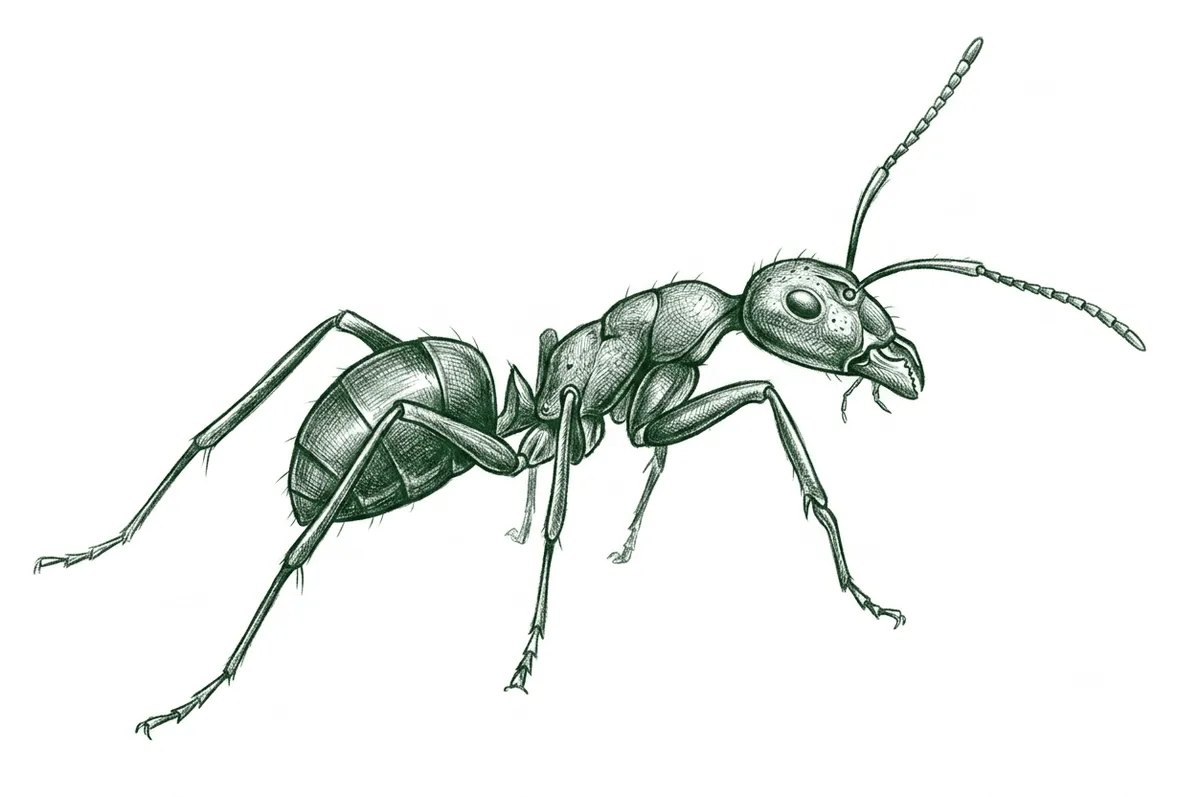
- Carpenter ants are among the largest ants you'll see indoors — up to a half-inch, usually black, with an evenly rounded thorax in side view.
- Unlike termites, they don't eat wood; they tunnel through damp or decaying wood to build nests, so coarse sawdust-like shavings (frass) near a wall, sill, or window is a classic warning sign.
- In Southern California they're drawn to moisture and softened wood, and they commonly get inside via tree branches touching the roof or gaps around utility lines.
- Other red flags include large dark ants foraging at night, faint rustling inside walls, and winged swarmers appearing indoors.
- The core control principle is moisture and nest elimination: fix the leaks and water-damaged wood, then treat both the parent and any satellite colonies at the source rather than just the ants you see.
Identification & Signs
- Among the largest ants (up to 1/2 inch)
- Usually black, but can be reddish or bi-colored
- Evenly rounded thorax (side view)
- Presence of coarse sawdust (frass) near nesting sites
Why are they a problem?
They are attracted to moisture and decaying wood. They often enter homes through tree branches touching the roof or through gaps around utility lines.
Prevention and Home Tips
Fix any roof or plumbing leaks immediately
Replace water-damaged wood in or around the home
Trim tree limbs so they don't touch the structure
Store firewood away from the house and off the ground
How Xtermicon Treats for Carpenter Ants
Carpenter ants can cause significant structural damage over time, making early identification and treatment critical. Our technicians will inspect your home for signs of activity, moisture issues, and potential nesting sites both inside and out, as carpenter ants are often drawn to wood that has been softened by water damage. We locate and treat both the parent colony and any satellite colonies within the structure, which often involves precision injections into wall voids and moisture-prone areas. This targeted approach, combined with a perimeter treatment to address foraging activity, helps ensure the infestation is addressed at its source and new colonies are deterred from establishing around your home.
Frequently Asked Questions
Do carpenter ants cause structural damage like termites?
They can, though differently. Carpenter ants don't eat wood — they excavate it to build smooth nest galleries, usually in wood already softened by moisture or decay. A small foraging trail is mostly a nuisance, but an established colony tunneling for months or years inside damp framing can weaken structural wood over time. That's why early identification matters: catching them while the damage is limited, and fixing the moisture issue, prevents a much larger repair later.
How did carpenter ants get inside my house?
Most carpenter ants come in from outside rather than starting indoors. They're attracted to moisture and decaying wood, so leaky windows, plumbing, and water-damaged framing draw them in. They typically enter through tree limbs or branches touching the roof, or through gaps around utility lines, vents, and the foundation. Once inside, they'll establish satellite nests in damp wall voids while the main colony may still be outdoors in a tree stump or woodpile.
Can I get rid of carpenter ants myself, or do I need a professional?
Surface sprays and store-bought bait may kill visible ants, but they rarely reach the nest, and carpenter ants frequently build a parent colony plus hidden satellite colonies inside walls and moisture-prone voids. Without locating and treating those, the colony keeps producing foragers. A licensed technician inspects for activity, moisture issues, and nesting sites, then uses targeted void injections plus a perimeter treatment to address the source — often paired with recurring service so new colonies don't re-establish.
Insights about Carpenter Ants
Specialists you
can count on.
Xtermicon was founded in 2015 with one focus: protect Southern California homes and businesses from the pests that threaten them. The name says it all — eXterminate TERmites & pest CONtrol — and that's exactly what we do. We're a family-owned team specializing in termite control, pest control, and rodent exclusion. From West LA and East LA to the beach cities and Orange County, we're local neighbors who treat your property like our own.