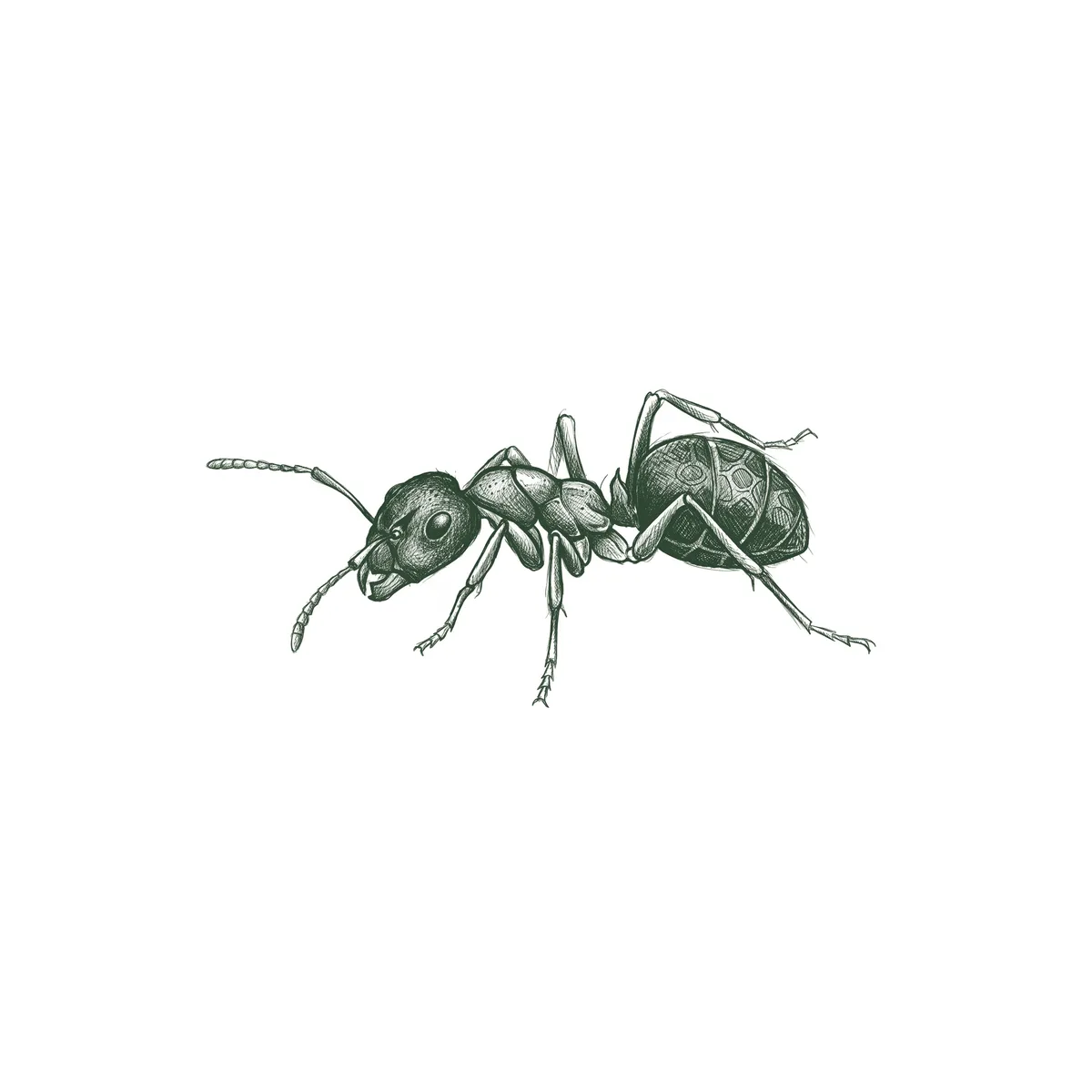
Argentine Ants
Linepithema humile
How do you get rid of Argentine ants in a Southern California home?
Start by cutting off what draws them in: wipe up sweet and sticky spills, store sugar and honey in sealed containers, fix leaky pipes, and clear standing water. Trim vegetation back from the foundation to remove outdoor trails. Because Argentine ants form huge, interconnected colonies, store-bought sprays often just scatter them. A licensed technician uses baiting and targeted liquid applications that work through the colony, usually with recurring service to keep it from coming back.
What are Argentine Ants?
Argentine ants are an invasive species that has displaced many native ant populations. They are highly social and form interconnected colonies that can cover entire city blocks. They are particularly attracted to sweet foods and water sources.
Key Takeaways
- Argentine ants are small (about 1/16 to 1/8 inch), uniformly light to dark brown, and travel in wide, distinct trails rather than wandering individually.
- Unlike odorous house ants, they give off little or no smell when crushed, which is one of the easiest ways to identify them.
- In Southern California's hot, dry summers they push indoors looking for moisture and sugar, showing up most often along kitchen counters, sinks, and bathrooms.
- They are a nuisance pest, not a danger — they do not sting, bite meaningfully, or damage wood the way termites or carpenter ants do, but their sheer numbers make them hard to ignore.
- These ants form massive, interconnected super-colonies, so killing the ants you see does little — lasting control means reaching the colony through baiting and a targeted perimeter approach.
- Because they adapt and re-establish quickly, ongoing monitoring and recurring service are usually what keep them from returning.
Identification & Signs
- Uniformly light to dark brown color
- Small size (about 1/16 to 1/8 inch)
- Lack of a strong odor when crushed (unlike odorous house ants)
- Travel in wide, distinct trails
Why are they a problem?
They enter homes in search of moisture and sugar. During hot, dry Southern California summers, they are frequently found in kitchens and bathrooms.
Prevention and Home Tips
Eliminate standing water and fix leaky pipes
Keep countertops free of crumbs and sticky spills
Store sweets and honey in sealed containers
Trim vegetation away from the foundation
How Xtermicon Treats for Argentine Ants
Argentine ants are one of the more difficult species to control — they form massive, interconnected colonies and adapt quickly, making them unusually persistent once they've established themselves around your home. Because of this, effective treatment goes beyond addressing the ants you can see. Our technicians identify colony activity, trail patterns, and entry points to develop a targeted approach that gets to the source of the problem. Treatment typically involves a combination of baiting and liquid applications selected specifically for Argentine ant behavior, giving the product time to work through the colony for longer-lasting results. Ongoing service is often recommended to monitor activity and ensure the infestation doesn't reestablish over time.
Frequently Asked Questions
Are Argentine ants dangerous or do they bite?
Argentine ants are a nuisance rather than a health or safety threat. They do not sting, and while they can bite if handled, the bite is tiny and harmless — nothing like fire ants. They do not damage wood or structures the way termites and carpenter ants do. The real problem is their numbers: they can contaminate food and overrun kitchens and pantries in overwhelming trails, which is why most homeowners want them controlled.
Why do I suddenly have so many Argentine ants in my kitchen?
During Southern California's hot, dry summers, Argentine ants move indoors searching for moisture and sugar, so kitchens and bathrooms are the first places they appear. A few crumbs, a sticky spill, a leaky pipe, or even a pet's water bowl is enough to start a wide trail. Because they form enormous interconnected colonies, what looks like a sudden invasion is often a single super-colony redirecting its foragers straight to your home's food and water.
Can I get rid of Argentine ants myself, or do I need a professional?
Cleaning up food and water sources and sealing trails helps, but DIY rarely solves an Argentine ant problem. They are one of the hardest ants to control because their super-colonies are massive and interconnected, and over-the-counter sprays often just scatter the ants without reaching the source. A licensed technician identifies trails, entry points, and colony activity, then uses baiting and targeted liquid applications chosen for Argentine ant behavior — typically with recurring service so the colony doesn't re-establish.
Insights about Argentine Ants
Specialists you
can count on.
Xtermicon was founded in 2015 with one focus: protect Southern California homes and businesses from the pests that threaten them. The name says it all — eXterminate TERmites & pest CONtrol — and that's exactly what we do. We're a family-owned team specializing in termite control, pest control, and rodent exclusion. From West LA and East LA to the beach cities and Orange County, we're local neighbors who treat your property like our own.