Ticks in Southern California: What Hikers Should Know Before Hitting the Trail
The cool weather that makes hiking pleasant again is the same weather ticks have been waiting for. How to avoid them, check for them, and get one off properly.
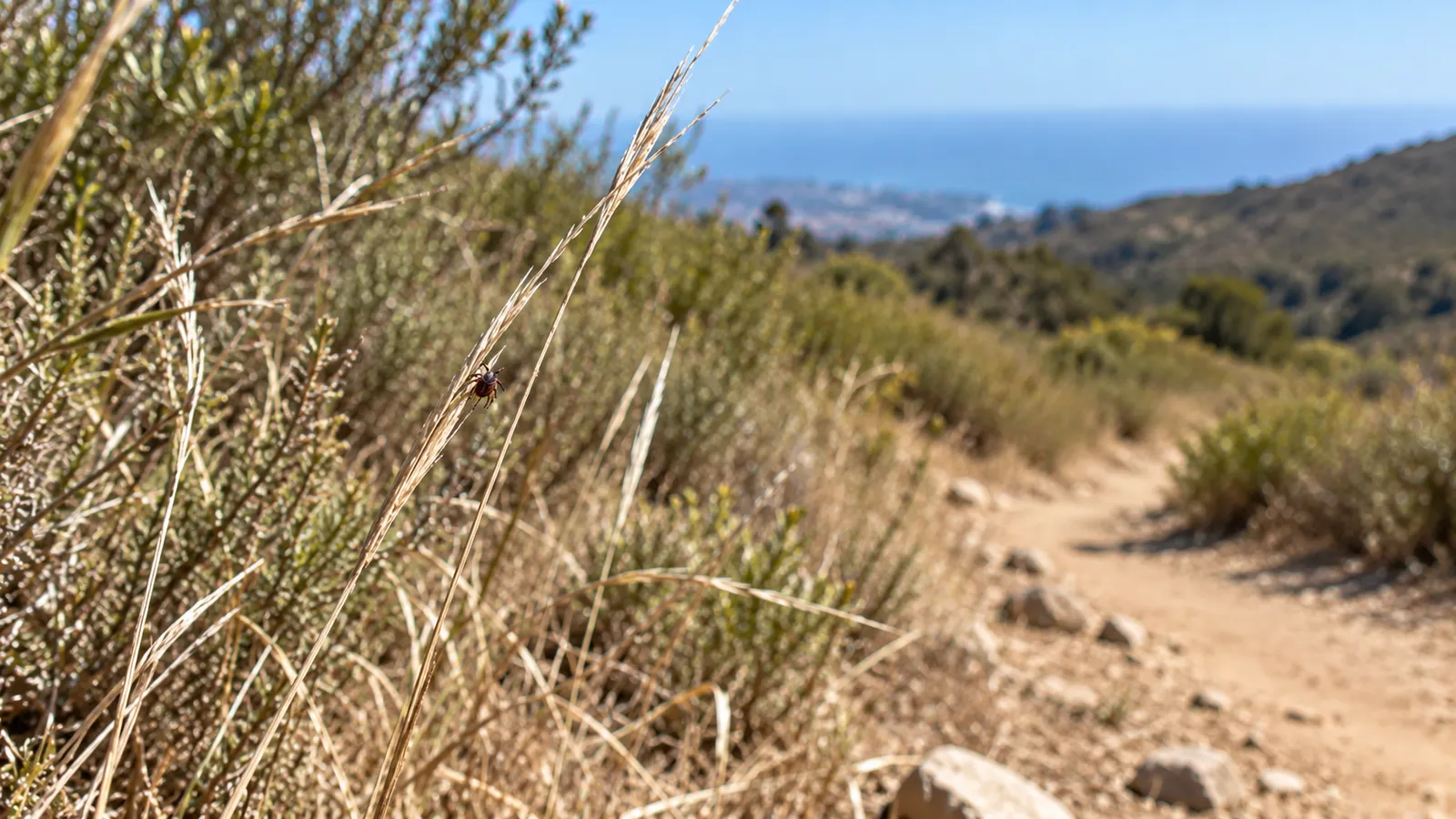
The first properly cool morning of fall does something to people in Southern California. Boots come out of the closet. The trail that was too hot to think about in August suddenly sounds like a great idea, and so does the one through the canyon with the shade and the long grass. Then you get home, peel off your socks, and find a small, flat, dark speck on your ankle that wasn't there this morning. It's attached. The weather that makes hiking pleasant again is the same weather the ticks have been waiting for.
Are there ticks on Southern California hiking trails?
Yes. Ticks live in the brushy, grassy edges of trails across Southern California, especially in shaded canyons and places where deer and other wildlife move through. They don't jump or drop from trees; they wait on the tips of grass and brush and grab on as you pass. In California, the adult stage of the tick most associated with Lyme disease is most active in the cooler, wetter months, which overlaps with fall and winter hiking season. Staying in the center of the trail, wearing long light-colored pants, using a repellent labeled for ticks and doing a full tick check afterward prevents most bites.
The Short Version
- Ticks wait on grass and brush at the trail edge and climb on as you brush past. They don't jump, fly or fall from trees.
- Fall through spring is prime time for adults of California's Lyme-carrying tick, which lines up neatly with hiking season.
- Long, light-colored pants tucked into socks, a repellent labeled for ticks, and staying mid-trail do most of the work.
- Check yourself, your kids and your dog the same day. Ticks often wander for a while before they attach.
- Remove an attached tick with fine-tipped tweezers, close to the skin, with a steady pull. Skip the matches and the nail polish.
- A spreading rash or flu-like symptoms in the weeks after a bite is a reason to call your doctor.
Where You Pick Up a Tick
Ticks don't jump, fly or drop out of trees, whatever you heard at summer camp. They climb to the tips of grass, brush and low plants and wait with their front legs held out for something to brush past. It's called questing. When your pant leg or your dog's side touches the plant, the tick grabs on and starts climbing, looking for a good place to feed.
That makes the trail edge the problem. Across Southern California, ticks are most common in brushy and grassy areas, along narrow or overgrown trails where vegetation crowds in, in shaded canyons, and anywhere deer and other wildlife regularly pass through. Sitting on a log, leaning against a tree trunk or sprawling in leaf litter during a break also puts you in contact with them. They aren't limited to any particular trail. Where plants crowd the path and animals move through, assume they are there.
You don't have to be miles from town, either. Homes that back onto canyons, open space or brushy hillsides can have ticks at the edge of the yard, and dogs carry them home from neighborhood walks as readily as from wilderness hikes.
The ticks you're most likely to meet
Southern California has several tick species, and you don't need to identify them on the trail. A rough sense of what is out there helps, though.
Western blacklegged tick
Small, with dark legs; the adult female has a reddish-orange body behind a dark shield. This is the tick most associated with Lyme disease in California. Its younger stages are tiny, about the size of a poppy seed.
Pacific Coast tick and American dog tick
Larger, with ornate pale or silvery markings on the shield behind the head. Common on dogs and in brushy country.
Brown dog tick
Plain reddish-brown, and unusual in that it can live and breed indoors in homes and kennels with dogs. More on that below.
On low vegetation along the margins of the trail, not out in the middle of it.
In California, adult blacklegged ticks are most active from fall through spring.
Ticks often wander before attaching, so a check right after the hike catches many early.
Why Fall Is Tick Season Here
In much of the country, ticks are a summer problem. California runs a little differently. Here, the adult stage of the western blacklegged tick is most active in the cooler, wetter months, roughly fall through spring, while the tiny nymphs are more active in spring and early summer. Other species keep their own schedules, but the overlap is clear: the months when hiking is most pleasant in Southern California are also the months when ticks are out on the trail edges.
A wet winter can mean thicker vegetation and damp, shaded trail edges, which ticks like. With a wetter-than-normal winter in the forecast this year, it's a good season to build the habits below.
What About Lyme Disease?
Ticks can carry diseases, and in California that includes Lyme disease along with a handful of less common infections. Lyme disease does occur here, though it is much less common than in parts of the Northeast and Upper Midwest. Most tick bites don't make anyone sick, and the risk of infection generally goes up the longer an infected tick stays attached. That's why the prevention habits and same-day checks matter: they shorten the time a tick gets.
This is a prevention guide, not a medical one. For questions about a specific bite, symptoms or testing, talk to your physician or your county public health department.
Dressing and Prepping for the Trail
Long pants, light colors
Light fabric makes dark ticks easy to spot before they reach skin. Tuck your pants into your socks. It looks silly. It works.
Closed shoes
Sandals, and trail shoes worn with bare ankles, give a tick a very short trip to skin.
A repellent labeled for ticks
Use an EPA-registered insect repellent that lists ticks on the label, on exposed skin, following the directions. Check the label before using any repellent on children.
Treated clothing
Clothing and gear can be bought pre-treated for ticks, or treated with a product made for fabric. Follow the label, and never put a fabric product on skin.
Hair up, hat on
Long hair tied back is one less thing for a tick to catch on in a brushy stretch.
Talk to your vet about the dog
Dogs pick up ticks far more often than people do. Ask your veterinarian about tick prevention before trail season, not after the first tick.
Habits That Keep Ticks Off You
Most tick encounters happen in the first few feet off the center of the trail. The single most effective habit is staying in the middle of the path and not brushing against vegetation. Don't cut switchbacks, walk single file through narrow sections, and resist wading into tall grass for a better photo.
For breaks, choose a sunny rock or open ground over a shady log or a bed of leaf litter. Keep dogs leashed and on the trail, where they can't run nose-first into the brush. If you hike the same routes often, you will start to recognize the overgrown, shaded stretches where ticks turn up, and those are the sections to move through briskly.
The Tick Check, Done Properly
Check before you get in the car
A quick look at shoes, socks and pant legs at the trailhead keeps ticks from riding home with you.
Put hiking clothes in the dryer
A run through a hot dryer kills ticks clinging to clothing. Do it before washing, since a cool wash may not.
Shower soon after you get home
It is a good chance to find ticks that haven't attached yet, and it rinses off any that are still wandering.
Do a full-body check
Use a mirror or a partner for the places you can't see: behind the knees, the waistband, under the arms, around the ears, the hairline and scalp, the belly button and between the legs. Check kids thoroughly.
Check the dog
Run your fingers through the coat and feel for small bumps, especially around the ears, between the toes, under the collar, in the armpits and around the tail.
Check your gear
Backpacks, hats and jackets can carry ticks into the house, so give them a look and a shake outside.
How to Remove a Tick
Use fine-tipped tweezers
Grasp the tick as close to the surface of the skin as you can, at the head and mouthparts rather than the body.
Pull straight out, steadily
Use slow, even pressure. Don't twist, jerk or squeeze the body.
Deal with leftover mouthparts
If part of the mouth stays in the skin, remove it with the tweezers if it comes out easily. If not, leave it alone and let the skin heal.
Clean up
Wash the bite and your hands with soap and water, or use rubbing alcohol on the bite.
Keep the tick for a while
Seal it in a zip-top bag or tape it to a card with the date. If symptoms develop, your doctor may want to know what kind of tick it was and when it bit.
Skip the folk remedies
Nail polish, petroleum jelly, a hot match, essential oils, dish soap: none of them make a tick politely back out, and all of them delay getting it off. The goal is to remove it quickly and cleanly with tweezers. That is the whole trick.
When a Bite Needs Medical Attention
A spreading rash
Especially a red rash that expands over several days, sometimes clearing in the middle. It can appear days to weeks after the bite.
Flu-like symptoms
Fever, chills, headache, fatigue, or muscle and joint aches in the weeks after a tick bite.
Trouble removing the tick
If you couldn't get it all out, or it had clearly been attached for a long time.
Signs of infection at the bite
Increasing redness, warmth, swelling or pus.
Tell the doctor about the bite and where you were hiking. A tick bite isn't a diagnosis, and most never cause trouble, but it is useful information. For anything you're unsure about, call your physician or your county public health department.
When the Ticks Come Home With You
Most trail ticks never become a household problem. They come home on a pant leg or a dog, get found, and that is the end of it. Two situations are different.
The first is a yard that backs onto open space, brush or a canyon, where ticks can live along the edge of the property. Keep grass short where the yard meets the brush, clear leaf litter and brush piles near patios and play areas, and put a buffer, like a strip of gravel or wood chips, between the lawn and the wild edge. Keep play equipment and seating well away from the brush line.
The second is the brown dog tick, which can complete its whole life cycle indoors. In a home with dogs, it can settle into dog beds, cracks, baseboards and the backs of furniture, and an indoor population can build quietly. If you keep finding ticks on your dog or around the house when nobody has been hiking, that is the one to suspect, and it usually takes a coordinated approach: your veterinarian treating the dog, and a pest control treatment of the home and yard.
That is where our flea and tick control service fits. We look at where pets spend their time, inside and out, and treat based on what we find, with kids and pets in mind. For an ongoing problem, recurring service is usually more effective than a single visit.
Ticks showing up at home, not just on the trail?
One tick after a hike is normal. Ticks turning up around the house are a different problem. Xtermicon is a family-owned, licensed pest control company offering flea and tick control across the South Bay, the Westside and greater Los Angeles. Call (310) 370-0963; quotes are free over the phone, with no obligation.
Tick FAQs
What time of year are ticks worst in Southern California?
It depends on the species, but for hikers the cooler months matter most. In California, adult western blacklegged ticks, the species most associated with Lyme disease, are most active from fall through spring, and the tiny nymphs are more active in spring and early summer. Ticks can turn up on trails year-round, so the prevention habits are worth keeping all year.
Do ticks jump or fall out of trees?
No. Ticks can't jump or fly, and they don't drop from trees. They wait on the tips of grass and low plants and grab on when something brushes past, then crawl upward. A tick found on your head or neck most likely climbed there from your legs.
Should I get tested after a tick bite?
That is a question for your doctor, and it depends on the situation. Many bites never cause illness. If you develop a spreading rash, a fever or other flu-like symptoms in the weeks after a bite, contact your physician and tell them about the bite and where you were. Having the tick saved in a sealed bag with the date can help.
How do I check my dog for ticks?
Run your fingers slowly through the coat against the direction of the fur, feeling for small bumps. Pay extra attention to the ears and ear flaps, around the eyes, under the collar, between the toes, in the armpits and groin, and around the tail. Remove attached ticks with fine-tipped tweezers the same way you would on a person, and ask your veterinarian about prevention.
What can I do in my yard to reduce ticks?
Keep grass short, especially where the yard meets brush or open space. Clear leaf litter, brush piles and tall weeds near the house and play areas, and keep a buffer of gravel or wood chips between lawn and wild areas. If your dog keeps bringing ticks home, or you are finding them indoors, a professional flea and tick treatment of the home and yard is worth considering alongside your vet's advice.
Related Reading
Our other reading on the pests that travel with pets and wildlife.
- Flea-borne typhus in Los AngelesRecord cases, and what homeowners should actually do about fleas.
- Flea prevention for SoCal pet ownersWhy fleas aren't just a wildlife problem, and how to stay ahead of them.
- Flea and tick controlTreatment for homes and yards where pets bring the problem home.
- TicksIdentification notes on the ticks found in Southern California.
- What bit me?A guide to common bites, and when to see a doctor.
- Landscaping habits that invite pestsYard choices that make the edge of your property friendlier to pests.
Sydney Pardey is the owner of Xtermicon, a family-owned pest control company serving the South Bay and greater Los Angeles area since 2015. All content is written from direct operational experience and reviewed against current California Structural Pest Control Board standards.
Specialists you
can count on.
Xtermicon was founded in 2015 with one focus: protect Southern California homes and businesses from the pests that threaten them. The name says it all — eXterminate TERmites & pest CONtrol — and that's exactly what we do. We're a family-owned team specializing in termite control, pest control, and rodent exclusion. From West LA and East LA to the beach cities and Orange County, we're local neighbors who treat your property like our own.