Landscaping Habits That Invite Pests — and What to Plant Instead
The everyday yard decisions that quietly draw termites, ants, and rodents toward your Southern California home — and the simple changes that push them back out.
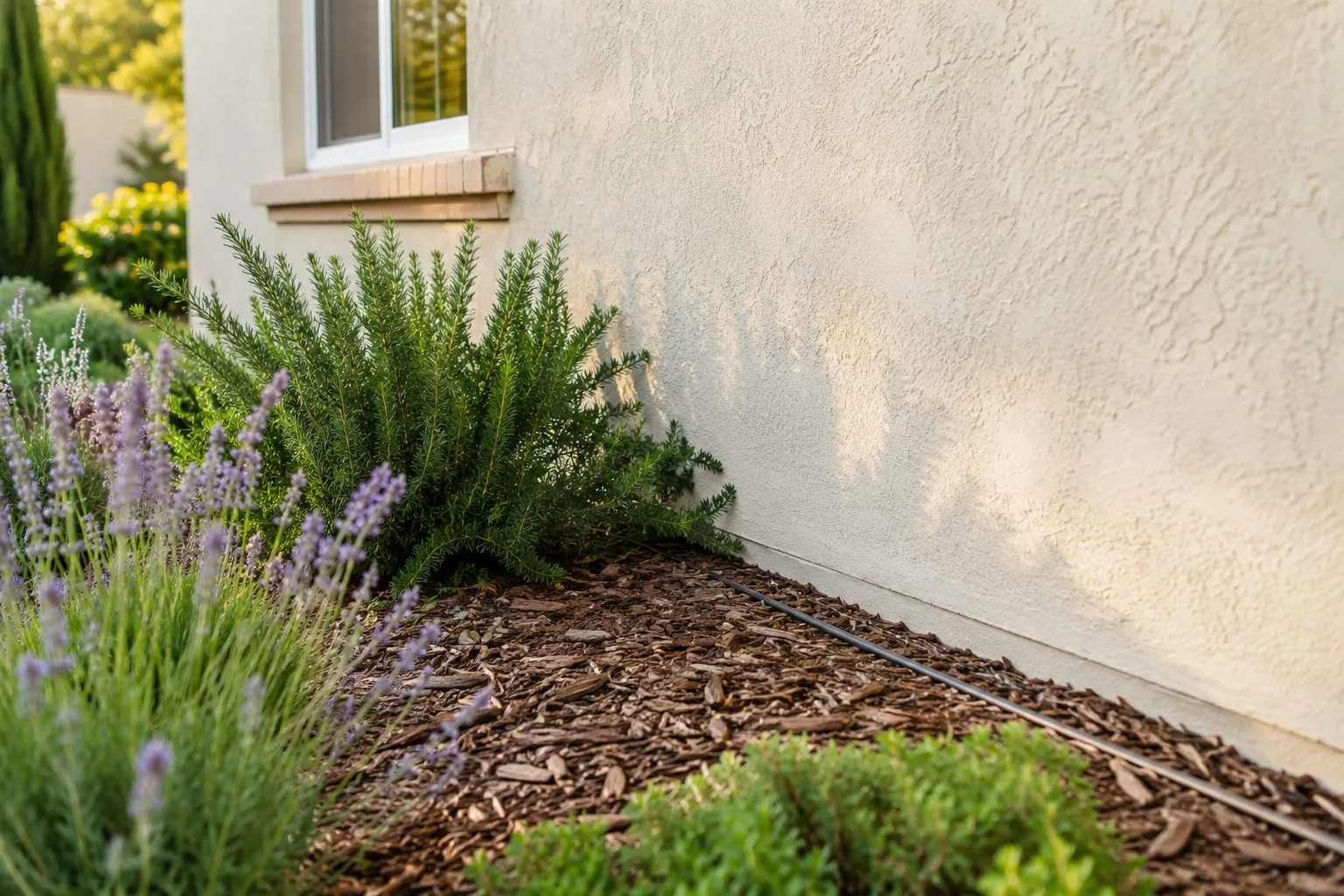
A well-kept yard is one of the quiet pleasures of owning a home in the South Bay — the drought-tolerant beds, the mature shrubs softening the foundation line, the mulch keeping the roots cool through a long dry summer. But here's something we tell homeowners on almost every inspection: the same landscaping choices that make a yard look finished are frequently the exact conditions that invite pests up to the walls and, eventually, inside. It's rarely neglect. More often it's good intentions — a thick bed here, a little extra water there — quietly building a welcome mat for termites, ants, and roof rats.
What landscaping habits attract pests to a Southern California home?
The most common culprits are mulch or wood piled against the foundation, shrubs and tree limbs touching the house or roofline, firewood stacked against the wall, dense ground cover growing right up to the structure, and overwatering or broken irrigation that keeps the soil near the foundation damp. Each one maps to specific pests: moisture and wood-to-soil contact draw subterranean termites and ants, overhanging branches give roof rats a bridge to your attic, and standing water breeds mosquitoes. The fix is a dry, plant-free buffer against the foundation, trimmed branches well off the structure, relocated firewood, and corrected irrigation.
The Short Version
- Pests don't arrive at random — they follow moisture, food, and physical bridges, and landscaping supplies all three right against the house.
- Mulch against the foundation creates the damp, wood-rich conditions subterranean termites and ants are built to exploit.
- Any branch, hedge, or vine touching the structure is a highway — roof rats in particular use overhanging limbs to reach the roofline.
- Overwatering and broken drip lines are an underrated driver of indoor ant problems and ideal conditions for termites.
- A 12–18 inch dry, plant-free buffer against the foundation is the single most effective landscaping change you can make.
- Pest-deterrent plants like rosemary, lavender, and marigold help at the margins, but they reduce pressure — they don't eliminate it.
Your Landscape Is the First Line — for You or for Them
Almost every pest that ends up inside a Southern California home gets there from the outside, and the journey starts in the few feet of ground that ring the structure. We call the things that make that journey easier "conducive conditions" — moisture, food, harborage, and physical pathways that bridge the gap between the yard and the wall. The landscape is where nearly all of those conditions live.
Our year-round growing season is part of what makes this a regional issue rather than a seasonal one. In colder climates, winter resets pest populations and forces landscaping into dormancy. Here, the beds keep growing, the irrigation keeps running, and the pests stay active twelve months a year. A landscaping habit that would be a minor problem somewhere with a hard freeze becomes a standing invitation in the South Bay, Torrance, and across greater Los Angeles.
The good news is that this cuts both ways. Because so much pest pressure is determined right at the foundation line, the homeowner who understands these habits has real leverage. You don't control whether Argentine ants live in your neighborhood — they do, in the millions. You do control whether your beds and irrigation roll out a path to your kitchen.
Six Common Habits — and the Pests Each One Invites
None of these are exotic mistakes. They're the ordinary, well-intentioned choices we see on beautifully maintained properties every week. What follows is each habit paired with the specific pests it tends to draw, so you can walk your own yard and recognize what you're looking at.
Mulch and wood chips piled against the foundation
Mulch does exactly what it's designed to do: it holds moisture and moderates soil temperature. Pressed right up against the foundation and piled a few inches deep, that becomes a damp, dark, wood-rich strip wrapping your home — which happens to describe ideal habitat for subterranean termites, the species that needs soil contact and moisture to survive. Organic mulch in direct contact with the structure can also bridge over the treated soil and inspection gap at the base of the wall, giving termites a concealed route up. The same conditions draw Argentine ants, cockroaches, and earwigs, all of which thrive in consistent moisture and decaying organic matter.
It's not the mulch — it's the placement
Mulch isn't the enemy. Out in the beds, a few feet from the house, it's fine. The problem is contact and depth against the foundation. Keep mulch to a couple of inches, pull it back so the bottom of the siding and the foundation are visible, and never let it bury the line where soil meets structure — that line is exactly where a technician looks for mud tubes.
Shrubs, hedges, and tree limbs touching the house or roofline
Pests are opportunists, and a branch resting on your eave or a hedge pressed against the siding is a free bridge over every barrier you've put in place. Ants travel these living pathways directly to the wall, bypassing any ground-level treatment entirely. More significantly, overhanging tree limbs are the classic roof rat highway in Southern California — roof rats are agile climbers that nest in tree canopy and citrus, and a limb within a few feet of the roof gives them a straight shot to the rooflines, vents, and gaps where they get into attics. Dense foundation shrubs also hold humidity against the wall and hide the structure from view, which means problems develop where neither you nor an inspector can see them.
Firewood and lumber stacked against the wall
A woodpile against the house is convenient in December and a problem the other eleven months. Stacked wood holds moisture, sits undisturbed for long stretches, and provides cover and food in one package. It's prime habitat for termites — both drywood termites already in the wood and subterranean termites moving up from the soil beneath it — and it's one of the most reliable places to find black widow spiders, which favor the dark, undisturbed gaps between logs. Rodents nest in woodpiles too. When the stack is against the wall, every one of those pests is already touching your home.
Dense ground cover and beds right up to the wall
Ivy and thick, low ground cover climbing the foundation looks lush, but at ground level it's a covered tunnel system. It gives rodents protected runways straight to the structure, harbors snails and spiders, and traps moisture against the wall around the clock. Ivy that climbs the wall itself is worse — it provides handholds for rats, hides cracks and entry points, and keeps the siding permanently damp. Beds planted flush to the foundation, with no break between the greenery and the wall, erase the buffer that would otherwise slow pests down and keep the structure inspectable.
Overwatering, broken irrigation, and poor drainage
This is the one homeowners least expect, and it may be the most important. Constant moisture near the foundation is a magnet. Overwatered beds, a drip line that's cracked or running long, a sprinkler head spraying the stucco, a low spot that puddles, or grading that slopes water back toward the house all keep the soil at the foundation damp — which is precisely what subterranean termites need to establish and what drives ants indoors. In a dry SoCal summer, the wettest ground for blocks is often the irrigated strip against a home, and ants will follow that moisture right through the wall to your sinks and bathrooms. Standing water anywhere — a clogged drain, a saucer under a pot, a low spot that never dries — also breeds mosquitoes in as little as a week.
Fruit trees, bird feeders, and fallen fruit
Backyard citrus and fruit trees are one of the joys of Southern California living, and they're also a dependable food source for pests. Fallen, rotting fruit on the ground feeds ants, draws rodents, and attracts flies. Roof rats are especially fond of citrus and will work a fruiting tree night after night, which keeps a population thriving right next to your home. Bird feeders scatter seed that does the same job for rodents on the ground below. None of this means you have to give up the lemon tree — it means the fruit on the ground matters as much as the fruit on the branch.
What the Foundation Line Is Really Doing
A plant-free, well-drained buffer of gravel or hardscape against the foundation is the single most effective landscaping change for keeping pests off the wall.
Keeping shrubs and tree limbs at least this far from the house and roofline removes the bridges ants and roof rats use to reach the structure.
With no hard winter to reset growth or pest populations, landscaping conducive conditions stay active every month of the year here.
Build a Dry Zone and Cut the Bridges
You don't need to tear out your landscaping. Most of the difference comes from a handful of changes concentrated in the first foot or two around the house — creating what we call a dry zone, then removing the physical pathways pests use to cross it.
The foundation-perimeter checklist
Pest-Deterrent Plants That Suit Southern California
If you're replanting beds — especially near the patio, walkways, and the edges of the dry zone — a few choices do double duty: they're drought-tolerant enough for SoCal, and their aromatic oils make them less appealing to certain pests. Set expectations honestly, though. These plants reduce pressure at the margins. They are not a force field, and no homeowner should rely on them as their only line of defense.
Rosemary.
A SoCal workhorse — thrives in heat and drought, and its strong oils are widely used as a natural deterrent for mosquitoes and some flying insects. Doubles as a low, tidy border plant near patios and walkways.
Lavender.
Beautiful, drought-tolerant, and disliked by mosquitoes, moths, and flies. Excellent along the edge of a seating area where you want fragrance working in your favor.
Marigold.
A classic companion plant whose scent deters a range of garden insects. Bright, cheap, and easy to tuck along bed edges and vegetable gardens.
Lemongrass and citronella.
Lemongrass contains the same citronella oil used in mosquito products and handles our climate well. Worth a spot near outdoor dining areas, though it spreads, so give it room.
Chrysanthemum.
The source of pyrethrin, a compound used in many insecticides, which makes mums genuinely unappealing to a variety of insects. A useful, colorful border choice.
Sage.
Aromatic, drought-hardy, and a natural fit for the region; the foliage deters several biting and flying insects while needing very little water.
Mint — in containers only.
Mint repels ants and some other pests, but it spreads aggressively and will take over a bed if planted in the ground. Keep it in pots so it earns its keep without becoming its own problem.
The honest limit of plants
Pest-deterrent plants are a nice supporting layer, not a solution. Against an Argentine ant supercolony of millions, or subterranean termites moving through the soil, a border of rosemary changes very little. Use these plants to make the entertaining areas more pleasant — and rely on the dry zone, the irrigation fixes, and a maintained perimeter for the real work.
How Xtermicon Reads and Treats the Landscape
When we inspect a Southern California home, the yard is half the job. A real inspection isn't just looking for pests — it's reading the conducive conditions in the landscape that explain why the pests are there in the first place, and would keep coming back even after a treatment if nothing changes. Mulch against the foundation, branches on the roof, a drip line that's been running into the same damp corner for a year: those are the things we flag, document, and explain, because fixing them is often what makes treatment actually hold.
Our exterior and perimeter service is built around that foundation line. We treat the band where the yard meets the structure, target the pathways pests use to reach the wall, address active problem areas, and leave honest notes on what we're seeing — no scare tactics, just a clear picture. Because the SoCal growing season never really stops, recurring service is what keeps you ahead of it: beds grow back, irrigation drifts out of adjustment, and pressure rises and falls with the seasons. Regular visits catch those changes before they become an indoor problem.
Two recurring options that keep the perimeter protected as your landscaping — and the season — changes.
Monthly Service
Best for homes with heavy landscaping, mature fruit trees, dense beds near the structure, or a history of ant or rodent pressure. Monthly visits keep perimeter treatment fresh and catch new conducive conditions as plants grow back.
Bi-Monthly Service
The right fit for most South Bay homes — frequent enough to stay ahead of seasonal landscape pressure without over-treating. Six visits a year, scheduled around peak activity windows.
Both programs include free re-service between scheduled visits if you see activity between appointments. If something shows up, we come back.
Landscaping and Pests FAQs
The questions South Bay homeowners ask us most when we point to the yard during an inspection.
Does mulch really attract termites?
Mulch itself doesn't create termites, but mulch piled against the foundation creates the damp, dark, wood-rich conditions subterranean termites need, and it can conceal their route up the structure. The fix isn't to give up mulch — it's to keep it a couple of inches deep, pull it back from the siding, and never bury the line where soil meets the foundation. Use mulch out in the beds, not against the wall.
How far should plants and tree branches be from my house?
Aim to keep shrubs, hedges, and tree limbs at least two to three feet from walls and the roofline, and ideally leave a 12 to 18 inch plant-free, well-drained buffer right against the foundation. Any branch overhanging the roof should be trimmed back, because overhanging limbs are the main way roof rats reach attics in Southern California. The clearance removes the physical bridges pests use and keeps the structure visible for inspection.
Can plants like lavender or mint replace pest control?
No. Aromatic plants like lavender, rosemary, marigold, and mint can reduce certain pests at the margins, and they're a nice addition near patios and seating areas. But against an Argentine ant supercolony or soil-dwelling termites, they make very little difference. Treat them as a supporting layer alongside a dry foundation zone, corrected irrigation, and a maintained perimeter — not as a standalone solution.
Why do I get ants indoors right after watering the garden?
In a dry SoCal summer, the irrigated soil against your foundation is often the wettest ground for blocks, and Argentine ants follow moisture rather than just food. Overwatering, a broken drip line, or a sprinkler hitting the stucco keeps that strip damp and draws foragers straight to the wall — and then to sinks, dishwashers, and bathrooms inside. Fixing the irrigation and letting the foundation soil dry out usually does more than any spray.
Is drought-tolerant landscaping better for keeping pests away?
It can be, because drought-tolerant designs typically use less water and often incorporate gravel and hardscape that make a natural dry zone against the foundation. But it's not automatic — dense succulent beds flush to the wall, decorative bark piled against the structure, or a malfunctioning drip system can still create harborage and moisture. The principle that matters most is a dry, inspectable, plant-free buffer at the foundation, whatever style of landscaping surrounds it.
Related Reading
Go deeper on the pests and services connected to your landscaping.
- Why your backyard is a bug magnet — and how to take it backThe companion guide to keeping pests out of your patio and outdoor entertaining space.
- Summer is coming — and so are the bugsHow SoCal pest pressure builds month by month and how to stay ahead of it.
- Why Argentine ants get worse when you spray themHow the supercolony works and why moisture in your beds keeps the trails coming.
- Subterranean termites pest libraryThe moisture-loving species that mulch and irrigation against the foundation invite.
- Roof rats pest libraryThe climber that uses overhanging branches to reach your roofline and attic.
- Our recurring pest control servicePerimeter and exterior programs that treat the conducive conditions in your landscape.
Sydney Pardey is the owner of Xtermicon, a family-owned pest control company serving the South Bay and greater Los Angeles area since 2015. All content is written from direct operational experience and reviewed against current California Structural Pest Control Board standards.
Specialists you
can count on.
Xtermicon was founded in 2015 with one focus: protect Southern California homes and businesses from the pests that threaten them. The name says it all — eXterminate TERmites & pest CONtrol — and that's exactly what we do. We're a family-owned team specializing in termite control, pest control, and rodent exclusion. From West LA and East LA to the beach cities and Orange County, we're local neighbors who treat your property like our own.