Why Your Backyard Is a Bug Magnet — and How to Take It Back This Summer
What's attracting pests to your patio in Southern California, and what you can actually do about it before your next backyard gathering.
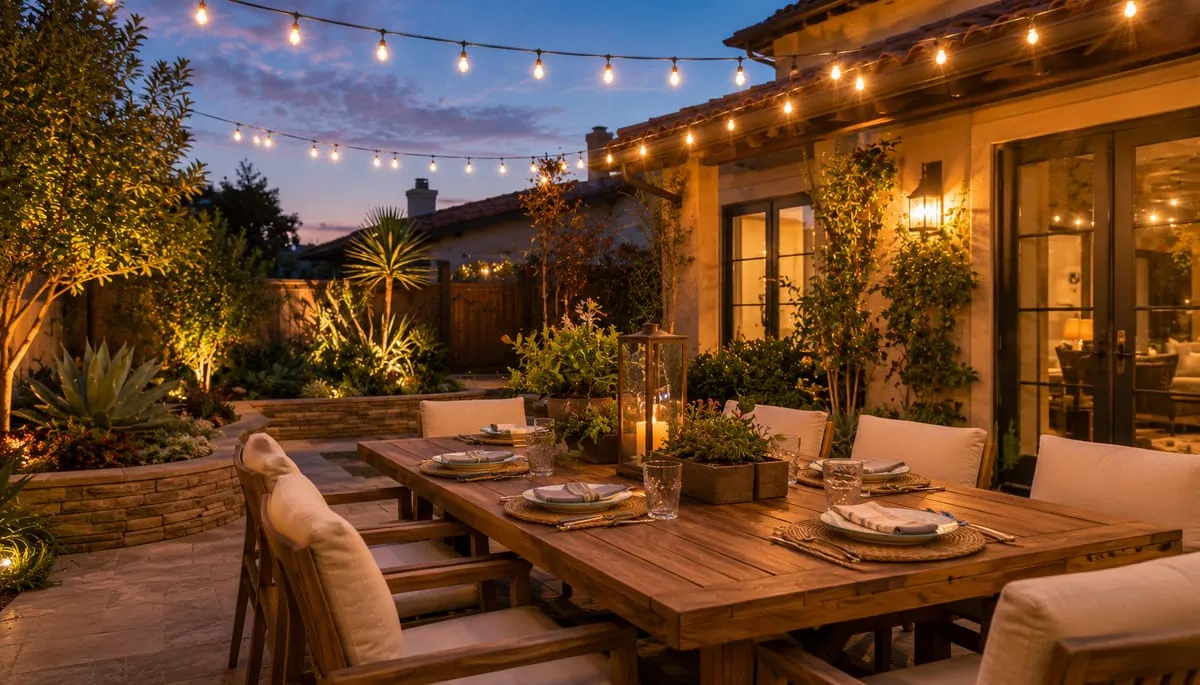
Summer in Southern California means one thing for most homeowners: the backyard becomes a second living room. The grill comes out, the string lights go up, the patio furniture gets rearranged, and suddenly you're spending more evenings outside than in. It's one of the genuine advantages of living here — outdoor entertaining is practically a year-round sport.
It also means your backyard becomes significantly more attractive to every pest in the neighborhood. The ants that found your last BBQ. The wasps building something under the eave you haven't checked since spring. The flies orbiting the trash can next to the back fence. The mosquitoes that appear precisely when the sun goes down and the candles come out. None of this is coincidence. Every one of these pests is responding to something specific your outdoor space is offering them — and once you understand what that is, most of it is fixable.
Why are there so many bugs on my patio in Southern California?
Southern California patios attract pests for five specific reasons: food and drink residue, standing water, outdoor lighting at the wrong color temperature, heat and carbon dioxide from people, and shelter near seating areas. Argentine ants, wasps, flies, mosquitoes, and spiders are the dominant summer pests. Most of these conditions are fixable — but established wasp nests, persistent ant pressure, and black widow harborage need a professional approach.
The Short Version
- Pests aren't random — they concentrate where conditions favor them, and summer patios create perfect conditions.
- Argentine ants and wasps are the two pests most likely to disrupt outdoor entertaining in SoCal.
- Standing water in plant saucers and decorative features breeds mosquitoes in as little as a week.
- Standard white outdoor lighting draws far more insects than warm 2700K LEDs or yellow bug lights.
- Patio perimeter — where plantings meet hardscape — is where most pests gain access to the entertaining space.
- Late-summer wasp nests should never be approached with over-the-counter spray.
What's Actually Attracting Pests to Your Patio
Pests aren't randomly distributed across your neighborhood — they concentrate wherever conditions are favorable. Your backyard entertaining space, during summer, tends to create a remarkable number of those conditions simultaneously.
Food and food residue.
Homeowners consistently underestimate how little it takes. A sticky ring from a soda can on the patio table. Grease dripped below the grill grates. A handful of chips between the seat cushions. Fruit from a nearby tree that landed on the patio and sat for a day. Argentine ants — the dominant species throughout the South Bay and greater Los Angeles — can locate a food source within hours and have a foraging trail established before you've finished cleaning up from dinner.
Standing water.
Southern California homeowners who water their gardens and lawns regularly create moisture conditions most of the region doesn't have. Saucers under potted plants. Low spots in the patio surface that hold puddles. A decorative water feature that doesn't circulate. A forgotten bucket in the corner. Mosquitoes need as little as a bottlecap of standing water to breed — and in the warmth of a SoCal summer, the development cycle from egg to biting adult can be as short as a week.
Outdoor lighting.
Standard white and blue-tinted outdoor bulbs broadcast a spectrum that's highly attractive to moths, beetles, flies, and other nocturnal insects. The glow from your string lights, outdoor ceiling fan, and ambient light spilling through sliding glass doors all contribute.
Heat and carbon dioxide.
Mosquitoes specifically detect and navigate toward both. This isn't something you can eliminate — it's simply how mosquitoes hunt. But understanding it means you can position other deterrents more strategically around the space.
Shelter and harborage near the entertaining space.
Dense potted plants clustered near seating. Cushion storage boxes with gaps in the lids. Gaps under patio furniture legs. Ivy or ground cover growing right up to the patio edge. Stacked firewood against the back fence near the seating area. These don't just attract pests — they house them, which means the problem lives right where you entertain.
The Specific Pests to Know About in SoCal Backyards
Across Redondo Beach, Manhattan Beach, Hermosa Beach, Torrance, Santa Monica, Culver City, Pasadena, and essentially every residential neighborhood in Los Angeles and Ventura Counties, Argentine ants are the dominant ant species. Their supercolony structure — hundreds of queens, no inter-colony aggression, millions of workers across your entire neighborhood — means any food source in your backyard is connected to an effectively unlimited supply of foragers. A barbecue that doesn't get fully cleaned up will have ants on it before you wake up the next morning.
This is the pest that most reliably ruins outdoor entertaining in Southern California. Colonies that started as a single queen in April are large, established, and aggressive by July and August. They build under eaves, in wall voids, in the hollow legs of patio furniture, in ground burrows near garden beds, and inside dense shrubs. They're attracted to protein foods — meat on the grill, sliced cheese, deli foods — as well as sweet drinks and fruit. Late summer is peak aggression season, when colonies are at maximum size and workers defend the nest vigorously.
House flies are drawn to the grill, trash, pet waste, and any uncovered food. Fruit flies appear wherever there's overripe fruit — from a bowl of peaches on the outdoor table to a bag of citrus near the back door. In a SoCal summer, a piece of fruit left on the patio surface for a few hours in the heat is enough to start attracting fruit flies by afternoon.
Mosquitoes are less dominant in coastal Southern California than in more humid parts of the country, but they are present and active — particularly in foothill communities, areas with mature landscaping and irrigation, and neighborhoods near the LA River basin, coastal wetlands, or any consistent standing water. The Aedes aegypti mosquito, which has expanded its range across the Los Angeles Basin over the past decade, bites aggressively during the day — making afternoon outdoor entertaining unpleasant in affected areas.
Patio areas with outdoor lighting draw insects, and insects draw spiders. Corners of patio covers, gaps in outdoor furniture, under cushion storage areas, and the space behind wall-mounted lights are all prime web-building locations. Most are harmless. The exception worth knowing about in Southern California — particularly in ground-level spaces, under decking, and around stored outdoor items — is the western black widow. Late summer is when black widow populations peak.
The backyard pest-proofing checklist
The Limits of Doing It Yourself
The habits above will meaningfully reduce pest pressure on your patio. For many homeowners they'll be enough. But some situations are better handled with a professional assessment rather than another round of DIY adjustments.
Established wasp nests near the patio.
Nests in wall voids or ground burrows near your entertaining area should not be approached with over-the-counter spray. A late-summer nest at maximum size can contain several thousand workers and will respond aggressively to any disturbance.
Persistent Argentine ant pressure.
Ant activity that continues despite consistent cleaning typically means the colony has established itself close enough to the structure that food on the patio is being found within hours. That's a perimeter treatment and bait program situation — surface cleaning alone won't resolve it.
Black widow activity in the entertaining area.
Consistent black widow presence around outdoor seating and storage areas warrants professional treatment of harborage zones and physical removal of webs and egg sacs — particularly before outdoor entertaining season gets fully underway.
Argentine ants can locate a new food source on your patio and establish a foraging trail within hours of it appearing.
In SoCal's summer heat, mosquitoes can complete their entire development cycle from egg to biting adult in as little as seven days.
Wasp and yellow jacket colonies reach maximum size and peak defensiveness in late summer — the same months backyard entertaining hits its stride.
Warm-toned LED bulbs at 2700K or yellow bug lights emit a spectrum significantly less attractive to flying insects than standard white bulbs.
Pests getting in the way of enjoying your backyard?
Xtermicon has been helping South Bay and Los Angeles homeowners get more out of their outdoor spaces since 2015. If pests are becoming a recurring problem on your patio, we're happy to take a look and give you a clear picture of what's happening and what makes sense to do about it.
Patio Pest FAQs
Common questions from Southern California homeowners about backyard and patio pests.
How do I keep ants off my patio table without using spray?
The reliable approach is to remove the attractant and treat the colony at its source — not the visible ants on the table. Wipe down surfaces thoroughly after every outdoor meal, including chair legs and the patio surface underneath. Don't leave open drinks or food unattended. For the underlying ant pressure, a professional baiting program targets the queens in the supercolony, which is what actually reduces foraging. Contact sprays on a table will only push ants to scatter and return through new entry points.
What's the safest way to get rid of a wasp nest near my patio?
For any nest near a living or entertaining area, the safe answer is professional removal. An established late-summer nest can contain several thousand workers, and disturbing it with an over-the-counter spray — particularly nests in wall voids or ground burrows you can't fully see — frequently goes wrong. A small new nest (golf-ball sized or smaller) found early in the season is sometimes manageable with caution at dusk, but anything larger or established is a professional call.
Do citronella candles actually work against mosquitoes?
Marginally. Citronella has a measurable but small repellent effect within a couple of feet of the candle on a still evening. It's not a substitute for addressing breeding sites, which is what actually controls mosquito populations. Empty plant saucers, treat standing water features, and consider EPA-registered repellents on skin for outdoor evenings during peak mosquito periods. For yards with persistent mosquito issues, professional perimeter treatment is significantly more effective than candles.
Why do I have so many mosquitoes when I live near the coast?
Coastal Southern California has lower mosquito pressure than inland areas in general, but it's not zero — especially anywhere with consistent irrigation, mature landscaping, or proximity to wetlands and the LA River basin. The Aedes aegypti mosquito has expanded its range across the LA Basin over the past decade and bites aggressively during the day, which makes afternoon outdoor time uncomfortable in affected neighborhoods. The most common breeding sites are surprisingly small — plant saucers, bird baths, low spots that hold water after irrigation.
When should I worry about black widows in my backyard?
Black widow populations peak in late summer and early fall — August through October across most of Southern California. They concentrate in undisturbed, sheltered spaces: under decking, inside outdoor furniture leg cavities, in stacked firewood, in the corners of storage areas, and along low fence lines. Worry less about an isolated web in a corner you can avoid, and more about consistent presence around seating areas or where children play. That's when professional treatment of the harborage zones is the right call.
Related Reading
- Summer is coming — and so are the bugsThe full SoCal summer pest season guide.
- How to stop Argentine ants from taking over your homeWhy DIY sprays make ant problems worse — and what actually works.
- Our general pest control serviceRecurring perimeter treatment for South Bay homes.
- Wasps & hornets pest libraryIdentification and behavior for SoCal stinging insects.
- Black widow pest libraryWhere they hide and how to spot them in outdoor spaces.
- Where black widows hide in SoCal homes — and how to find themA location-by-location guide to the garage, patio, and yard spots they favor.
- Landscaping habits that invite pests — and what to plant insteadHow mulch, branches, and overwatering near the foundation draw pests, and the fixes that push them back.
- Ankle-biter mosquitoes are taking over Southern CaliforniaWhy afternoon mosquito bites got so much worse — and how to take back your patio.
Sydney Pardey is the owner of Xtermicon, a family-owned pest control company serving the South Bay and greater Los Angeles area since 2015. All content is written from direct operational experience and reviewed against current California Structural Pest Control Board standards.
Specialists you
can count on.
Xtermicon was founded in 2015 with one focus: protect Southern California homes and businesses from the pests that threaten them. The name says it all — eXterminate TERmites & pest CONtrol — and that's exactly what we do. We're a family-owned team specializing in termite control, pest control, and rodent exclusion. From West LA and East LA to the beach cities and Orange County, we're local neighbors who treat your property like our own.