Ankle-Biter Mosquitoes Are Taking Over Southern California — What They Are and How to Stop Them
The aggressive, daytime-biting mosquito that showed up in SoCal backyards over the last decade is a different animal from the ones you grew up with. Here's why it's worse — and what actually works against it.
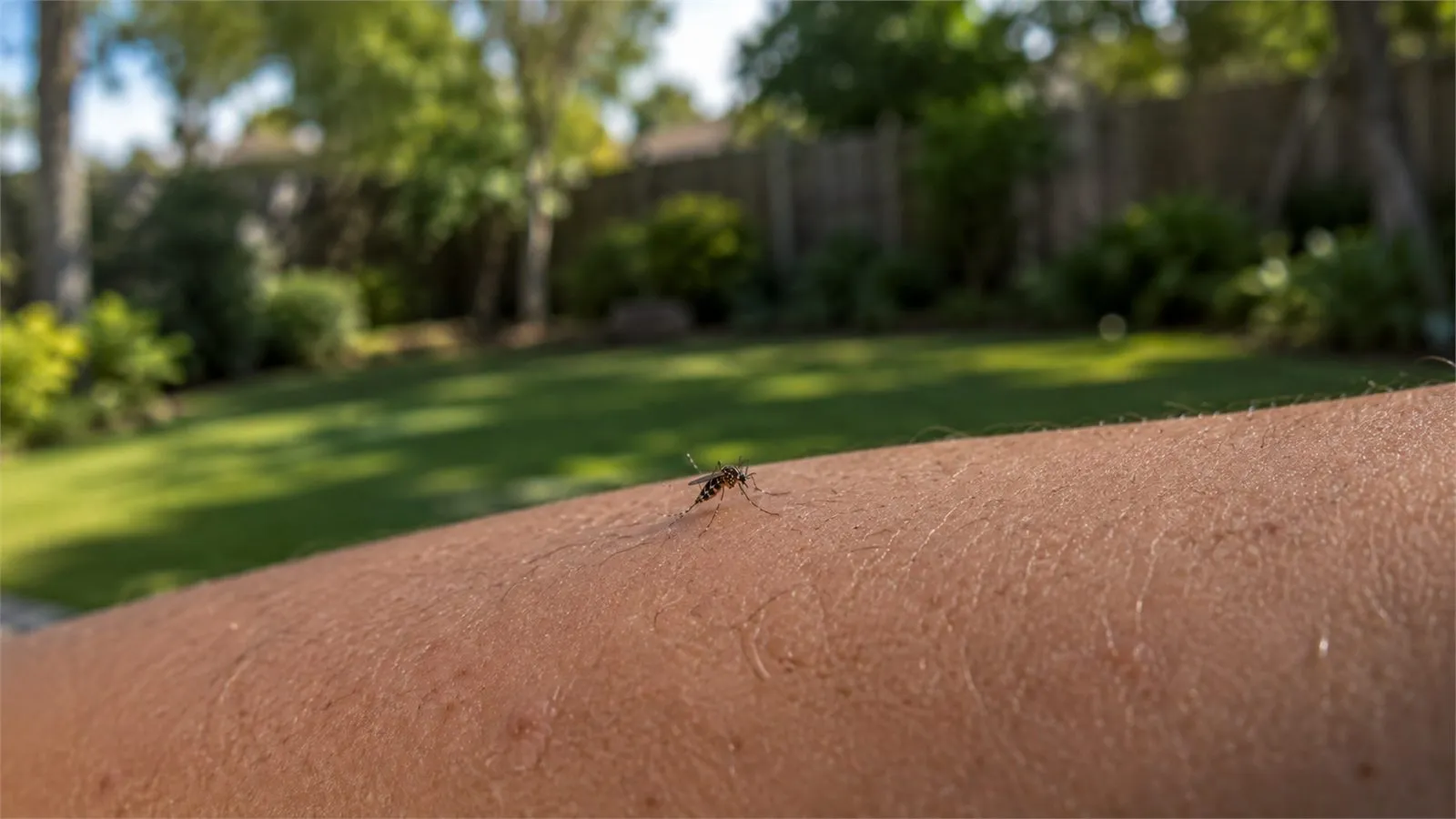
You're on the patio in the middle of the afternoon — not dusk, not near a pond, just a normal SoCal day — and something is biting your ankles. You look down and there's a small, dark mosquito with white stripes on its legs, and then another, and then you're swatting at your feet like the ground is on fire. If this has started happening in the last several years when it never used to, you're not imagining it. Southern California has a new mosquito, and it behaves nothing like the ones we grew up with.
The mosquitoes most of us remember came out at dusk, hung around standing water, and could be avoided by going inside in the evening. The mosquito that has taken over yards across the South Bay, greater Los Angeles, and Orange County over the last decade is the invasive Aedes mosquito — the "ankle-biter" — and it has rewritten the rules. It bites in broad daylight, it breeds in an amount of water you'd never think twice about, and the old advice barely dents it. Understanding what changed is the first step to actually getting your yard back.
Why are mosquitoes suddenly so bad in Southern California?
Two invasive species — Aedes aegypti and Aedes albopictus — arrived in California in the 2010s and are now established across Los Angeles, Orange County, and the South Bay. They're small and dark with white markings, and they behave very differently from our native mosquitoes: they bite aggressively during the day (especially morning and late afternoon), they stay low around your ankles and legs, and they breed in tiny containers — a bottle cap of water is enough. They also don't travel far, which means the ones biting you almost certainly hatched in your yard or a neighbor's. That's why they feel relentless, and why the old "stay inside at dusk" advice does nothing. Control comes down to eliminating every bit of standing water and, when that isn't enough, professional source reduction and targeted treatment.
The Short Version
- Southern California now has invasive Aedes mosquitoes (aegypti and albopictus) — aggressive daytime biters that arrived and spread over the last decade.
- They bite in daylight and stay low around ankles and legs — dusk avoidance no longer works.
- They breed in tiny amounts of water — a bottle cap, a plant saucer, a bottle cap's worth in a bromeliad leaf.
- They rarely fly more than about 150 feet, so the source is almost always on your property or right next door.
- Their eggs survive drying for months and hatch when re-wetted, which is why dumping water once isn't enough.
- Real control is relentless source reduction plus, when needed, professional larval control and targeted barrier treatment through the season.
The Mosquito That Changed the Game
Aedes aegypti (the yellow fever mosquito) and Aedes albopictus (the Asian tiger mosquito) are not native to California. They hitchhiked here — most likely in shipments of goods and ornamental plants like "lucky bamboo" that ship in standing water — and were first detected in the state in 2011. Since then they've spread through most of Southern California and well beyond, and they thrive in exactly the environment we've built: dense residential neighborhoods full of container water, irrigation, and warm weather.
You can usually tell an Aedes mosquito from the mosquitoes we used to have. They're small and dark, with bright white markings — banded legs and a distinctive pattern on the body. But the more reliable tell is behavior. If you're getting bitten in the middle of the day, around your feet and ankles, in a yard with no obvious pond or marsh, you're dealing with Aedes. Native Culex mosquitoes — the ones that transmit West Nile virus and peak at dusk and dawn — behave the old way. Aedes rewrote the playbook.
Aedes lay eggs just above the waterline in tiny containers. A plant saucer, a bottle cap, or the pooled water in a plant leaf is enough for a batch.
These are weak, close-range fliers. The mosquitoes biting you almost certainly hatched on your property or a neighbor's — which is good news, because the source is findable.
Unlike native mosquitoes that peak at dusk, Aedes bite aggressively in daylight — especially morning and late afternoon — and come at you low, around the ankles.
Why the Old Tactics Stopped Working
Everything that made native mosquitoes manageable is exactly what makes Aedes so frustrating. Native mosquitoes breed in larger, more permanent water — ponds, ditches, neglected pools — which are relatively easy to find and treat. Aedes breed in a scatter of tiny, cryptic containers all over a property, most of which a homeowner never thinks of as "standing water."
Then there are the eggs. A female Aedes lays her eggs just above the waterline inside a container, and those eggs can survive completely dry for months. The next time rain, irrigation, or a hose refills that container, the eggs hatch. This is why people dump out a bucket, feel like they've solved it, and are back to swatting a week later — the eggs were waiting on the walls of the container the whole time. Dumping water isn't enough; the surfaces have to be scrubbed, and it has to happen consistently, because a week is roughly all it takes for an egg to become a biting adult in warm weather.
Add the daytime biting and the low-to-the-ground flight pattern, and you have a pest that shrugs off citronella candles, evening curfews, and the occasional can of spray. This is a numbers game won by cutting off breeding, not by killing the adults you can see.
The Hidden Water Sources in Your Yard
Because Aedes need so little water, the breeding sites are almost always things you'd walk right past. When we inspect a yard for mosquito sources, this is the checklist we run — and there is nearly always more than one.
Plant saucers and pot drainage trays
The single most common source in SoCal yards. The saucer under a potted plant collects water every time you irrigate and holds it for days. Bromeliads and other plants that pool water in their leaf axils are breeding sites all by themselves.
Clogged gutters and corrugated drain pipe
A gutter that doesn't fully drain, or the ridged black corrugated drain pipe that holds water in its low spots, is a hidden nursery you can't see from the ground.
Buckets, tarps, wheelbarrows, and toys
Anything left outside that can cup water — a folded tarp, a kid's toy, a wheelbarrow, a trash-can lid, a forgotten bucket — refills with every watering or drizzle.
Trash and recycling bins
Bins with lids that trap rainwater, or bottles and cans inside the recycling that hold a swallow of water each, add up fast.
Fountains, birdbaths, and neglected water features
Any decorative water that isn't moving or being changed is prime habitat. A fountain that's been switched off for the season is a breeding pond.
Pet bowls, saucers, and drip trays
Outdoor water bowls left to sit, and the drip trays under AC units and potted plants, all qualify.
Boat, RV, and grill covers; tires; and low spots
Covers pool water in their folds, old tires are a classic mosquito factory, and any low spot in the yard that stays wet after irrigation counts.
How to Actually Get Rid of Ankle-Biter Mosquitoes
Effective mosquito control is a two-part effort: the homeowner cuts off the breeding, and a professional handles the sources you can't eliminate and the resting adults. Neither half works well alone.
Your job: relentless source reduction
Tip and toss every week
Once a week, walk the yard and empty anything holding water. Weekly matters — it's shorter than the egg-to-adult cycle, so you break the generation before it can bite.
Scrub, don't just dump
For containers you're keeping, scrub the inside walls when you empty them. Aedes eggs cling to the sides above the waterline and survive dumping — scrubbing removes them.
Fix the water that keeps coming back
Clear gutters, correct low spots and drainage, and adjust irrigation so it isn't leaving standing puddles. Store buckets and toys upside down.
Manage the water you can't remove
Keep fountains running or drained, change birdbath and pet water every few days, and treat rain barrels or ponds you're keeping with mosquito dunks (a larvicide safe for that use) or stock ornamental ponds with mosquitofish.
How we treat it
Inspect and find the cryptic sources
We walk the whole property looking for the sources a homeowner misses — the corrugated drain line, the gutter that doesn't drain, the neighbor's runoff, the plant that pools water. Finding the source is most of the battle.
Larval control where water can't be removed
For standing water that can't be eliminated — drains, catch basins, water features — we apply a targeted larvicide that stops larvae from becoming biting adults without harming the surrounding environment when used correctly.
Mosquito traps that spread control beyond the trap
Our mosquito traps use an advanced autodissemination system: mosquitoes are lured in and come into contact with a tablet containing an insect growth regulator (IGR), which prevents them from laying viable eggs. Rather than simply capturing mosquitoes, the trap allows them to fly off carrying the IGR on their bodies, spreading it to other breeding sites and resting mosquitoes they contact. This "horizontal transfer" effect extends control well beyond the trap itself, helping suppress the broader mosquito population around your property over time.
Targeted treatment of resting sites
Adult Aedes rest during the day in cool, shaded, humid spots — dense foliage, under decks, in shrubbery, along fence lines. We target those harborage areas rather than blanket-spraying the open yard.
A source-reduction plan and seasonal follow-up
We leave you a specific list of what to fix and change, and because mosquito pressure rebuilds through the warm months, we handle it as an ongoing seasonal effort rather than a one-and-done.
The honest truth about mosquito control
No treatment makes a yard permanently mosquito-free while water keeps collecting in it — anyone promising that is overselling. Control is source reduction plus targeted treatment, maintained through the season. And because these mosquitoes cross property lines, a neighbor's neglected pool or a public storm drain can undo your work. Report public and abandoned-pool sources to your local vector control district — the Greater Los Angeles County Vector Control District or the Orange County Mosquito and Vector Control District — who handle sources you can't.
Are these mosquitoes dangerous?
In California, invasive Aedes are mostly an aggressive biting nuisance. But Aedes aegypti and albopictus are capable of transmitting viruses like dengue, Zika, and chikungunya, and California has recorded a small number of locally-acquired dengue cases in recent years. This isn't cause for alarm — it's a reason to take breeding sites seriously. The practical response is the same either way: fewer breeding sites and fewer bites.
Losing the battle with mosquitoes in your own yard?
Xtermicon has been helping South Bay and greater Los Angeles homeowners take back their yards since 2015. If you've dumped every bucket you can find and you're still getting bitten in the afternoon, that's exactly the situation where a professional inspection finds the source you missed. We'll identify what's breeding, treat what we can't remove, and give you a straight plan.
Southern California Mosquito FAQs
Common questions from South Bay and Los Angeles homeowners about the new daytime mosquitoes.
Why am I getting bitten by mosquitoes during the day now?
Because the mosquito biting you is almost certainly an invasive Aedes species, which is a daytime biter — most active in the morning and late afternoon. This is a real change: the native mosquitoes SoCal used to have came out mainly at dusk and dawn. Aedes established across Los Angeles and Orange County over the last decade, and they bite low and aggressively during daylight hours, which is why the old habit of just going inside in the evening no longer helps.
How do I get rid of ankle-biter mosquitoes in my yard?
Start by eliminating standing water — all of it, even tiny amounts. Walk the yard weekly and empty or scrub anything that holds water: plant saucers, buckets, gutters, drain pipes, birdbaths, and pet bowls. Aedes eggs stick to container walls and survive drying, so scrub rather than just dump. For water you can't remove, use mosquito dunks or professional larvicide. If you're still getting bitten after that, the source is likely something cryptic (a clogged drain line, a neighbor's yard) or a resting-adult population — that's when a professional inspection and targeted treatment make the difference.
I keep dumping standing water but the mosquitoes keep coming back. Why?
Three usual reasons. First, Aedes eggs survive on dry container surfaces for months and hatch when re-wetted, so if you dumped but didn't scrub, the eggs are still there. Second, there's often a hidden source you haven't found — a corrugated drain pipe, a gutter that holds water, an AC drip tray. Third, these mosquitoes cross property lines: a neighbor's breeding source or a public storm drain can keep supplying your yard. Persistent problems usually need a professional to find the cryptic source and coordinate with local vector control on the ones you can't reach.
Do bug zappers, citronella, or foggers work against these mosquitoes?
Not well. Bug zappers kill mostly harmless night-flying insects and very few biting mosquitoes. Citronella candles and repellents give only limited, localized relief. Store-bought foggers knock down the adults present at that moment but do nothing about the eggs and larvae that replace them within days. None of these address breeding, which is the only thing that actually reduces the population. Source reduction plus targeted professional treatment is what works.
Can these mosquitoes make me or my kids sick?
In California they're primarily an aggressive biting nuisance, and most bites just itch. That said, invasive Aedes are capable of transmitting dengue, Zika, and chikungunya, and California has seen a small number of locally-acquired dengue cases in recent years, so they're worth taking seriously — not panicking over. The sensible approach is to reduce breeding sites around the home, use EPA-registered repellent on exposed skin when needed, and keep kids from being bitten repeatedly during afternoon play. Fewer breeding sites means fewer bites and lower risk.
Related Reading
More on SoCal summer pests and protecting your outdoor space.
- Why your backyard is a bug magnet — and how to take it backThe companion guide to reclaiming your patio and outdoor living space from summer pests.
- Summer is coming — and so are the bugsHow SoCal pest pressure builds month by month, mosquitoes included.
- Landscaping habits that invite pestsHow irrigation and standing water in the landscape create the conditions mosquitoes need.
- Protecting your kids from pestsKeeping children safe from the pests — biting insects included — around a SoCal home.
- Mosquitoes pest libraryBiology, behavior, and the species SoCal homeowners actually encounter.
- Our general pest control serviceSeasonal, targeted treatment that includes mosquito source reduction and harborage work.
Reference Guides
Undated reference documents on this topic — built to be bookmarked rather than read once.
Sydney Pardey is the owner of Xtermicon, a family-owned pest control company serving the South Bay and greater Los Angeles area since 2015. All content is written from direct operational experience and reviewed against current California Structural Pest Control Board standards.
Specialists you
can count on.
Xtermicon was founded in 2015 with one focus: protect Southern California homes and businesses from the pests that threaten them. The name says it all — eXterminate TERmites & pest CONtrol — and that's exactly what we do. We're a family-owned team specializing in termite control, pest control, and rodent exclusion. From West LA and East LA to the beach cities and Orange County, we're local neighbors who treat your property like our own.