Roof Rat
Rattus rattus
How do you get rid of roof rats in a Southern California home?
Getting rid of roof rats takes more than traps — they enter from above, so the priority is sealing roof-line entry points like eaves, vents, and utility gaps with gnaw-proof materials, cutting back branches and ivy that act as highways to the roof, and clearing food sources like fallen citrus. A licensed technician then sets targeted traps in attics and voids to remove the rats already inside.
What are Roof Rat?
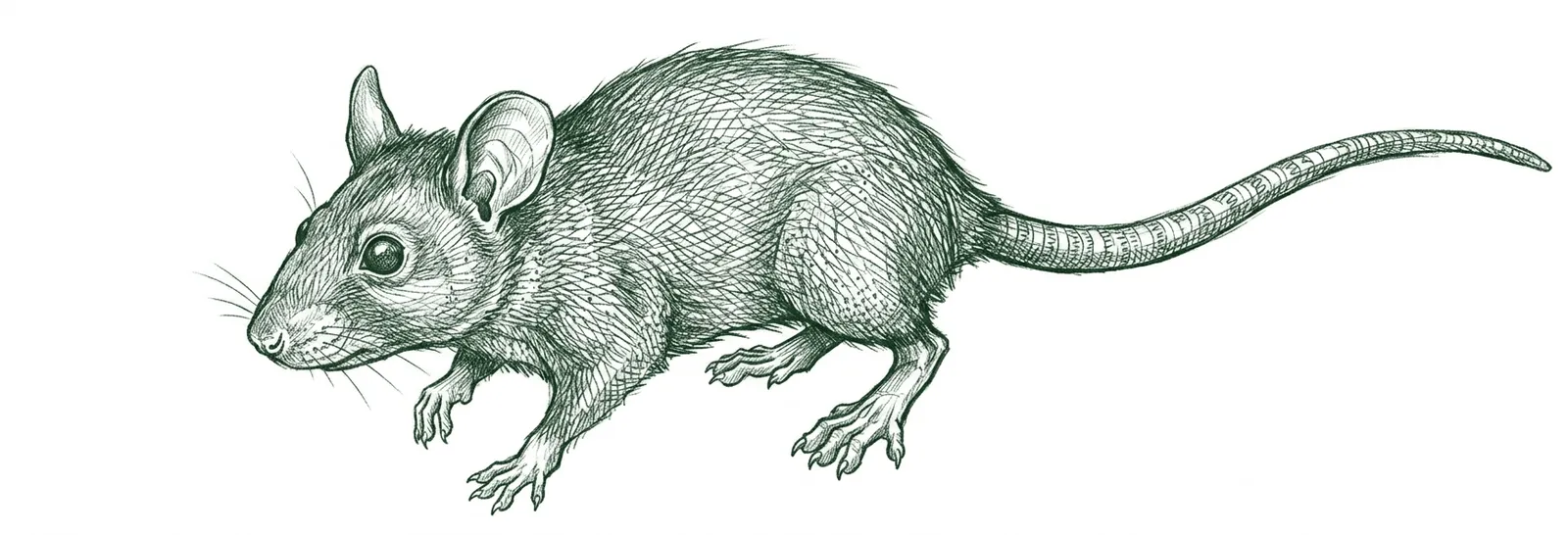
Roof rats are lean, acrobatic rodents that prefer high elevation. In Southern California, they are frequently found in palm trees and ivy, using these as bridges to enter attics and roof lines.
Key Takeaways
- Roof rats are agile climbers that nest high — in attics, rafters, palm trees, and ivy — rather than at ground level.
- In Southern California they are drawn to citrus and avocado trees, fallen fruit, dense vegetation, and branches that touch the roof.
- Telltale signs include droppings, gnaw marks, greasy rub trails, and scratching or scurrying noises in the ceiling or attic at night.
- Exclusion — sealing roof-line gaps as small as a half-inch — matters more than trapping alone, because rats keep returning through open access points.
- They breed quickly and re-invade, so lasting control depends on habitat management and ongoing monitoring, not a single visit.
Identification & Signs
- Lean body (6-8 inches long)
- Black to dark brown fur
- Large ears and pointed nose
- Tail is longer than the body and head
Why are they a problem?
They are highly attracted to fruit trees (citrus, avocados) and lush vegetation. Ivy-covered walls and tree branches touching the roof provide direct access into homes.
Prevention and Home Tips
Trim tree branches at least 5 feet away from the roof line
Remove thick ivy or ground cover from the house
Pick up fallen fruit as soon as it drops
Seal any openings in eaves and roof lines
How Xtermicon Treats for Roof Rat
Roof rats are highly agile climbers, making roof-line exclusion and high-elevation habitat management the most critical parts of their control. Our technicians carefully inspect your eaves, roof vents, and utility entry points — often the primary routes these rodents use to enter attics. We use specialized, aircraft-grade exclusion materials to seal these high-access points, ensuring they can withstand both the elements and rodent gnawing. Combined with a program of tree-trimming and habitat modification around the structure, we disrupt their "aerial highways" and use targeted trapping systems in attic spaces to remove any rodents already inside. This high-focused approach is the only way to achieve lasting results against such an adaptive climber.
Frequently Asked Questions
What attracts roof rats to my home?
Roof rats are drawn to food and shelter at height. In Southern California, the biggest attractants are fruit trees — especially citrus and avocado — along with fallen fruit, dense ivy, woodpiles, and tree branches that touch the roof. Once they find a reliable food source and an easy climb to the eaves, they move into attics and wall voids to nest.
How can I tell if I have roof rats versus mice or Norway rats?
Roof rats are lean, 6 to 8 inches long with a tail longer than their body, large ears, and a pointed nose — and they nest high, in attics and rafters, rather than in burrows. Norway rats are bulkier with shorter tails and stay low, in crawl spaces and ground burrows. House mice are much smaller, roughly 2 to 3 inches in the body. Hearing scratching or scurrying in the ceiling at night is a strong sign you are dealing with roof rats.
Are roof rats dangerous?
Beyond the nuisance, roof rats can contaminate food and surfaces, spread disease-causing organisms through their droppings and urine, and carry parasites such as fleas. They also gnaw constantly to wear down their teeth, and chewed electrical wiring in attics is a genuine fire hazard. Their droppings and nesting materials can aggravate allergies and asthma as well.
Can I get rid of roof rats myself, or do I need a professional?
A few traps may catch the rats you can see, but they rarely solve the problem, because roof rats re-enter through gaps as small as a half-inch and breed quickly. Lasting control means finding and sealing every roof-line entry point with gnaw-proof materials, trimming back the vegetation they climb, and monitoring over time — work that is difficult and often unsafe to do across a roof and attic. A licensed technician manages the exclusion-and-removal process safely.
How long does it take to get rid of roof rats?
Most of the active rats inside a home can be removed within a few weeks of trapping and exclusion, though the timeline depends on the size of the population and how many entry points need sealing. Because roof rats re-invade from neighboring yards and trees, a home stays protected only with maintained exclusion and ongoing monitoring — which is why most Southern California homes do best on a recurring service plan.
Insights about Roof Rat
Specialists you
can count on.
Xtermicon was founded in 2015 with one focus: protect Southern California homes and businesses from the pests that threaten them. The name says it all — eXterminate TERmites & pest CONtrol — and that's exactly what we do. We're a family-owned team specializing in termite control, pest control, and rodent exclusion. From West LA and East LA to the beach cities and Orange County, we're local neighbors who treat your property like our own.