Pest Control Compliance for California Property Managers: What the Law Actually Requires
The habitability obligation is broad and the specifics live in your lease and your counsel's advice. What is squarely in your control is whether you can prove what was done, and when.
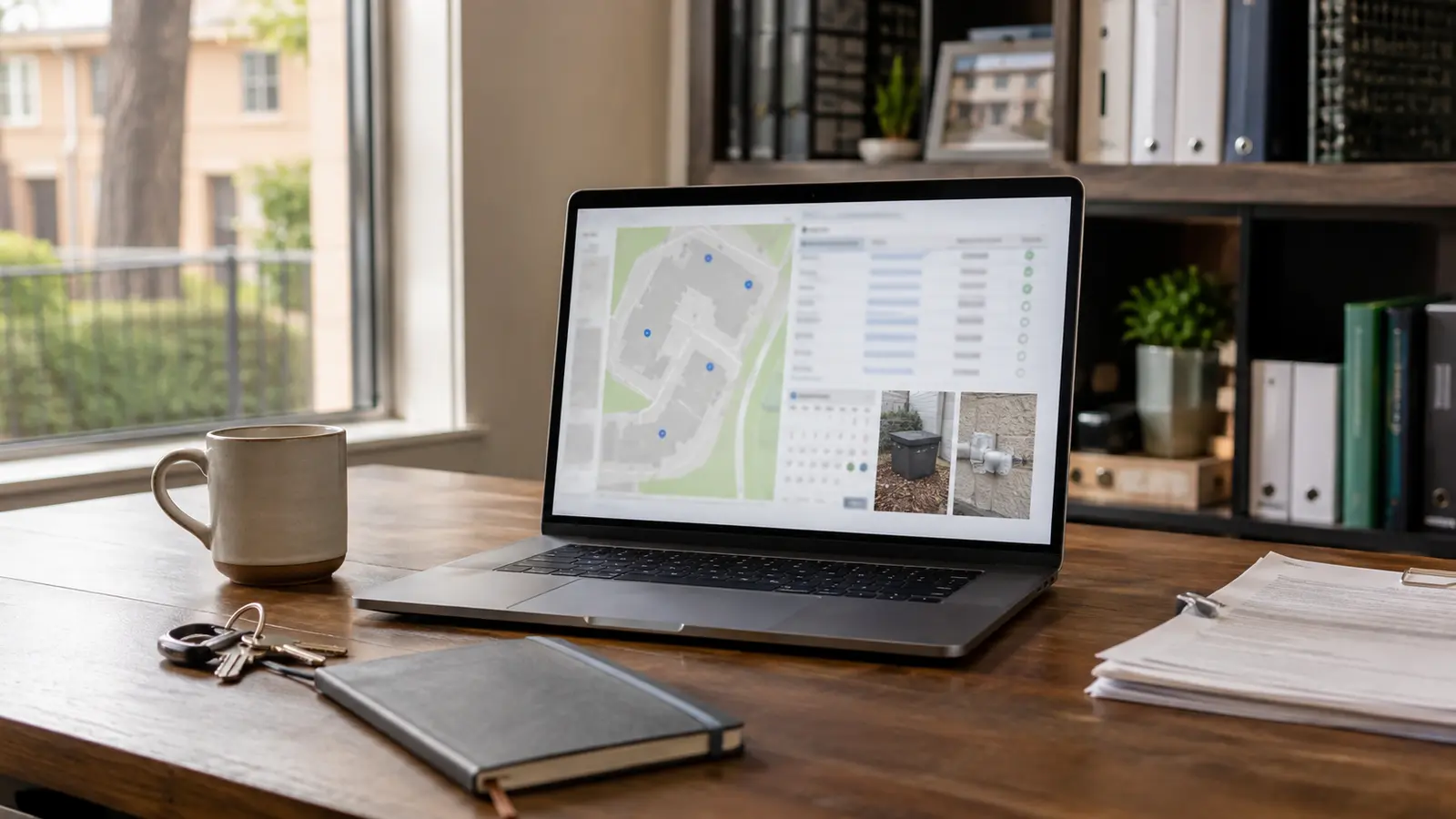
The pest control question that actually costs property managers money is rarely "did we treat it." It is "can we show what we did, when, and what we told the resident." A manager who treated a problem promptly but kept no record is in a materially worse position than one who treated it a week later and documented every step — and that gap tends to reveal itself at the worst possible time, in front of an owner, a board, or an attorney, months after the staff who handled it moved on.
What does California law require landlords to do about pests?
California law requires residential rental housing to be maintained in a habitable condition, and freedom from vermin infestation is part of what habitability means. In practice that means an owner or manager is generally responsible for keeping the property free of infestations and responding to reported problems within a reasonable time. How responsibility divides between owner, manager, association, and resident depends on the lease, the property type, the cause of the infestation, and local ordinances, which vary considerably across California cities. This is general background rather than legal advice — the specifics of any particular dispute are a question for an attorney, not a pest control vendor.
The Short Version
- California habitability standards expect rental housing to be kept free of vermin. That is the general principle; the specifics of any situation depend on the lease and local ordinance.
- This article is general information, not legal advice. Anything contested should go to counsel.
- Documentation is the part fully within your control, and it is what actually holds up when a claim or complaint surfaces later.
- Records outlive staff. Managers change, vendors change, and institutional memory does not survive either — the file does.
- Advance notice before treatment is both a practical necessity for access and a courtesy that reduces disputes. Build lead time into the schedule.
- A scheduled recurring program produces a continuous record by default. Reactive-only service produces a record only when something went wrong.
What Habitability Actually Means Here
California law establishes an implied warranty of habitability for residential rentals — an obligation that a rental unit be fit for human occupancy, independent of what the lease says. Being free of vermin infestation is one of the conditions generally understood to fall under it, alongside working plumbing, weatherproofing, heat, and structural soundness.
That is the durable principle, and it is worth knowing precisely because it is broad. What it does not do is answer the specific questions managers actually face. Who is responsible when a resident's own conduct caused the infestation? What is a reasonable response time? What happens in a building where one unit's problem is demonstrably coming from another? How do local ordinances in a particular city modify the baseline? Those answers depend on the lease language, the property type, the facts, and the jurisdiction — and they are exactly the questions where getting it wrong is expensive.
We are deliberately not citing a specific code section here, and we would gently suggest treating any vendor who confidently quotes statute numbers at you with some caution. Pest control companies are not qualified to interpret habitability law, and a vendor who tells you what the law requires in your specific situation is exceeding their competence. What we can speak to with authority is the operational side — what documentation looks like, what a defensible service record contains, and how the pest control half of this supports whatever position your counsel takes.
General information, not legal advice
This article summarizes widely understood principles to help property managers think about their processes. It is not legal advice, it does not create any professional relationship, and it should not be relied on for a specific dispute, lease provision, or habitability claim. California requirements vary by jurisdiction and by circumstance, and local ordinances can impose obligations beyond the state baseline. Consult an attorney for your situation.
Why Documentation Is the Part That Protects You
Here is the pattern we see repeatedly, and it is almost never about a manager who ignored a problem.
A resident reports something. Someone on site calls a vendor. The vendor comes out, treats, and leaves. Maybe there is an invoice; maybe the site manager remembers it clearly. Eight months later the resident raises a habitability claim covering that period, or an owner asks why the same unit has been treated four times, or the property changes management companies. Now the question is what was found, where, what was done about it, and what the resident was told — and the honest answer is that nobody knows, because it lived in one person's memory and that person has moved on.
The treatment was fine. The response was prompt. And none of that is demonstrable. That is the failure mode worth designing against, because it is entirely preventable and it does not require doing anything differently on the pest control side — only recording it.
The corollary is worth stating too: a documented record is not only defensive. It is how you find out that unit 12 has been treated for the same issue three times, which is the signal that the actual problem is a plumbing chase or an adjacent unit rather than unit 12. Managers who keep real records catch building-level problems earlier, because the pattern is visible.
What a Defensible Service File Contains
Ask any prospective vendor to show you a sample of what they produce after a visit. If they cannot, that answers your question. What a useful record contains:
The date, the technician, and the license
Who was on the property, when, and under what license. This is the baseline and it is surprising how often it is missing.
Findings tied to specific locations
Not "evidence of activity" but which unit, which room, which side of the building. A finding without a location cannot be followed up or shown to have been resolved.
Conducive conditions, recorded separately from pest activity
The leaking fixture, the missing vent screen, the enclosure that will not close, the vegetation against the wall. These are your repair list — and documenting that you were told about them, and when, matters as much as documenting the treatment.
What was applied, where, and in what quantity
Specific enough that a different technician can pick it up next month, and specific enough to answer a resident asking what was used near their door. Product labels and safety data should be available on request.
What the resident was told
Preparation instructions given, re-entry timing communicated, and any access issue encountered. This is the piece most often absent and most often disputed later.
The follow-up protocol and what triggers a return
What happens next, when, and under what conditions the vendor comes back between scheduled visits. Get this into the contract rather than leaving it in a sales conversation.
Two practices worth standardizing beyond the vendor's paperwork. First, keep the file at the property level as well as the unit level — a per-unit record misses the building pattern, which is where the expensive problems live. Second, retain records for longer than feels necessary; claims surface well after the fact, and storage is free compared to the alternative.
Notice, Access, and the Practical Half
Entry into an occupied unit is governed by its own rules in California, and the general expectation is reasonable advance written notice for a non-emergency entry, during normal business hours, stating the purpose. Your counsel and your management policies should govern the specifics — including what your local jurisdiction requires, which can be more demanding than the state baseline.
From the operational side, the things that make treatment days go well:
Give real lead time
Both for the legal notice requirement and because residents need to prepare. Same-day scheduling reliably produces refused entry, unprepared units, and a wasted visit that still gets billed.
Send preparation instructions with the notice, not at the door
For most general service there is little to do. For bed bug or cockroach work, preparation is substantial and determines whether treatment works at all. A resident learning about it when the technician arrives is a failed appointment.
State re-entry timing explicitly
Residents want to know when they and their pets can be back in the space. Say it in the notice, in plain language, and make sure it matches what the technician says on site.
Ask about children, pets, pregnancy, and sensitivities
Not as a liability exercise but because it genuinely changes product and placement choices. Give residents a channel to raise it before the visit rather than at the door.
Document refusals and no-access
A unit that would not grant entry is an important record — both for the building-wide picture and because an untreated unit in a shared structure undermines everything around it.
Close the loop after the visit
Tell the resident what was done. A resident who hears nothing assumes nothing happened, and that assumption is the origin of a meaningful share of complaints.
Where scheduled service changes the picture
The structural advantage of a recurring program over call-when-it-breaks is not only that problems get caught earlier — though they do. It is that a scheduled program generates a continuous record as a byproduct. You have documentation of routine inspection whether or not anything was found, which is a materially different position from having documentation only of the occasions when something went wrong.
It also changes the tenant-notice burden. A predictable service cadence that residents know about is easier to administer than a series of one-off entries, and it means the access conversation is a standing arrangement rather than a negotiation each time.
For properties with shared structure, common areas, and a trash enclosure, monthly is the usual cadence, because those are continuous pressure points. Lower-density properties — detached townhomes with private yards and no shared walls — often work on a longer interval with common areas covered more frequently. The determining factors are how much shared structure exists, how much common landscaping touches the buildings, and the property's history.
Setting a standard across a portfolio?
Xtermicon works with property managers, HOAs, condo and community associations, and multi-unit buildings across Los Angeles County and Orange County, with scheduling and routing run as a single account and one point of contact. For questions about your legal obligations specifically, talk to your attorney — we will support whatever documentation standard they set.
Property Manager Compliance FAQs
What managers ask when they are building a process rather than reacting to a complaint.
Is the landlord or the tenant responsible for pest control in California?
It depends on the lease, the property type, the cause, and local ordinance, and it is genuinely a question for your counsel rather than your pest vendor. The consistent background principle is that residential rental property is expected to be maintained free of vermin as part of habitability, which is why documentation of inspection and response matters to management regardless of how costs are ultimately allocated. From the pest control side, the practical reality is that infestations in shared structure are rarely attributable to a single unit, which is part of why building-wide programs tend to be the workable arrangement.
How quickly do we have to respond to a pest complaint?
The general standard is a reasonable time, which is deliberately not a fixed number and varies with severity and circumstances — and some local jurisdictions impose their own timelines. What we would say operationally is that the date you received the report and the date you acted should both be in the record, because the gap between them is what gets examined later. A documented prompt response is a strong position; an undocumented one is difficult to demonstrate no matter how fast it actually was.
What notice do we need to give before entering a unit to treat?
California generally expects reasonable advance written notice for non-emergency entry, during normal business hours, stating the purpose, and local rules can be stricter. Your counsel should set your policy. Practically, more lead time than the minimum is worth giving — residents need to prepare, preparation determines whether some treatments work at all, and short notice reliably produces refused entry and wasted visits.
Does having a recurring pest control contract help our compliance position?
It helps in a specific and practical way: it produces a continuous documented record of inspection and treatment, rather than a record that exists only for the occasions when something went wrong. It also tends to catch building-level issues earlier, since someone is on the property regularly. Whether that satisfies any particular obligation is a legal question we are not in a position to answer — but as a matter of evidence, a manager with twelve months of service reports is in a different position from one with three invoices.
A tenant is refusing entry for treatment. What do we do?
Document it — the notice given, the date, the refusal, and any reason stated — and take the next step according to your counsel's guidance and your lease. From the pest control side the important part is that an untreated unit in a shared structure undermines the work around it, particularly for German cockroaches and bed bugs, which move between units. That makes a documented pattern of refused access materially relevant to explaining why a building-wide problem is not resolving.
Should bed bug work be part of our general contract?
It is typically quoted separately, and worth confirming rather than assuming. Bed bug work runs a different process — inspection to confirm it is not a look-alike, substantial resident-side laundering and preparation, and multiple treatment visits rather than one. In a multifamily setting, the part to get right in advance is scope: a report in one unit is a reason to inspect the neighbors immediately, and the notice and preparation burden on the management side is considerably heavier than for general service.
Related Reading
The rest of the community and multi-unit material.
- Pest control for multifamily buildingsWhat a thorough inspection covers, and the vendor red flags worth walking away from.
- Why HOAs should budget for monthly inspectionsThe economics of a scheduled program versus calling when a resident complains.
- HOA & community pest controlCommunity-wide contracts for associations and multi-unit buildings.
- Commercial pest controlIndustry-specific programs for managed and mixed-use property.
- German vs. American cockroachesWhich species actually moves between units, and why it changes the scope.
- How to prevent bed bugs when travelingWorth circulating to residents — most introductions are travel-related.
Sydney Pardey is the owner of Xtermicon, a family-owned pest control company serving the South Bay and greater Los Angeles area since 2015. All content is written from direct operational experience and reviewed against current California Structural Pest Control Board standards.
Specialists you
can count on.
Xtermicon was founded in 2015 with one focus: protect Southern California homes and businesses from the pests that threaten them. The name says it all — eXterminate TERmites & pest CONtrol — and that's exactly what we do. We're a family-owned team specializing in termite control, pest control, and rodent exclusion. From West LA and East LA to the beach cities and Orange County, we're local neighbors who treat your property like our own.