Why HOAs Should Budget for Monthly Pest Inspections, Not Reactive Calls
In a building with shared walls, a pest problem in one unit is a pest problem in the building. Here is the case for a scheduled program over a call-when-someone-complains arrangement — in board terms rather than pest-control terms.
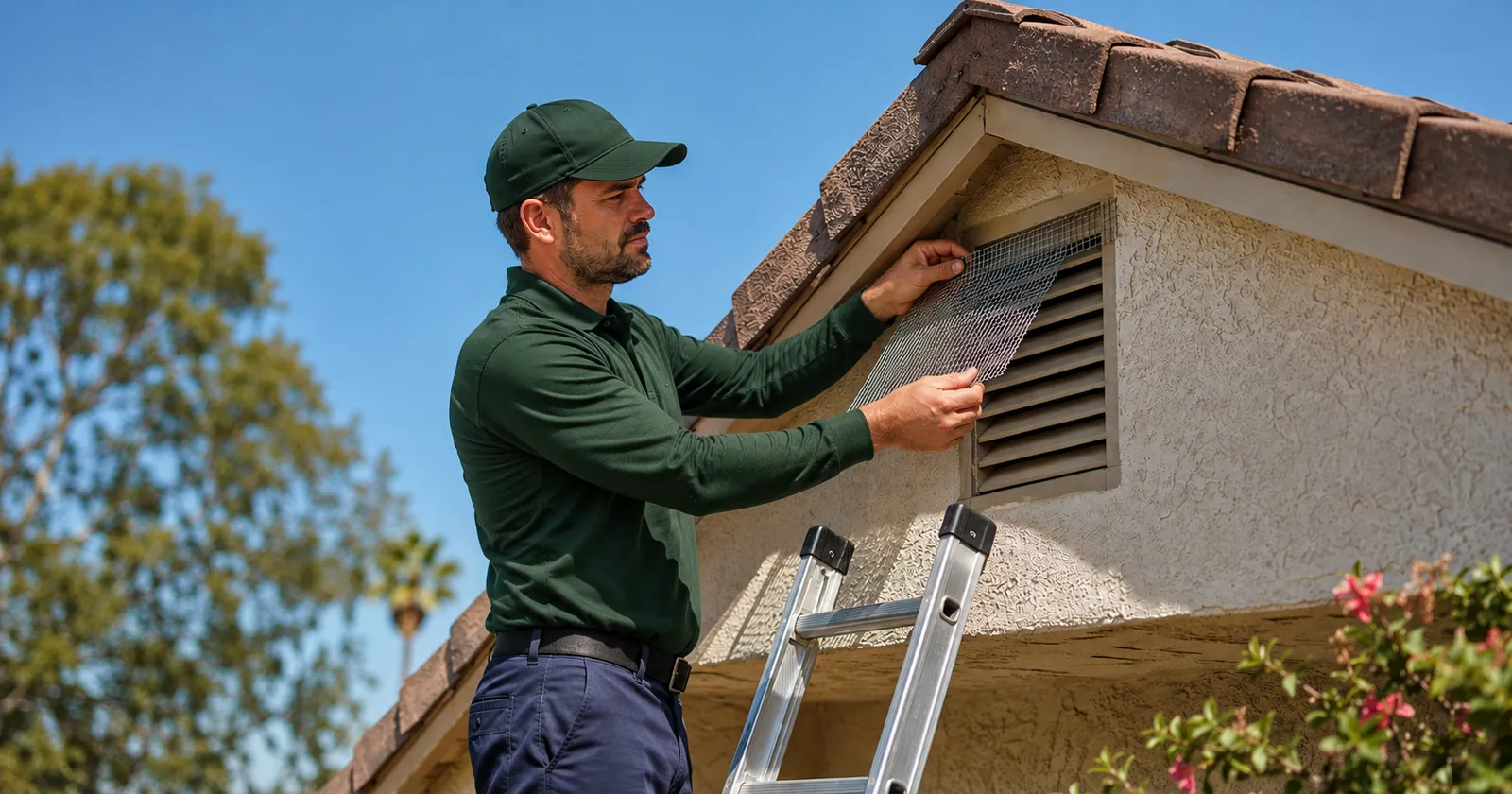
The call comes from unit 14. There are cockroaches in the kitchen, it has been going on a while, and the resident is not happy. A vendor goes out, treats unit 14, and the complaint stops. Six weeks later the call comes from unit 12, then unit 16. What the board is treating as three incidents is one infestation that has been moving through the shared structure for months, and the reactive arrangement is guaranteeing that it is only ever discovered one unit at a time, always late.
Should an HOA pay for monthly pest control or just call when there is a problem?
For any building with shared walls, shared utilities, or common areas, a scheduled program is the better economic decision — not because problems are more frequent, but because reactive service always starts late. A resident complaint is a lagging indicator: German cockroaches, bed bugs, and rodents spread through wall voids, plumbing chases, and shared attics well before anyone in any single unit notices enough to call. That means a reactive arrangement pays for repeated single-unit treatments on a problem that is already building-wide, and does it without any record the board can point to later. A monthly program converts an unpredictable series of escalating emergencies into a fixed line item, and gives the board documented evidence of due diligence.
The Short Version
- A resident complaint is a lagging indicator. In a shared-wall building, the problem has usually been spreading for weeks or months before the first call.
- German cockroaches, bed bugs, and rodents all move between units through wall voids, plumbing chases, shared attics, and common walkways.
- Single-unit treatment on a building-wide problem is the most expensive way to buy pest control — you pay repeatedly and never get ahead of it.
- Boards have a due-diligence exposure that individual homeowners do not, and documentation of a scheduled program is what answers it.
- A scheduled program turns an unpredictable series of emergency spends into a fixed, budgetable line item.
- The right cost comparison is not monthly service versus zero. It is monthly service versus one bad building-wide infestation.
Shared Walls Change the Math
A single-family home is a closed box. Whatever gets in came from outside, and a treatment at the perimeter plus the interior addresses it. A multi-unit building is not a closed box — it is a connected system, and pests use the connections.
The routes are the same in nearly every property we walk:
Wall voids and plumbing chases
Stacked kitchens and bathrooms share vertical chases, and the penetrations where supply and waste lines pass through are rarely sealed tightly. German cockroaches use these as a highway between units and between floors.
Shared attics and subareas
A continuous attic over multiple units, or a shared crawl space, means a rodent problem in one section is a rodent problem across the run. Roof rats in particular travel the full length.
Common walkways and shared entries
Exterior corridors, shared laundry, trash enclosures, and mail areas are where activity concentrates and where it gets transferred between units on people and belongings.
Trash enclosures and dumpster areas
Usually the single highest-pressure point on any multi-unit property, and usually the one nobody has walked recently.
Landscaping against the structure
Common-area planting that touches the building gives ants, rodents, and roaches a bridge over any perimeter treatment.
The consequence is that a treatment confined to one unit is treating a symptom in a system. Push German cockroaches out of unit 14 and a meaningful share of them relocate rather than die — often into 12 and 16. The board then pays for three visits to solve a problem that one coordinated pass would have handled, and the residents in 12 and 16 now have a complaint of their own.
A Resident Complaint Is a Lagging Indicator
This is the part that makes reactive service structurally expensive, and it is worth being specific about the three pests that drive most community calls.
German cockroaches live in tight harborage — inside appliance motor compartments, behind cabinet toe-kicks, in the gaps around plumbing penetrations. When a resident sees one in daylight, that generally means the harborage areas are already crowded. Daytime sightings are a late-stage symptom, not an early one. By then the population has had months to establish and to work outward along the chases.
Bed bugs are worse on this axis. The interval between introduction and the point where someone is reacting enough to report it is often weeks, and in the meantime the unit's occupants are moving through common areas, shared laundry, and sometimes other units. A bed bug report in one unit in a shared-wall building is a reason to look at the adjacent units immediately, not a reason to treat one unit and close the ticket.
Rodents are the quietest of the three. Activity in an attic run or a subarea can continue indefinitely without a single resident hearing anything, and the first report is frequently not a sighting at all — it is a smell, or a chewed line, or a unit with an unexplained problem. By the time it surfaces, there is usually damage to go with it.
The cost comparison boards actually make is the wrong one
The instinct is to compare a monthly program against zero, which makes the program look like a pure add. The honest comparison is a monthly program against the realistic cost of one building-wide problem: repeated single-unit treatments over months, an eventual coordinated treatment across multiple units anyway, any repair or replacement that comes with it, the management time absorbed along the way, and the resident relations cost of a problem that visibly went unaddressed for a season. A recurring program is the cheaper of the two in most buildings, and it is the only one you can put in a budget.
Due Diligence Is a Board Concern, Not Just a Pest Concern
Beyond the economics, there is an accountability dimension to this that individual homeowners simply do not have.
California law sets habitability expectations for residential rental property that include keeping buildings free of vermin, and while the specific obligations vary by the type of property and the relationship between the association, owners, and tenants, the practical point holds regardless: when a resident asks what the association has done about a pest problem, the answer needs to be something other than a recollection. Boards turn over. Management companies change. The institutional memory of who called whom and when tends not to survive either.
A scheduled program answers that question structurally. There is a service history, there is a record of what was found and when, and there is a documented pattern of the association acting rather than reacting. That is worth having on file before anyone asks for it — which is, inevitably, the point at which it becomes difficult to assemble.
This is also the argument that tends to land with boards that are otherwise cost-focused. A monthly line item is not only cheaper than the alternative; it is the version of the arrangement that produces evidence.
What a Scheduled Program Involves
Programs are built around the property rather than sold as a fixed package — a garden-style complex with individual entries, a mid-rise with interior corridors, and a townhome community with private yards have genuinely different pressure points, and what a visit covers follows from that. Broadly, a recurring community program is doing four things.
Perimeter and common-area treatment
The exterior envelope and the shared spaces where pressure concentrates — trash enclosures, laundry and utility rooms, mail and mechanical areas — treated on a consistent cadence rather than after a complaint.
Monitoring, so problems surface early
Placed monitoring in the areas that tell you first. This is the piece reactive service structurally cannot provide, and it is where most of the value sits: finding a German cockroach population while it is in one unit rather than three.
Documentation for the board
Consolidated service records and treatment documentation the board or management company can review — the file that answers the due-diligence question later.
Response between visits
When a resident reports activity in an area covered by the program, that gets handled between scheduled visits rather than waiting for the next one.
One practical note on structure, because it is the question that comes up first in most board meetings: the common-areas-versus-interiors split is negotiable. An association can carry a consolidated arrangement covering common areas and interior treatment together, or contract for exterior and common-area work only, with interior treatment arranged separately with residents. Both are workable. Which one fits depends on the property's governing documents and how the board wants to handle the owner-versus-association cost line — that is a board decision rather than a vendor decision, and it is worth settling before comparing proposals.
What to Ask Before Signing Anything
If the board is comparing proposals, price per month is the least informative number in the packet. These questions separate the options.
What does the program cover, and what is billed separately?
Termite work and bed bug treatment are commonly quoted separately from a general pest program. Better to know that at signing than at the first bed bug report.
What documentation will the board receive, and how often?
Ask to see an example. If a vendor cannot show you what their reporting looks like, that is the answer.
How do you handle a problem that crosses units?
Listen for whether they treat adjacent units as a matter of course on shared-wall findings, or whether each unit is a separate ticket. This single answer predicts most of your future costs.
What happens between scheduled visits?
Confirm the response arrangement for resident reports, and confirm it in the contract rather than the sales conversation.
Are you sealing entry points or only treating?
Exclusion work is what stops the same problem recurring. A program that only ever applies product is buying you a subscription rather than a solution.
Who is our point of contact?
For a multi-property portfolio or a large association, a single point of contact and consistent scheduling matter more than they sound like they should.
Reviewing your community's pest contract?
Xtermicon contracts with HOAs, condo and community associations, property managers, and multi-unit buildings across Los Angeles County and Orange County — including schools and religious institutions — with one point of contact and service documented for your board. If your association is comparing proposals or rethinking a reactive arrangement, call (310) 370-0963 to arrange a walkthrough and a proposal for your property.
HOA Pest Control FAQs
What boards and property managers ask when they are weighing a scheduled program against calling as needed.
How often should an HOA schedule pest service?
Monthly is the standard for multi-unit properties with shared walls, common areas, and trash enclosures, because those are continuous pressure points rather than seasonal ones. Some lower-density communities — detached townhomes with private yards and no shared structure — work fine on a bi-monthly or quarterly cadence with common areas covered more often. The determining factors are how much shared structure exists, how much common landscaping touches buildings, and the property's history. A walkthrough answers it better than a rule of thumb.
Is monthly service actually cheaper than calling when we have a problem?
In most multi-unit properties, yes, though the saving shows up over a year rather than in any single month. Reactive service looks cheaper because you only see the invoices you receive. What it does not price in is that each reactive call arrives late, treats one unit of a building-wide problem, and is usually followed by more calls from adjacent units. A scheduled program is a predictable line item you can budget, and its real value is catching things while they are still confined to one place.
Who pays — the association or the individual owner?
That is set by your governing documents and the board, not by the vendor, and both structures are common. Some associations carry a consolidated arrangement covering common areas and interior treatment together. Others contract for exterior and common-area work only, with interior treatment arranged separately with residents. Either can be set up. It is worth deciding which structure the board wants before you compare proposals, because it changes what you are comparing.
What if only one unit has the problem?
Then the question worth asking is how confident anyone is that it is only one unit. With German cockroaches, bed bugs, and rodents in a shared-wall building, a single reported unit is frequently the first one to notice rather than the only one affected — they move through wall voids, plumbing chases, and shared attic runs. Treating the reported unit alone can push a portion of the population into the neighbors. Inspecting the adjacent units is the standard response, and it is far cheaper than discovering the answer one complaint at a time.
Do you handle bed bugs and termites under the same contract?
Those are typically quoted separately from a general pest program, and it is worth confirming that with any vendor rather than assuming. Bed bug work involves a different process — inspection to confirm it is not a look-alike, laundering and preparation on the resident's side, and multiple treatment visits. Termite work runs on its own inspection and treatment track entirely. A general program covers the ongoing pressure; those two are handled as distinct scopes.
Do you work with property managers across multiple properties?
Yes, and that is a large share of the community work. Multi-property arrangements are scheduled and routed as a single account with one point of contact, which is the practical reason we cover a wider geographic footprint for associations and management companies than we do for individual residential service — the South Bay, the LA Westside, Central Los Angeles, Long Beach and Lakewood, and Orange County. If you manage a property outside that list, call and we will tell you honestly whether we can service it well.
Related Reading
Community and multi-unit pest control, plus the specific pests that drive most association calls.
- HOA & community pest controlCommunity-wide programs for associations, property managers, and multi-unit buildings.
- Commercial pest controlFor management companies with mixed residential and commercial property.
- German vs. American cockroachesWhy the species matters in a shared-wall building, and which one actually spreads between units.
- How to prevent bed bugs when travelingWorth circulating to residents — most community bed bug introductions are travel-related.
- Fall rodent season in Southern CaliforniaThe seasonal push that moves rodents into shared attics and subareas.
- What pest control costs in Southern CaliforniaHow pricing is actually built, for boards benchmarking a proposal.
Sydney Pardey is the owner of Xtermicon, a family-owned pest control company serving the South Bay and greater Los Angeles area since 2015. All content is written from direct operational experience and reviewed against current California Structural Pest Control Board standards.
Specialists you
can count on.
Xtermicon was founded in 2015 with one focus: protect Southern California homes and businesses from the pests that threaten them. The name says it all — eXterminate TERmites & pest CONtrol — and that's exactly what we do. We're a family-owned team specializing in termite control, pest control, and rodent exclusion. From West LA and East LA to the beach cities and Orange County, we're local neighbors who treat your property like our own.