How to Prevent Bed Bugs When Traveling: A Practical Guide
Most trips end without a single bed bug coming home with you. Here's the simple routine that keeps it that way — and what to do if one slips through.
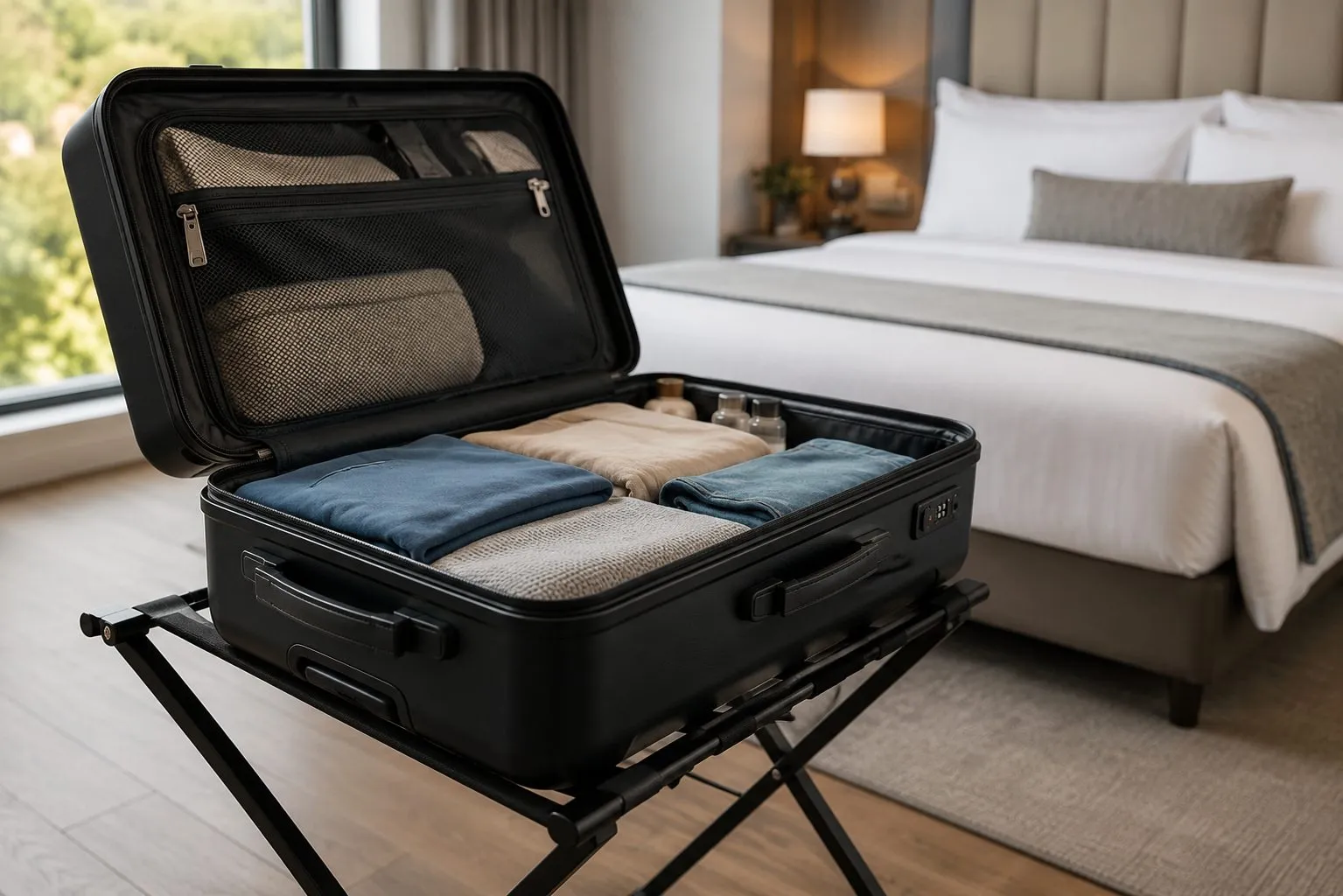
Here's the part nobody tells you about bed bugs: they almost never start in your home. They start in someone else's — a hotel two states away, a vacation rental near the beach, the seat-back pocket on a long flight, a relative's guest room — and then they ride home with you in the folds of your luggage. You don't bring them in because your house is dirty. You bring them in because you traveled, and one of them found a way into your bag. The good news is that the habits that keep that from happening are simple, fast, and genuinely effective once you know them.
How do you prevent bed bugs when traveling?
Inspect the hotel room before you unpack: keep luggage in the bathroom or tub at first, then pull back the sheets and check the mattress seams, box spring, headboard, and the wall behind it with a flashlight. During your stay, keep bags closed and off the floor and bed — use the luggage rack away from the wall, and a hard-sided suitcase if you have one. The highest-leverage step happens at home: unpack in the garage, run every washable item through a hot dryer for 30+ minutes on high heat (which kills bed bugs at all life stages), and store the suitcase away from your bedroom. If you suspect you brought some home, call a professional — bed bugs are notoriously hard to eliminate with DIY products.
The Short Version
- Bed bugs are hitchhikers, not a hygiene problem — they travel in luggage and clothing, and travel is the number one way they enter Southern California homes.
- Los Angeles consistently ranks among the top US metros for bed bug activity, which makes returning travelers a primary spread vector into local homes.
- A two-minute arrival inspection of the mattress seams, box spring, and headboard catches the vast majority of problems before you ever unpack.
- Keeping luggage closed and off the floor and bed during your stay dramatically lowers the odds of anything getting in.
- The post-trip dryer protocol is the single most effective habit: high heat for 30+ minutes kills every life stage, including eggs.
- If bed bugs do make it home, a professional multi-barrier treatment is the reliable path to eradication — DIY rarely finishes the job.
The World's Best Hitchhiker
Bed bugs don't fly and they don't jump. They have exactly one way of getting from place to place: they catch a ride. A bed bug that crawls into the seam of a suitcase in a hotel in another city can be in your bedroom in Redondo Beach by the next night, and you'd never know it happened. That's the whole reason this is a travel article rather than a cleaning article. Eliminating them isn't about how tidy your home is — it's about intercepting them before they unpack with you.
Los Angeles consistently ranks among the worst metro areas in the country for bed bug activity, year after year. That's not a knock on the city — it's a function of population density, constant tourism, and the sheer volume of people moving through hotels, rentals, and airports. For South Bay homeowners, the practical takeaway is simple: the bed bug risk in our region isn't mostly local, it's imported. Every trip you take, and every trip a houseguest takes before visiting you, is a potential introduction point.
About the size of an apple seed — flat, oval, and reddish-brown. Big enough to see if you know where to look.
A single fertilized female can lay hundreds of eggs over her lifetime, which is why a couple of stowaways can become an infestation.
Bed bugs can go a long time between meals, so they survive transit in luggage and storage with ease.
What Bed Bugs Look Like — and the Signs They Leave
You can't inspect for something you can't recognize. Adult bed bugs are about the size and shape of an apple seed — flat, oval, and reddish-brown, turning darker and more swollen after a blood meal. Young bed bugs (nymphs) are smaller and nearly translucent, which makes them harder to spot. The eggs are tiny, pale, and roughly the size of a pinhead. But here's the useful part: you rarely need to find a live bug to know they're present. They leave behind a very specific set of clues.
Rusty or reddish stains on sheets and mattresses.
These are crushed bed bugs or small smears of blood, often along the seams and edges of the mattress where bugs hide closest to where you sleep.
Dark fecal specks.
Tiny black or dark-brown dots, like someone touched a fine felt-tip pen to the fabric. They cluster in seams, along piping, in mattress tags, and where the headboard meets the wall. This is the single most reliable sign.
Shed skins (exoskeletons).
Pale, translucent husks left behind as nymphs grow. Finding them means bed bugs have been molting — and breeding — in that spot.
A sweet, musty odor.
A heavy infestation can produce a faintly sweet, musty smell. Most travelers won't notice this, but it's worth knowing.
Bites in lines or small clusters.
Bed bug bites often appear in a row or a tight group on skin exposed during sleep. Bites alone aren't proof — people react very differently, and some don't react at all — but combined with the other signs, they matter.
Bites are not a reliable test by themselves
People react to bed bug bites wildly differently. One person can wake up with a row of welts while their partner in the same bed shows nothing for weeks. Don't wait for bites to confirm a problem and don't assume you're fine because you don't have any — trust the physical signs on the mattress and headboard instead.
The Two-Minute Hotel Room Inspection
This is the habit that does the most work, and it costs you about two minutes when you walk into a room. The goal is simple: confirm the bed is clean before you commit your luggage to the space. Do this every time, even at nice hotels — bed bugs have nothing to do with star rating or cleanliness, and the most expensive resort in town can have them just as easily as a roadside motel.
Park your luggage in the bathroom first
The bathroom — ideally the tub — is the least likely place in the room to harbor bed bugs because there's no fabric for them to hide in. Set your bags there while you inspect, so that if the room does have a problem, your luggage never touched it.
Pull back the sheets and check the mattress seams
Strip the bedding back at the head of the bed and run your eyes (and a flashlight) along the seams, piping, and folds of the mattress. This is where bed bugs hide closest to their host. Look for live bugs, dark fecal specks, rusty stains, and shed skins.
Check the box spring and bed frame
Lift the mattress edge and inspect the box spring, especially the seams and any fabric underside. Then look along the frame, slats, and screw holes — bed bugs tuck into anything tight and dark.
Inspect the headboard and the wall behind it
Headboards mounted to the wall are a classic hiding spot, and the gap between the headboard and the wall collects fecal specks. If you can, tilt the headboard or shine a light behind it.
Scan the nightstand, luggage rack, and upholstered furniture
Check nightstand seams and drawers, the folding luggage rack's straps and joints, and any upholstered chair or sofa in the room. These are secondary harborage spots, especially in rooms that have had a problem before.
Keep a small flashlight handy
Your phone's flashlight is plenty. Bed bugs and their droppings hide in shadows and tight seams, and a bright, direct light makes the difference between spotting them and walking right past them. It takes the inspection from a guess to a real check.
If you find anything, don't panic and don't try to tough it out. Take a photo, leave the room, and ask the front desk for a new room that is not directly adjacent to (or directly above or below) the original — bed bugs spread between neighboring rooms. Then inspect the new room the same way before settling in.
Habits That Keep Your Luggage Off-Limits
Even in a clean room, a few small choices over the course of your stay keep the odds firmly in your favor. The whole strategy comes down to one idea: give bed bugs as few opportunities as possible to reach your belongings.
Your in-room luggage routine
The Post-Trip Protocol That Actually Stops Them
If you only adopt one habit from this entire guide, make it this one. Almost every bed bug introduction into a home happens at the moment of unpacking — the suitcase comes straight into the bedroom, gets opened on the bed, and anything riding along steps off right where it most wants to be. Reversing that one sequence is the difference between a near-miss and an infestation.
Unpack in the garage or entryway, not the bedroom.
Bring the suitcase in somewhere with hard floors and away from where you sleep. The bedroom is the last place you want to open a bag that just came off a trip.
Run all washable clothing through a hot dryer for 30+ minutes on high heat.
This is the key. Heat kills bed bugs at every life stage, including eggs, and the dryer is more reliable than washing for this purpose. Even clothes you never wore should go through — a quick high-heat cycle is cheap insurance. Items that can't be dried hot can go to a dry cleaner or be sealed in a bag for an extended period.
Inspect, vacuum, and isolate the suitcase.
Look over the empty suitcase carefully, paying attention to seams and zippers, then vacuum it out (and empty the vacuum outside). Wipe down hard-sided cases.
Store luggage away from sleeping areas.
Keep suitcases in the garage, a closet far from the bedrooms, or a sealed storage bin — not under the bed. That way, if anything was missed, it has nowhere useful to go.
Why the dryer beats the washer
It's the sustained high heat that kills bed bugs and their eggs, not the water or detergent. A hot dryer cycle of 30 minutes or more is the proven step. A warm or cold wash on its own can leave eggs intact, which is why we always point travelers to the dryer specifically.
You Think You Brought Them Home — Now What?
Sometimes, despite good habits, one gets through. Maybe you skipped an inspection on a late-night arrival, or a houseguest unknowingly brought them. If you're waking up with bites in lines, finding dark specks along your mattress seams, or seeing the apple-seed-shaped bugs themselves, the most important thing is not to overreact with store-bought sprays — and not to ignore it either.
Here's the honest truth about DIY bed bug control: it almost never finishes the job. Bed bugs hide in dozens of tiny harborage points across a room — behind baseboards, inside electrical outlets, in furniture joints, along the seams of the mattress and box spring. Over-the-counter sprays kill the bugs you can see and miss the eggs and the ones tucked deep in the walls. Worse, aggressive spraying often scatters the population into new areas of the home, turning one infested room into several. People spend months and a lot of money chasing a problem that quietly keeps reproducing.
How Xtermicon handles bed bugs
Eradicating bed bugs reliably means hitting every life stage — adults, nymphs, and eggs — across every place they hide. That's the principle our bed bug treatment is built around.
Thorough inspection first
We confirm it's actually bed bugs (people often mistake other pests or skin reactions for them) and map out where the activity is concentrated, so treatment targets the real harborage points rather than guessing.
A thorough fabric-cleaning checklist, paired with treatment
We provide a thorough list of exactly what you'll need to do to clean your fabrics — bedding, clothing, and other washables — which gets paired with our treatment. Your hot-dryer work handles the fabrics; our treatment handles the harborage points washing can't reach. The two together are what close out an infestation.
A multi-barrier approach targeting all life stages
We use a three-step process, applying different chemicals at different stages so that anything missed in the first pass, or any egg that hatches afterward, doesn't restart the cycle. Bed bugs are eliminated by closing every gap, not by a single quick treatment.
Guidance for prepping and preventing reintroduction
We tell you exactly how to prepare the home for treatment and how to handle laundry, luggage, and travel going forward so the same thing doesn't happen again.
Caught it early? That works in your favor.
A couple of stowaways caught within days of a trip is a far easier and less invasive situation than a population that's had months to spread through a bedroom. If you're even unsure, an inspection costs you nothing but a phone call — and catching it early is exactly the outcome all of these habits are designed to produce. Xtermicon has served the South Bay and greater Los Angeles since 2015. A straight assessment, no scare tactics.
Travel Bed Bug FAQs
The questions South Bay travelers ask us most about keeping bed bugs out of the house.
Can bed bugs really come home in my luggage?
Yes — it's the single most common way bed bugs enter a home. They don't fly or jump; they catch a ride in the seams and folds of luggage, in clothing, and in bags. A bug picked up in a hotel in another city can be in your bedroom by the next night. That's exactly why the arrival inspection and the post-trip dryer routine matter so much: they intercept hitchhikers before they ever settle in.
Does staying at an expensive hotel mean I'm safe from bed bugs?
No. Bed bugs have nothing to do with cleanliness or price — they're spread by the constant flow of travelers, so a luxury resort can have them just as easily as a budget motel. Inspect every room the same way regardless of where you're staying: luggage in the bathroom first, then check the mattress seams, box spring, headboard, and the wall behind it with a flashlight before you unpack.
Will washing my clothes kill bed bugs after a trip?
It's the dryer that does the work, not the wash. Sustained high heat kills bed bugs at every life stage, including eggs, so run all washable clothing through a hot dryer for at least 30 minutes on high heat — even items you never wore. A warm or cold wash alone can leave eggs intact. Anything that can't handle high heat can be dry-cleaned or sealed in a bag for an extended period.
How can I tell if my bites are from bed bugs?
Bed bug bites often appear in a line or a small cluster on skin that was exposed during sleep, but bites alone aren't proof — people react very differently, and some don't react at all. The reliable confirmation is physical evidence: dark fecal specks and rusty stains along the mattress seams and behind the headboard, shed skins, or the apple-seed-shaped bugs themselves. If you find those signs, it's worth a professional inspection.
Why can't I just get rid of bed bugs myself with store-bought spray?
Because bed bugs hide in dozens of tiny spots a spray can't reach — inside furniture joints, behind baseboards, in outlets, deep in mattress and box-spring seams — and over-the-counter products usually miss the eggs entirely. Aggressive spraying can even scatter the population into new rooms, making things worse. Reliable eradication takes a professional approach — a multi-step treatment combining targeted products and follow-up — so every life stage in every hiding spot is addressed.
Related Reading
Go deeper on bed bugs and the services that handle them.
- Our bed bug control serviceA three-step, multi-barrier approach built to eliminate every life stage.
- Bed bugs pest libraryIdentification, behavior, and the hiding spots that make them so hard to find.
- Recurring pest control service plansOngoing protection that keeps the whole house monitored, not just one problem at a time.
- 5 pests that never stop causing problems in Southern CaliforniaA field guide to the pests we treat most across the South Bay and greater LA.
- How long does pest control take to work?Realistic timelines for treatment results, including stubborn pests like bed bugs.
Reference Guides
Undated reference documents on this topic — built to be bookmarked rather than read once.
Sydney Pardey is the owner of Xtermicon, a family-owned pest control company serving the South Bay and greater Los Angeles area since 2015. All content is written from direct operational experience and reviewed against current California Structural Pest Control Board standards.
Specialists you
can count on.
Xtermicon was founded in 2015 with one focus: protect Southern California homes and businesses from the pests that threaten them. The name says it all — eXterminate TERmites & pest CONtrol — and that's exactly what we do. We're a family-owned team specializing in termite control, pest control, and rodent exclusion. From West LA and East LA to the beach cities and Orange County, we're local neighbors who treat your property like our own.