Fall Rodent Season in Southern California — Why Rats and Mice Come Indoors as It Cools
Every autumn, rodent calls spike across the South Bay and LA. It isn't random — it's a seasonal shift you can get ahead of. Here's what drives it and how to keep them out before they move in.
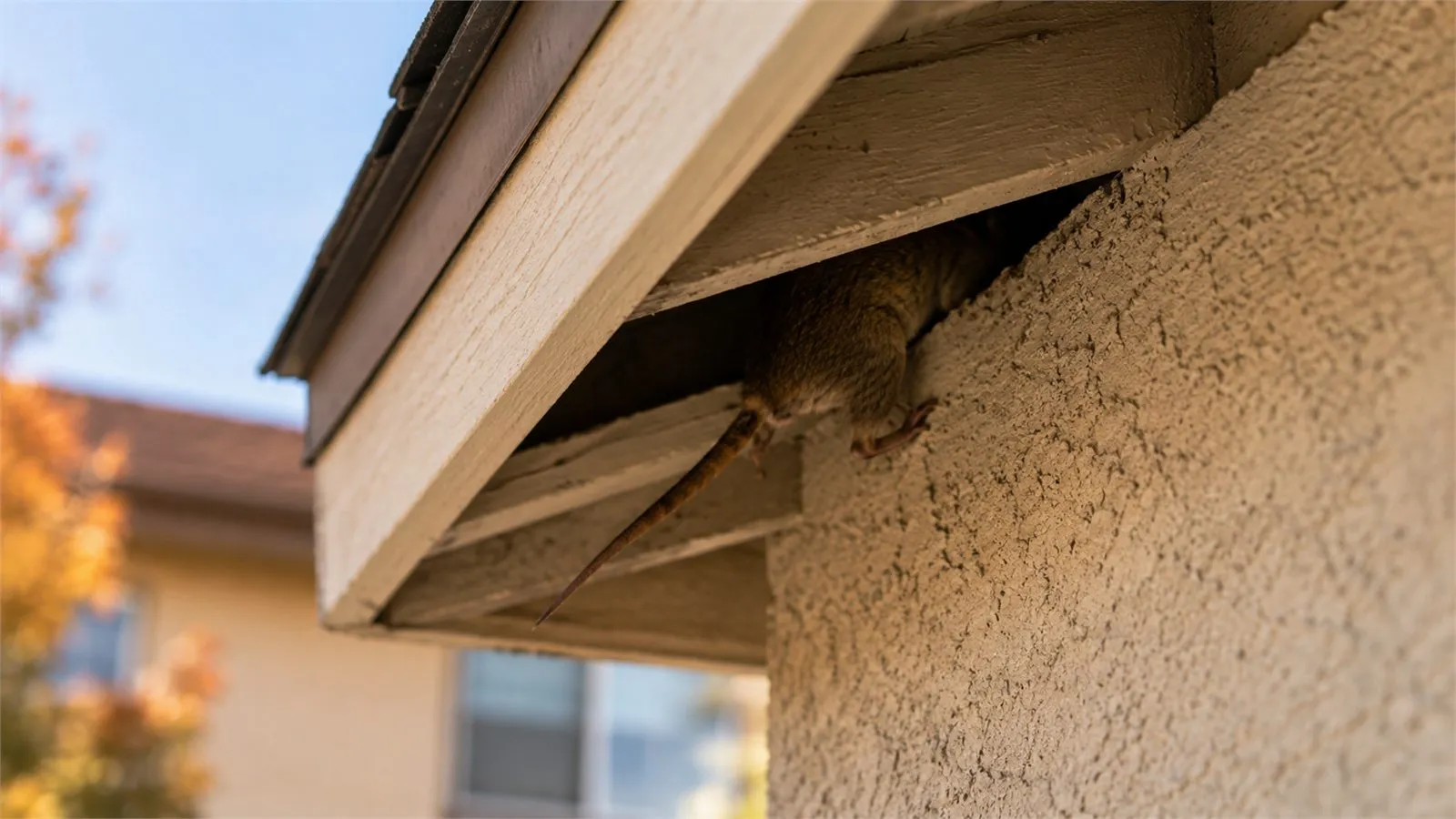
It usually starts with a sound. Somewhere around the first genuinely cool nights of fall, a homeowner is lying in bed and hears it — a scratching, scurrying, rolling sound in the ceiling or the wall. Then it's droppings behind the pantry, or a chewed bag of dog food in the garage. And every year, right on schedule, our phone starts ringing more. Fall is rodent season in Southern California, and the timing is no accident.
Rats and mice don't decide to invade your home at random. They're responding to a seasonal squeeze that happens every year as summer ends: the weather cools, the easy outdoor food disappears, and a summer's worth of breeding has left more rodents than the outdoors comfortably supports. All of that pressure pushes them toward the warmest, most reliable food source in the neighborhood — the houses. The good news is that because it's predictable, it's also preventable, if you get ahead of it.
Why do rats and mice come inside in the fall?
As temperatures drop and the abundant outdoor food and water of summer dries up, rodents seek warm shelter and a reliable food supply — and a heated home with a pantry, garage, and attic is the best option around. Fall also follows the summer breeding boom, so rodent populations peak just as the cooling weather pushes them to find harborage indoors. In Southern California the most common home invader is the roof rat, a skilled climber that gets into attics along the roofline and overhanging branches, along with house mice and ground-dwelling Norway rats. The critical window is early fall, before they establish and breed inside. The durable fix is exclusion — sealing the entry points — not just trapping the ones already in.
The Short Version
- Fall rodent pressure is seasonal and predictable: cooling temperatures plus vanishing outdoor food plus a summer breeding peak all push rodents indoors.
- The roof rat is SoCal's most common home invader — a climber that enters attics along the roofline, utility lines, and overhanging branches.
- A mouse fits through a gap the width of a pencil (about a quarter inch); a rat needs only about a half inch.
- Trapping alone is an endless loop — without sealing entry points, new rodents just replace the ones you catch.
- Early fall is the window: seal and monitor before they get in and start breeding, not after.
- Professionals avoid interior poison for a reason — it risks pets, children, and wildlife, and leaves dead rodents in walls.
What Actually Drives the Fall Rodent Surge
Three forces line up at the same time every autumn, and together they turn a manageable outdoor rodent population into an indoor problem.
First, temperature. Rodents don't hibernate — they stay active all winter, which means they need warmth to survive the cooler months. Your home is a reliable source of heat, and once nights start dropping into the cool range, the warm cavity of an attic or wall void becomes far more attractive than a woodpile or a burrow. Second, food. Summer offers rodents an outdoor buffet — fruit, seeds, insects, garden produce, garbage. As fall sets in, a lot of that dries up or gets harvested, and the search for a steady food supply leads straight to pantries, garages, and pet-food bins. Third, population. Rodents breed prolifically through the warm months, so by early fall the population is at its yearly peak, and the competition for shelter and food is at its highest — pushing more of them to take the risk of moving indoors.
A house mouse can squeeze through a gap about the width of a pencil. If a pencil fits, a mouse can follow.
A rat needs only a gap about a half inch — roughly the width of a thumb. They gnaw small openings into big ones.
Sealing and monitoring before the cool-weather push — rather than after rodents are established and breeding inside — is far easier and cheaper.
The SoCal Cast: Who's Trying to Get In
Three rodents account for nearly all of the fall calls across the South Bay and greater LA, and they don't behave the same way — which changes where you look and how you keep them out.
Roof rats — the climbers.
By far the most common home-invading rat in coastal and suburban SoCal. Roof rats are agile climbers that travel along fences, utility lines, and tree branches to reach the roofline, then enter attics through gaps at the eaves, vents, and roof junctions. They love the fruit trees — citrus, avocado — that are everywhere here. If your noise is up high, in the ceiling or attic, it's almost certainly roof rats.
Norway rats — the burrowers.
Larger and stockier, Norway rats stay low. They burrow in the ground, along foundations, and under sheds and slabs, and they get in at ground level — crawlspaces, garage gaps, foundation openings, and around utility penetrations. Noise or activity low in the structure, in a garage or crawlspace, points to Norway rats.
House mice — the opportunists.
Small, curious, and content with very little, house mice need almost no opening to get in and very little food to stay. They're often the first to show up and the easiest to underestimate, and a single pair becomes a real problem fast in a warm house with an accessible pantry.
The Entry Points to Check Before Fall
Rodents don't need a door left open — they exploit the gaps a house naturally develops. These are the openings we find most often, and the ones worth checking now.
The roofline: eaves, fascia, and roof junctions
Gaps where the roof meets the walls, at the eaves, and where rooflines join are the classic roof-rat entry. So are gaps at the ends of the barrel tile common on SoCal roofs.
Attic and gable vents
Unscreened or damaged attic, gable, and dormer vents are open invitations. Rodents also chew through weak screening.
Overhanging branches and utility lines
Any branch within a few feet of the roof is a bridge, and rodents walk utility lines like tightropes straight to the structure.
Utility penetrations
The gaps where pipes, electrical conduit, gas lines, and AC refrigerant lines enter the house are one of the most common and most overlooked entry points.
Garage door corners and weatherstripping
The corners of a garage door and worn bottom weatherstripping leave gaps rodents slip through — and the garage is often where pet food and trash are stored.
Foundation and crawlspace vents; dryer vents
Ground-level foundation gaps, damaged crawlspace vent screens, and dryer vents with broken flaps all give ground-dwelling rodents a way in.
How to Tell Rodents Have Already Moved In
Sounds at night
Scratching, scurrying, gnawing, or a rolling sound (rats caching fruit or nuts) in the ceiling, walls, or attic — most noticeable after dark when the house is quiet.
Droppings and grease marks
Dark, spindle-shaped droppings along walls, in cabinets, in the garage, or in the attic; and dark greasy rub marks along the routes they travel repeatedly.
Gnaw damage
Chewed food packaging, gnawed wood and wire, and shredded material used for nesting. Chewed electrical wiring is both a sign and a genuine fire hazard.
Pet behavior and odor
A dog or cat suddenly fixated on a wall, appliance, or the ceiling, and a lingering musky urine odor in an enclosed space, both point to activity you can't yet see.
Your Fall Rodent-Proofing Checklist
How Professional Rodent Control Actually Works
Effective rodent control follows a specific order, and skipping steps is why so many DIY efforts turn into a recurring battle.
Inspection to find every entry point
We inspect the roofline, attic, subarea, garage, and exterior to find how they're getting in and where they're active. Finding the openings is the part DIY efforts almost always miss — and the part everything else depends on.
Exclusion — sealing them out
We seal the entry points with rodent-proof materials. This is the durable fix: it's what actually keeps rodents out over time, rather than just removing the ones currently inside.
Trapping out the interior population
We remove the rodents already inside with traps — not interior poison. Trapping is cleaner, avoids poisoned rodents dying and rotting inside walls, and removes the risk of secondary poisoning to pets, children, and wildlife.
Cleanup and follow-up verification
We address contaminated insulation and nesting where needed, then verify the work — traps stay in place until activity stops, confirming the structure is sealed and clear.
Ongoing exterior monitoring
Because pressure rebuilds — especially through fall and winter — recurring exterior monitoring catches new activity before it becomes another indoor problem.
Why trapping without sealing never ends
The most common reason a rodent problem "won't go away" is trapping without exclusion. If the entry points are still open, every rodent you catch is simply replaced by another from outside — you're not solving the problem, you're running a bait station. Sealing without removing the interior population has the opposite flaw: you trap rodents inside. Both steps, in the right order — seal, then remove — is what actually works. And it's why we don't use interior rodenticide: a poisoned rat dies in a wall void, and the risk to a curious dog or a child isn't worth it.
Hearing something in the ceiling this fall?
Xtermicon has been sealing rodents out of South Bay and greater Los Angeles homes since 2015. Fall is when we get the most rodent calls, and getting ahead of it — before they establish and breed indoors — is far easier than clearing an entrenched population in January. If you're hearing activity or finding droppings, we'll inspect, find the entry points, and give you a straight plan.
Fall Rodent Season FAQs
Common questions from Southern California homeowners about the autumn rodent surge.
Why do I suddenly hear scratching in my attic in the fall?
Because fall is when rodents — most likely roof rats in a SoCal attic — move indoors for warmth as nights cool and outdoor food dries up, and it follows the summer breeding peak, so there are more of them looking for shelter. Attic noise (scratching, scurrying, or a rolling sound) at night is the classic sign of roof rats, which climb the roofline and enter through gaps at the eaves and vents. It rarely resolves on its own, and it tends to get worse as the weather cools further, so early fall is the time to address it.
What's the difference between having rats versus mice?
Location and scale are the big tells. Roof rats are up high — attics, ceilings, the roofline — and they're the most common in coastal and suburban SoCal. Norway rats stay low — garages, crawlspaces, foundations, and burrows in the yard. House mice are small, get in through tiny gaps, and often show up in kitchens and pantries. Mice need a smaller opening and less food, so they can establish almost anywhere; rats do more structural and wiring damage. Correct identification changes where you look for entry points and how you treat, which is a core part of a professional inspection.
Can't I just put out poison or snap traps myself?
You can trap, and snap traps used correctly are effective for the rodents already inside — but trapping without sealing the entry points is an endless loop, because new rodents keep replacing the ones you catch. We strongly advise against interior poison: poisoned rodents die inside walls and ceilings (creating an odor problem that's hard to locate), and rodenticide is a serious secondary-poisoning risk to pets, children, and the hawks and owls that eat rodents. The lasting fix is finding and sealing the entry points, then removing the interior population by trapping.
How do rats get onto my roof in the first place?
Roof rats are excellent climbers. They travel along fences, walk utility and cable lines like tightropes, and use overhanging tree branches as bridges to reach the roof — and they can climb rough exterior surfaces like stucco directly. Once on the roof, they exploit gaps at the eaves, roofline junctions, vents, and the open ends of barrel tile. Trimming branches back at least three feet from the roof and screening vents removes their two favorite routes.
How do I keep rodents out for good?
Exclusion plus maintenance. The durable fix is sealing every entry point with rodent-proof materials — steel wool, hardware cloth, and metal flashing rather than foam or caulk — combined with cutting off the things that draw rodents in: overhanging branches, accessible pet food and trash, fallen fruit, clutter, and water sources. Because pressure rebuilds seasonally, ongoing exterior monitoring catches new activity early. A one-time cleanout without sealing and maintenance won't hold; the combination does.
Related Reading
Go deeper on the rodents behind the fall surge and how professional control handles them.
- Rats in the attic — signs you have them and what to doThe attic-specific guide to identifying and handling a roof-rat problem.
- Why are there rats in Southern California suddenly?The regional trends behind SoCal's growing rat population.
- Roof rat exterminator — what to expectWhat professional roof-rat control actually involves, step by step.
- Landscaping habits that invite pestsHow branches, fruit trees, and clutter create the highways rodents use to reach your home.
- Our rodent control serviceInspection, exclusion, and removal built around sealing rodents out for good.
- Roof rats pest libraryBiology, behavior, and why roof rats dominate SoCal attics.
Sydney Pardey is the owner of Xtermicon, a family-owned pest control company serving the South Bay and greater Los Angeles area since 2015. All content is written from direct operational experience and reviewed against current California Structural Pest Control Board standards.
Specialists you
can count on.
Xtermicon was founded in 2015 with one focus: protect Southern California homes and businesses from the pests that threaten them. The name says it all — eXterminate TERmites & pest CONtrol — and that's exactly what we do. We're a family-owned team specializing in termite control, pest control, and rodent exclusion. From West LA and East LA to the beach cities and Orange County, we're local neighbors who treat your property like our own.