German Cockroaches vs. American Cockroaches — Which Do I Have, and Why It Matters
The two most common cockroach species in Southern California look similar at a glance but require completely different treatment approaches. Misidentifying them is one of the most common reasons cockroach control fails.
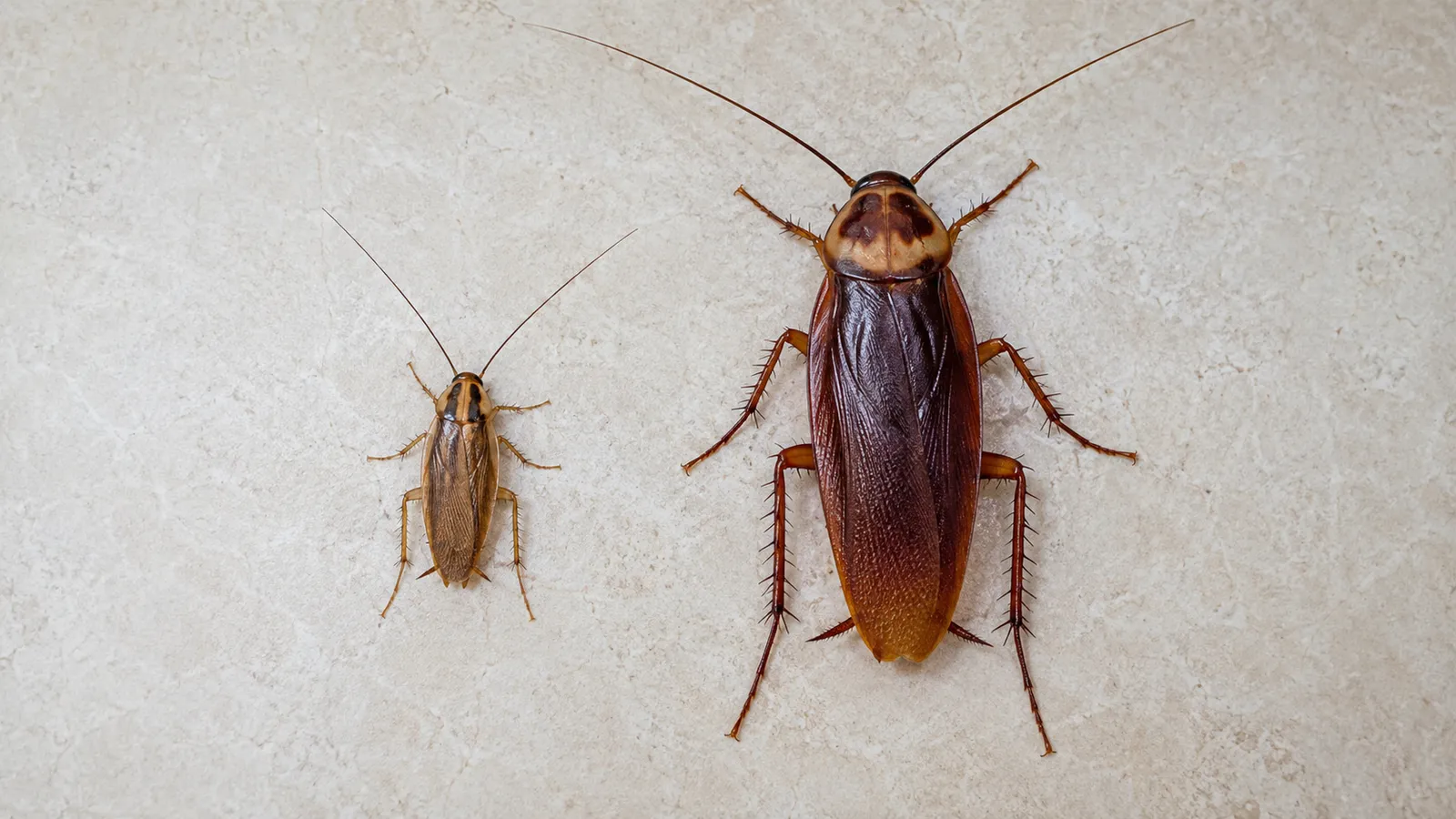
You see a cockroach in your kitchen. You don't really care what species it is — you just want it gone. Understandable. But in Southern California, "cockroach" can mean several different pests — each with different biology, different preferred locations in your home, and different treatment protocols. The two species most Southern California homeowners encounter are the German cockroach and the American cockroach, and a treatment that controls one often does nothing for the other. The single most common reason cockroach control fails is that the wrong approach was applied to the wrong species from the start.
Knowing which one you have doesn't mean you treat it yourself — it means you can give a pest control professional accurate information, understand why they're recommending a specific approach, and recognize whether the service you received was actually designed for what's in your home.
What's the difference between German and American cockroaches, and which one is in my house?
German cockroaches are small (½–⅝ inch), light brown with two dark stripes behind the head, and live indoors — typically in kitchens and bathrooms, behind appliances and inside wall voids. American cockroaches are large (1½–2 inches), reddish-brown, and live outdoors or in plumbing — usually entering homes through drains, sewer lines, or under doors. If you're seeing small light-brown roaches on counters or behind your fridge, you almost certainly have German cockroaches — a harder, more involved problem that requires professional treatment. If you're seeing one or two large reddish-brown roaches near the bathroom or garage, you have American cockroaches entering from outside, which is a different problem with a different fix.
The Short Version
- Southern California homes encounter several cockroach species, but German and American cockroaches are by far the most common.
- German cockroaches are small, indoor-breeding, and the harder problem to solve — they require professional gel bait treatment in harborage zones.
- American cockroaches are large, mostly outdoor-living, and usually individual intruders entering through plumbing rather than an infestation.
- Foggers and broadcast sprays fail against German cockroaches and do nothing to address the entry route for American cockroaches.
- Identifying the species is the first step to understanding why a professional is recommending a specific treatment.
More Than Two Species — But Two That Matter Most
Southern California is home to several cockroach species. The German cockroach and the American cockroach are the two most commonly encountered in residential settings, but homeowners occasionally encounter others worth knowing about.
Oriental cockroaches
Sometimes called "water bugs" — dark brown to black, about an inch long, and favor damp areas like crawl spaces, drains, and low-level plumbing. Their behavior is closer to American cockroaches than German, and they're treated similarly.
Turkestan cockroaches
An invasive outdoor species — sold in the pet trade as the "red runner" — that has spread across the LA basin since the early 2000s and is now replacing the Oriental cockroach in local yards. Its dark females are routinely mistaken for Oriental cockroaches and its slender, flying males for American cockroaches.
Smoky brown cockroaches
Large, uniformly dark brown, and strongly attracted to light — more common in foothill communities and areas with mature tree canopy. They're an outdoor species that occasionally enters homes.
Brown-banded cockroaches
Small like German cockroaches but with different harborage preferences — they favor drier, higher locations like upper cabinets, behind picture frames, and inside electronics rather than the warm, moist zones German cockroaches prefer.
All of these are worth identifying correctly if you encounter them — because treatment approach follows the species. The focus of this article is the two you're most likely to deal with, but if what you're seeing doesn't match either description, that's useful information to bring to a professional.
How to Tell German from American
The fastest way to tell the species apart is by size and color. Almost everything else follows from those two things.
German cockroach (Blattella germanica) is small — about half an inch as an adult, light tan to medium brown, with two distinctive dark parallel stripes running lengthwise behind the head. They're fast runners but rarely fly, and they prefer to stay close to walls and corners rather than crossing open spaces. You'll see them at night in kitchens — on countertops, behind toasters, under the lip of the sink, around the dishwasher.
American cockroach (Periplaneta americana) is large — typically 1½ to 2 inches as an adult, sometimes longer — and reddish-brown to dark mahogany in color, with a pale yellowish figure-eight pattern on the back of the head. They can fly clumsily in warm weather, and they're often spotted in bathrooms, garages, or coming out from under appliances after a plumbing issue.
If a cockroach is small enough to be ambiguous, look at the head: German cockroaches have two clear vertical stripes; Americans have the figure-eight pattern. If a cockroach is over an inch long, it's not German — German cockroaches don't get that large.
What Each Species Actually Is
German cockroaches are an indoor pest. Period. They don't survive long outdoors in Southern California's dry climate — they need consistent warmth, moisture, and food, which means kitchens and bathrooms. They're remarkable breeders: a single female produces an egg case containing 30 to 40 eggs roughly every six weeks, and she carries the egg case attached to her body until it's ready to hatch. In warm SoCal kitchens above 85°F, a German cockroach can develop from egg to reproducing adult in as little as six weeks — meaning a small population in May can become a serious infestation by August if untreated.
Their entire life is structured around tight harborage. A German cockroach prefers to be touching surfaces on multiple sides — the back, the belly, and one side or the top. That means they live in cracks, gaps behind cabinet toe-kicks, inside the motor compartments of dishwashers and refrigerators, behind wall outlets, under stove burners, and in the rubber gaskets of refrigerator doors. When you see one on a counter at night, you're seeing a forager — there are typically dozens to hundreds more in the surrounding harborage zones that you haven't seen.
American cockroaches are different. They're primarily outdoor insects — they live in storm drains, sewer systems, leaf litter, palm tree crowns, and crawl spaces. When you find one in your home, it's almost always an individual that came in from outside through a drain, an unsealed sewer cleanout, a gap under a door, or a plumbing penetration. They don't breed indoors in the same way German cockroaches do; a self-sustaining American cockroach population inside the structure is unusual unless there's a significant plumbing issue or persistently damp space supporting them.
This is why the experience of the two species feels different. German cockroaches are infestations — you see them consistently, they multiply, they get worse over time. American cockroaches are typically incidents — you see one occasionally, often in the same general location.
Light tan/brown with two dark stripes. Indoor-only. Breeds prolifically in kitchens and bathrooms.
Reddish-brown with figure-eight marking. Lives outdoors and in plumbing. Enters through drains and gaps.
In warm SoCal kitchens above 85°F, egg to reproducing adult in as little as six weeks.
Not uncommon in SoCal homes to have German cockroaches in the kitchen and American cockroaches near drains simultaneously.
Why Misidentification Causes Treatment Failure
The treatment for German cockroaches is fundamentally different from the treatment for American cockroaches — and applying the wrong approach wastes time and money while the problem continues.
The problem with German cockroaches: foggers and broadcast sprays are the most common over-the-counter response — but they don't reach the harborage zones where the population actually lives. The cockroaches in wall voids, motor compartments, and cabinet cavities never contact the product. They wait it out, emerge within a day or two, and continue to breed. Meanwhile the fogger has deposited product across kitchen surfaces where food is prepared. Repellent sprays make things worse — they push German cockroaches deeper into the structure where they're harder to reach, and the population continues growing in the new locations.
This is why German cockroach control requires professional gel bait application in the actual harborage zones — inside cabinet hinges, behind appliances, near plumbing penetrations, in crack-and-crevice locations. The bait is taken by foragers who carry it back to the colony and share it with other workers and queens through trophallaxis. This is the only approach that reaches the reproductive core of the population. It requires knowing exactly where to place the bait, which harborage zones to target, and what formulation works for the specific infestation — work that a professional does by inspecting the structure before treating.
The problem with American cockroaches: the most common misapplication is treating the interior — spraying baseboards, setting traps along kitchen walls — without addressing the actual entry point, which is almost always a drain, a sewer cleanout, or a gap in plumbing that's giving cockroaches direct access from outside. Interior treatment produces no lasting results if the entry route is still open. A professional identifies where the cockroaches are coming from and addresses that specifically, rather than treating the visible cockroach as if it lived in the kitchen.
The species determines the treatment
A technician who identifies the species before applying product is doing real pest control. One who sprays the same thing regardless of what's there is guessing. The difference in outcomes is significant — and it's the first question worth asking when you call.
Why German Cockroaches Are the Bigger Health Concern
If you have to pick which species to worry about more, it's German cockroaches — by a significant margin. American cockroaches carry the same general bacterial load as any insect that travels through drains and sewers, but the encounter rate is low in a typical home and the presence is usually limited to the occasional individual.
German cockroaches are a different category of problem. Their shed skins and droppings become airborne particulate matter that accumulates in kitchens and adjacent rooms. Cockroach allergens are one of the most extensively documented indoor asthma triggers — particularly in childhood asthma development, where early exposure significantly raises the risk of developing chronic asthma. In urban Los Angeles, German cockroach allergens are a public health concern that affects tens of thousands of children.
The other concern is that German cockroach populations grow quickly. A small problem at the visible scale — one or two roaches a week — often represents a much larger population in harborage. By the time most homeowners call for service, the population behind the appliances and inside the wall voids is typically much larger than the visible activity suggests. Calling sooner rather than later is the single most impactful decision.
What to Tell Xtermicon When You Call
The most useful information you can give a pest control professional when you call about cockroaches:
Size and color
Small and light brown, or large and reddish-brown? This is usually enough to identify the species before we arrive.
Where you're seeing them
Kitchen, bathroom, garage, near a specific appliance or drain? Location is the second-most reliable species indicator after size.
How often
One or two occasionally, or multiple sightings per week? Frequency tells us how established the population likely is.
Time of day
Are they appearing at night, or also during the day? Daytime sightings of German cockroaches specifically indicate an overcrowded harborage population.
Any recent changes
Moved in recently, had plumbing work, brought in a used appliance? These are common introduction routes that help us narrow the source quickly.
This information allows the technician to arrive with the right product for the right species, inspect the right areas, and apply treatment precisely where the population actually lives — rather than making a guess based on a general description.
Seeing cockroaches and not sure what you're dealing with?
Xtermicon has been treating cockroach infestations across the South Bay and greater Los Angeles since 2015. Whether it's a German cockroach population behind your appliances or an American cockroach coming up from a drain, we identify the species first and apply the approach that actually works for it. If you've already had service elsewhere without resolution, that's usually a species misidentification or the wrong treatment method — and it's something we can diagnose quickly. Give us a call.
German vs. American Cockroach FAQs
Common questions from Southern California homeowners about cockroach identification and treatment.
How can I tell if I have German cockroaches or just a few American ones that wandered in?
Frequency and location are the best indicators. German cockroaches produce frequent sightings in kitchens, often multiple at a time, with small dark droppings (resembling ground pepper) accumulating in corners and around appliances. American cockroaches typically appear individually, mostly in bathrooms, garages, or near drains, with longer gaps between sightings. If you're seeing several roaches a week — especially small light-brown ones in the kitchen — you almost certainly have a German cockroach infestation that warrants professional treatment promptly.
Can foggers (bug bombs) get rid of German cockroaches?
No — and they often make the situation worse. Foggers release an aerosolized product that fills the open air of a room but doesn't penetrate the harborage spaces where German cockroaches actually live. The roaches in wall voids, inside appliance motor compartments, and behind toe-kicks never contact the product. They resume normal activity within a day or two. The right approach is professional gel bait placed directly in harborage zones — work that requires knowing where the population lives inside the structure.
Why do I have American cockroaches in my bathroom?
Almost certainly because of a drain or plumbing pathway. American cockroaches travel through sewer lines and emerge through any drain with a dried-out or missing trap, sewer cleanouts with damaged caps, plumbing penetrations through walls and floors with unsealed gaps, and gaps under exterior doors. A professional identifies which entry point they're using and addresses it specifically — interior treatment alone won't resolve an American cockroach problem if the entry route is still open.
I see cockroaches during the day — is that worse than seeing them at night?
For German cockroaches, yes — daytime sightings are a reliable sign that the harborage population is severely overcrowded. German cockroaches are nocturnal by nature; when they appear in daylight it typically means there are significantly more hidden in walls and behind appliances than you're seeing. This is a signal to call for professional service promptly rather than wait to see if the problem resolves.
How long does it take to get rid of a German cockroach infestation?
For a moderate infestation treated with a proper professional gel bait program, visible population decline typically begins within two to three weeks and meaningful control within four to six weeks. Larger or longer-established populations take longer. The most common reason treatment timelines extend is that a competing product — an aerosol spray, a fogger — gets applied over or near the bait, disrupting the program. A professional service that uses the right approach and isn't interfered with produces consistent results.
Related Reading
- Why isn't my pest control working? 7 reasons treatments failHow misidentification is the most common reason cockroach control fails.
- Protecting your kids from pests: a room-by-room guideCockroach allergens are a leading childhood asthma trigger — how to reduce exposure at home.
- 5 pests that never stop causing problems in Southern CaliforniaThe year-round pests every SoCal homeowner should know.
- Our general pest control serviceWhat professional cockroach treatment actually involves.
- German cockroach pest libraryIdentification, biology, and habitat.
- American cockroach pest libraryIdentification, biology, and entry routes.
- What attracts cockroaches to a clean house?Why spotless kitchens still get roaches — moisture, warmth, and harborage.
- Turkestan cockroaches: the roach taking over SoCal yardsThe invasive outdoor roach whose males and females get mistaken for American and Oriental cockroaches.
Reference Guides
Undated reference documents on this topic — built to be bookmarked rather than read once.
Sydney Pardey is the owner of Xtermicon, a family-owned pest control company serving the South Bay and greater Los Angeles area since 2015. All content is written from direct operational experience and reviewed against current California Structural Pest Control Board standards.
Specialists you
can count on.
Xtermicon was founded in 2015 with one focus: protect Southern California homes and businesses from the pests that threaten them. The name says it all — eXterminate TERmites & pest CONtrol — and that's exactly what we do. We're a family-owned team specializing in termite control, pest control, and rodent exclusion. From West LA and East LA to the beach cities and Orange County, we're local neighbors who treat your property like our own.