Turkestan Cockroaches: The Roach Taking Over Southern California Yards
An invasive outdoor roach is quietly replacing the Oriental cockroach across the region — and it is constantly mistaken for two other species. Here is how to identify it, keep it out, and know when to call a professional.
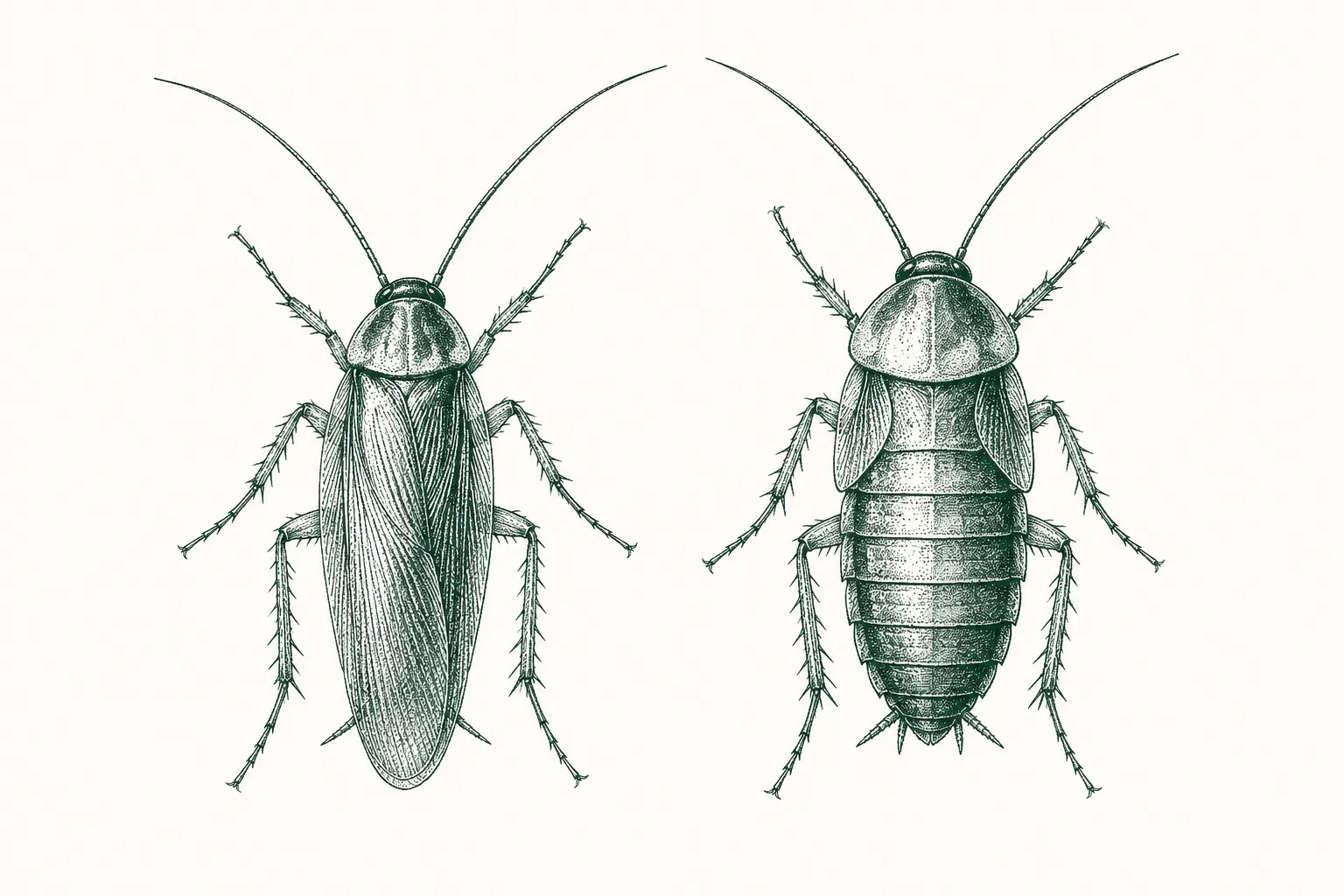
It usually starts at the porch light. On a warm Southern California evening, a slender, reddish-tan insect about an inch long comes gliding in and lands near the door, and your first thought is that a small cockroach just flew at you. Or it starts when you lift the lid on your water-meter box and a cluster of dark, fast-moving roaches scatters into the soil. Both are the same insect: the Turkestan cockroach, an invasive species most homeowners have never heard of but are increasingly seeing. Over the past two decades it has quietly spread across the region and is now steadily replacing the Oriental cockroach as the most common roach living in Southern California yards.
What is a Turkestan cockroach, and why am I seeing more of them in Southern California?
The Turkestan cockroach (Blatta lateralis) is an invasive, primarily outdoor roach that has spread across Southern California over the past 20 years and is now replacing the long-established Oriental cockroach as the dominant outdoor, or peridomestic, species. It lives and breeds outdoors — in water-meter and irrigation boxes, block walls, leaf litter, and mulch — and wanders indoors mainly in search of water rather than to nest. It is spreading fast because it reproduces more quickly than the Oriental cockroach, tolerates heat and dry conditions well, the males can fly to lights, and it is sold nationwide as a reptile feeder insect under the name "red runner." Because it breeds outside in harborage you cannot easily reach, controlling it is an exterior and exclusion problem, not an indoor spraying one.
The Short Version
- The Turkestan cockroach is an invasive outdoor roach that has spread across Southern California since about 2001 and is now replacing the Oriental cockroach in yards across the region.
- It is constantly misidentified: the dark, short-winged females are mistaken for Oriental cockroaches, and the slender, tan, flying males are mistaken for American cockroaches.
- Adults are only about three-quarters of an inch to an inch long — far smaller than the 2-inch American cockroach — and the males are the ones you see flying to porch lights on warm nights.
- It lives and breeds outdoors in water-meter boxes, irrigation valve boxes, block walls, leaf litter, and mulch, and comes inside mainly looking for water rather than to nest.
- Because the population lives outdoors in harborage you cannot reach, indoor sprays and foggers do not solve it — control is about outdoor harborage reduction, exclusion, and targeted perimeter treatment.
- Part of its rapid spread is the reptile-feeder trade, where it is sold online as the "red runner" roach.
A Roach Most People Have Never Heard Of
The Turkestan cockroach is native to a band of the world stretching from North Africa through the Middle East and into Central Asia — the historical region of Turkestan, which gives the insect its name. It was first detected in the United States in 1978 at the Sharpe Army Depot in Lathrop, California, and entomologists believe it arrived on military equipment shipped back from Central Asia. For a couple of decades it stayed a curiosity. Then it started moving.
By around 2001 it was confirmed as an established, breeding population in Los Angeles County, and in the years since it has spread throughout the South Bay, the greater LA area, and much of the Southwest. Today, across large parts of Southern California, it has overtaken the Oriental cockroach as the roach you are most likely to find living outdoors around a home. If you have noticed more roaches in your yard, your water-meter box, or flying at your lights in recent years, this is very likely the species behind it.
The Great Cockroach Mix-Up
The reason so few homeowners know the Turkestan cockroach by name is that it is almost always mistaken for something else. And here is the part that makes identification genuinely confusing: the males and females look so different from each other that they are commonly mistaken for two entirely different species.
The females are dark and stout and get called Oriental cockroaches. The males are slender and tan and can fly, so they get called American cockroaches. Two very different-looking insects, one species — and neither of the roaches people think they are seeing.
About the size of an Oriental cockroach, and roughly half the length of a 2-inch American cockroach.
Slender tan males glide to porch lights on warm nights; the darker females have only short wing pads and cannot fly.
First confirmed as a breeding population in Los Angeles County; now the dominant outdoor roach across much of SoCal.
The female: mistaken for an Oriental cockroach
A female Turkestan cockroach is about an inch long, broad-bodied, and dark brown to almost black — which is exactly why she gets confused with the Oriental cockroach, another dark, ground-dwelling roach common in the same damp outdoor spots. The giveaway is the coloring around the edges. A female Turkestan has distinct cream or pale-yellow markings along the sides of the shield behind her head (the pronotum) and along the margins of her short wing pads. The Oriental cockroach, by contrast, is a uniform glossy black or very dark brown with no pale markings, and has a noticeably broader, wider body. If you are looking at a dark roach with cream trim, it is a Turkestan.
The male: mistaken for an American cockroach
A male Turkestan cockroach looks nothing like the female. He is slender, reddish-tan to light brown, with long, pale yellowish wings edged in cream that extend the length of his body — and, unlike the female, he can fly. Because he is winged and reddish, he gets mistaken for the American cockroach, the large roach many people picture when they think "big flying roach." The difference is size. A male Turkestan is only about three-quarters of an inch to an inch long; an American cockroach is a full 1½ to 2 inches, distinctly reddish-brown, with a pale yellow figure-eight pattern behind the head. If a roach flew to your light and it is under an inch long, it is almost certainly a male Turkestan, not an American.
A quick way to tell what you are looking at
Flying and small, under an inch? Male Turkestan. Dark, stout, and grounded with cream trim along the edges? Female Turkestan. Genuinely large — pushing two inches — and reddish-brown with a figure-eight marking? That is an American cockroach, a different pest with a different entry route.
Why the Turkestan Is Replacing the Oriental
When two similar species compete for the same outdoor niche, small biological advantages decide the outcome — and the Turkestan cockroach has several over the Oriental cockroach it is displacing.
It breeds faster
Female Turkestan cockroaches produce their egg cases sooner and mature from egg to adult more quickly than Oriental cockroaches, so a population builds and rebounds faster.
It handles heat and drought better
The Oriental cockroach needs consistently cool, damp conditions. The Turkestan tolerates the hotter, drier weather that defines most of Southern California, so it thrives in more places.
The males disperse by flight
Because male Turkestans can fly to lights, the species spreads to new yards and neighborhoods more easily than the ground-bound Oriental cockroach.
People are shipping it around the country
The Turkestan is sold online as the "red runner" — a popular feeder insect for pet reptiles, valued because it cannot climb smooth walls and does not burrow. Escapees and releases have helped seed new populations well beyond where it could have spread on its own.
How They Get Into Your Home
Here is the most important thing to understand about this roach: it is a peridomestic pest, meaning it lives and breeds outdoors, around the structure — not inside it. Unlike German cockroaches, which set up permanent breeding populations in kitchens and bathrooms, Turkestan cockroaches do not establish indoors and cannot sustain a population inside a typical home. When they show up inside, it is almost always an individual that wandered or flew in, usually looking for water, and it typically does not last long indoors.
That said, "they wander in" still means you keep finding them. The common ways they get inside:
Gaps under doors and garage doors
A worn or missing door sweep is the single most common entry point for a ground-level roach walking in from the yard at night.
Males flying to lights
Porch, patio, and entryway lights draw flying males, which then slip in through an open door, a torn screen, or a nearby gap.
Weep holes, vents, and utility penetrations
Unscreened foundation vents, weep holes in block or brick, and the gaps where pipes and wires enter the wall all give a wandering roach a way in.
Hitchhiking in landscaping materials
Bagged mulch, potted plants, and rock or wood delivered for the yard can carry Turkestan cockroaches or their egg cases in with them.
How to Protect Your Home
Because Turkestan cockroaches live outside, the most effective thing you can do is make the outside of your home less livable for them and seal the routes they use to get in. This is where homeowners have real leverage.
The Turkestan-proofing checklist
When to Call in a Professional — and What We Do
One or two roaches a season, handled by tightening up door sweeps and reducing moisture, is something most homeowners can stay on top of themselves. It is worth calling a professional when you are seeing them repeatedly — multiple sightings a week, roaches turning up indoors again and again, clusters in the water-meter box or along the foundation, or a steady stream of males at the lights all summer. That pattern means there is an established outdoor population producing them faster than exclusion alone will fix.
Because the roaches live outside in harborage you cannot easily reach, the treatment is fundamentally an exterior job — which is also why indoor sprays and foggers do so little for this pest. Here is how we approach it:
Inspect and confirm the species
We verify it is actually a Turkestan cockroach — not a German cockroach breeding indoors, which is a completely different problem — and map where they are harboring: meter boxes, valve boxes, block walls, mulch beds, and the moisture zones around the structure.
Treat the harborage and perimeter
We apply targeted treatments — typically granular and gel baits placed in and around harborage sites, plus a residual perimeter treatment — aimed at the outdoor zones where the population actually lives and travels, rather than blanketing your interior.
Close the entry points
We identify the specific gaps letting them indoors and give you a clear exclusion plan — door sweeps, vent screens, sealing penetrations — so fewer wander in while the outdoor population comes down.
Keep pressure on through the warm months
Turkestan activity climbs with the heat, so recurring service through the warmer part of the year keeps the outdoor population suppressed and the perimeter protected instead of letting it rebuild between visits.
The honest truth about this roach
You cannot spray your way out of a Turkestan cockroach problem from inside the house. The population is outdoors, in harborage you often cannot see, and fogging the kitchen or dumping insecticide down a storm drain does nothing to it — and treating storm drains is something you should never do. Real control is outdoor harborage reduction, sealing the home up, and treating the exterior, done consistently. Give us a call and we will start with an inspection.
Turkestan Cockroach FAQs
The questions South Bay and Los Angeles homeowners ask us most about this increasingly common roach.
How do I know if I have Turkestan cockroaches and not Oriental cockroaches?
Look at the coloring and the edges. Turkestan cockroaches — especially the dark females most often confused with Oriental roaches — have cream or pale-yellow markings along the shield behind the head and around the margins of the wing pads. Oriental cockroaches are a uniform glossy black to very dark brown with no pale trim, and have a broader, heavier body. The other tell is behavior: if you are seeing roaches fly to your lights, those are male Turkestans — Oriental cockroaches cannot fly at all. When both are found in the same damp outdoor spots, the cream edging is the most reliable difference.
Are Turkestan cockroaches dangerous, or do they carry disease?
They are primarily a nuisance pest rather than a direct danger, but they are not harmless. Like any roach that travels through soil, drains, and debris, they can carry bacteria on their bodies and contaminate surfaces they cross, and cockroach shed skins and droppings contribute to the allergens that can aggravate asthma and allergies. The upside is that because Turkestans live outdoors and do not build up large indoor populations the way German cockroaches do, the indoor exposure in a typical home is far lower. Keeping them outside is mostly about comfort and preventing the occasional contamination.
Why am I suddenly seeing roaches fly to my porch light at night?
Those are almost certainly male Turkestan cockroaches. The males have full wings and are drawn to light on warm evenings, which is when people most often notice this species for the first time. It usually means there is a breeding population somewhere in the yard or nearby — often in a water-meter box, irrigation box, or mulch bed. Switching to yellow "bug" bulbs or warm LEDs and moving lights away from doors reduces how many are drawn in, but a steady nightly show through the summer is a sign it is worth having the exterior looked at.
Can Turkestan cockroaches infest inside my house like German cockroaches?
No — and this is the key difference. Turkestan cockroaches are an outdoor, peridomestic species; they do not establish self-sustaining breeding populations inside a typical home. The ones you see indoors are wanderers that came in for water and usually do not survive long inside. If you are finding small light-brown roaches consistently in your kitchen or bathroom, clearly breeding indoors, that points to German cockroaches instead — a genuinely different and more involved indoor problem. Telling the two situations apart correctly is the first step to fixing the right one.
How do I get rid of Turkestan cockroaches for good?
Treat it as an outdoor and exclusion problem, not an indoor one. Reduce the moisture and harborage that keep them near the house — fix irrigation leaks, pull mulch back from the foundation, clear debris, and clean out water-meter and valve boxes — then seal the ways they get inside with door sweeps, vent screens, and sealed penetrations. For an established population that keeps producing roaches, a professional exterior treatment of the harborage and perimeter, repeated through the warm months, is what actually brings the numbers down and keeps them down. Indoor sprays and foggers do not reach where this roach lives, so on their own they will not solve it.
Related Reading
Go deeper on the roaches this one gets confused with — and how professional cockroach control actually works.
- German vs. American cockroaches: which do you have?The indoor-vs-outdoor roaches SoCal homeowners see most — and why the species decides the treatment.
- Oriental cockroach pest libraryThe dark, damp-loving "water bug" the female Turkestan is most often mistaken for.
- American cockroach pest libraryThe large, reddish, figure-eight roach the flying male Turkestan gets confused with.
- What attracts cockroaches to a clean house?Why spotless homes still get roaches — moisture, warmth, and outdoor harborage.
- Landscaping habits that invite pestsThe mulch, moisture, and ground-cover conditions that feed outdoor roach populations.
- Our general pest control serviceWhat professional exterior cockroach control and exclusion actually involve.
Reference Guides
Undated reference documents on this topic — built to be bookmarked rather than read once.
Sydney Pardey is the owner of Xtermicon, a family-owned pest control company serving the South Bay and greater Los Angeles area since 2015. All content is written from direct operational experience and reviewed against current California Structural Pest Control Board standards.
Specialists you
can count on.
Xtermicon was founded in 2015 with one focus: protect Southern California homes and businesses from the pests that threaten them. The name says it all — eXterminate TERmites & pest CONtrol — and that's exactly what we do. We're a family-owned team specializing in termite control, pest control, and rodent exclusion. From West LA and East LA to the beach cities and Orange County, we're local neighbors who treat your property like our own.