Pest Control for Multifamily Buildings: What Property Managers Should Expect From an Inspection
A twenty-minute walkthrough and a two-hour one produce very different results, and the difference is not effort — it is whether the inspector went to the places pests actually are. Here is the standard to hold a vendor to.
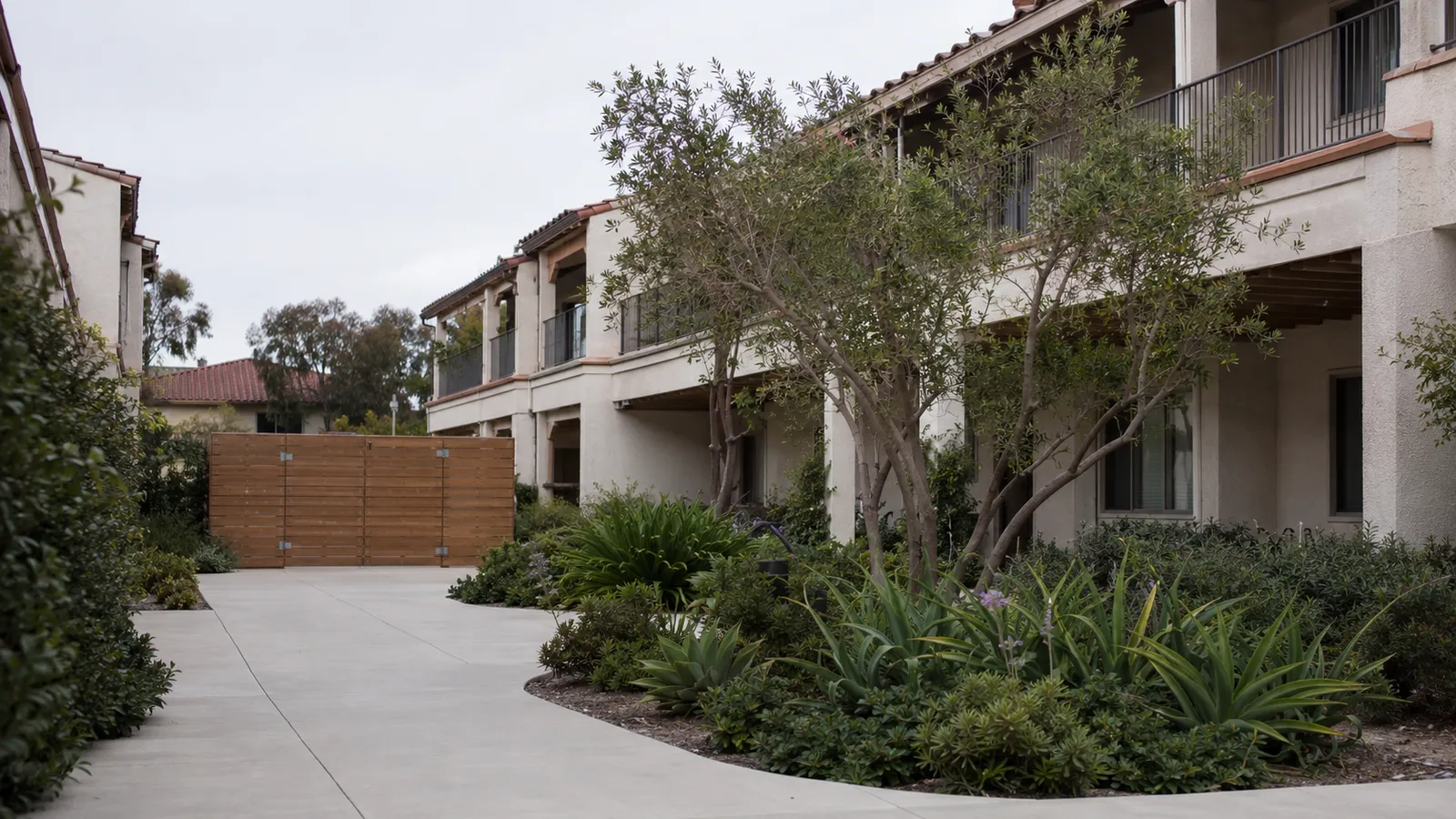
Two vendors walk the same 24-unit property. The first is done in twenty minutes: a lap of the perimeter, a look at the unit that complained, a quote by end of day. The second spends two hours, opens the trash enclosure, gets into the laundry room and the electrical closet, asks for access to the subarea, and wants to see the two units adjacent to the one that reported. Their quotes may not be far apart. What they are actually selling is not remotely the same thing, and the difference will show up in your budget over the following year.
What should a multifamily pest inspection cover?
A thorough inspection covers the whole property rather than the unit that complained. That means the exterior envelope and perimeter, the trash and recycling enclosure, laundry and utility rooms, mechanical and electrical spaces, common corridors and stairwells, any shared attic run or crawl space, the landscaping where it meets the building, and a sample of actual occupied units — including the ones adjacent to any reported problem. The inspector should be identifying conducive conditions and entry points, not only counting pests, and you should come away with documentation of what was found and where. An inspection that only visits the reporting unit is not an inspection of a multifamily property.
The Short Version
- A multifamily inspection is a property inspection, not a unit inspection. If only the complaining unit gets looked at, the finding will be incomplete.
- The highest-pressure areas are almost always the trash enclosure, the laundry room, and the utility and mechanical spaces — not the units.
- Adjacent units matter. German cockroaches, bed bugs, and rodents move through wall voids, plumbing chases, and shared attic runs.
- California habitability law expects rental housing to be kept free of vermin, which makes documentation a management concern rather than a nicety.
- Expect findings by location, conducive conditions, what was treated where, and recommendations that are not treatments — repairs, sanitation, exclusion.
- The clearest red flags: quoting before inspecting, no documentation, no follow-up protocol, and treating symptoms rather than entry points.
What a Real Inspection Actually Covers
If you want a single question to evaluate a vendor with, make it this: where did they go? A thorough inspection on a multifamily property covers eight areas, and most of them are not units.
The exterior envelope and perimeter
Foundation gaps, utility and conduit penetrations, weep holes, door sweeps and thresholds on every common entry, vent screens, and the roofline. This is where an inspector should be identifying entry points rather than pest activity — the two are different findings and both belong in the report.
Trash and recycling enclosures
Reliably the highest-pressure point on any multifamily property, and reliably the area a rushed inspection skips. Look for what the inspector notes: drainage, whether lids close, spillage, how often it is serviced, and the condition of the enclosure floor and walls.
Laundry rooms
Warmth, moisture, lint, and food debris in one shared room, usually with plumbing penetrations that connect it to the rest of the building. A consistent origin point for German cockroach populations.
Utility, mechanical, and electrical rooms
Undisturbed, warm, and full of penetrations between spaces. Also the rooms nobody has entered in months, which is exactly why rodent activity shows up there first.
Common corridors, stairwells, and mail areas
Lower-pressure but high-transfer — these are the shared paths along which problems move between units on people and belongings.
Subareas, crawl spaces, and shared attic runs
The single most commonly skipped area and often where a rodent problem actually lives. A continuous attic over multiple units means one problem across the whole run. If an inspector does not ask for access here, that tells you what kind of inspection you are getting.
The landscaping interface
Where common-area planting touches the building. Vegetation against a wall is a bridge over any perimeter treatment, and irrigation against a foundation is a standing invitation.
A sample of occupied units
Not just the vacant ones that are easy to access. Kitchens and bathrooms, under sinks, behind and under appliances, and the plumbing penetrations at the wall. Crucially, this should include the units adjacent to and above and below any unit that has reported a problem.
Why Adjacent Units Are Not Optional
The thing that separates multifamily work from a house is that the building is a connected system, and the three pests that drive most management calls all exploit the connections.
Stacked kitchens and bathrooms share vertical plumbing chases, and the penetrations where supply and waste lines pass through framing are rarely sealed tightly. German cockroaches use those as a route between units and between floors, which is why treating a single reporting unit frequently pushes a portion of the population next door rather than eliminating it. Rodents use shared attic runs and subareas the same way, traveling the full length of a building from a single entry point. Bed bugs move with people and belongings through common corridors and laundry, and by the time one unit reports, the introduction is often weeks old.
So when an inspector asks to see the units on either side of a report, that is not upselling. It is the only way to establish whether you have one unit's problem or a building's problem, and that answer determines everything about what the work should cost and how long it will take. An inspector who does not ask has decided not to find out.
The question that reveals the most
Ask a prospective vendor: "If one unit reports German cockroaches, what do you do?" The answer sorts the field immediately. Inspect the adjacent units and the units above and below as a matter of course is the right answer. Treat the unit that called and close the ticket means every future problem on your property will be discovered one complaint at a time, always late, and you will pay for it repeatedly.
Habitability Makes This a Management Issue
Setting aside the pest side for a moment, there is a reason property managers treat this differently than a homeowner would.
California habitability law expects residential rental property to be maintained in a condition fit to live in, and freedom from vermin infestation is part of that expectation. The precise obligations, and how responsibility divides between owner, manager, association, and resident, vary with the property type and the agreements in place — that is a question for your counsel rather than your pest control vendor, and this is background context rather than legal advice.
The practical management consequence is straightforward regardless of the specifics: when a resident, an owner, or a board asks what was done about a pest problem and when, the answer needs to be a record rather than a recollection. Staff turn over. Management contracts change. The memory of who called which vendor in which month does not survive either. That makes documentation the part of this that a manager should care about most, and the part that is easiest to overlook when comparing proposals on price.
What You Should Expect to Receive
Ask any vendor to show you a sample of what they produce after a visit. If they cannot, you have your answer. What a useful record contains:
Findings tied to specific locations
Not "evidence of rodent activity" but which room, which unit, which side of the building. A finding without a location cannot be acted on or followed up.
Conducive conditions, separately from pest activity
The leaking fixture, the missing vent screen, the enclosure that does not close, the vegetation against the wall. These are your repair list, and they are usually the difference between a problem that ends and one that recurs.
What was treated, where, and with what
Specific enough that a different technician could pick it up next month, and specific enough to answer a resident asking what was applied near their door.
Recommendations that are not treatments
A vendor whose every recommendation is more service is telling you something. Sanitation changes, repairs, and exclusion work should appear alongside treatment, and some of it will be your work rather than theirs.
A follow-up protocol
What happens next, when, and what triggers a return between scheduled visits. Get this in the contract rather than the sales conversation.
When to Keep Looking
Five things that should give a property manager pause, in rough order of how much they predict future cost.
A quote before an inspection
On a multifamily property, a number produced without walking the building is a guess that will be revised, or a scope that will turn out not to cover what you needed. The inspection is what determines the work.
No documentation, or none they can show you
If there is no record, then from a management standpoint the service did not happen. This is the one that hurts a year later rather than a month later.
Treating symptoms rather than entry points
A program that applies product on a schedule and never seals anything is a subscription. Exclusion work is what makes a problem stop recurring, and its absence is why some properties are still treating the same rodent issue in year three.
Unwillingness to inspect adjacent units
Covered above, and worth repeating because it is the most expensive one. It guarantees late discovery on every future problem.
No defined response between visits
Residents report problems on their own schedule. A program with no answer for what happens between scheduled visits will produce either long waits or surprise invoices, and usually both.
How we approach a multifamily walkthrough
For what it is worth, our own version follows the same order as the list above: exterior envelope and entry points first, then the shared high-pressure spaces — enclosures, laundry, utility and mechanical rooms — then subarea and attic access where it exists, then units, including the neighbors of anything reported. We would rather walk a property and tell you it needs less than you expected than quote a program off a phone call. For portfolios, scheduling and routing run as a single account with one point of contact, which is why our community and multi-unit footprint is wider than our individual residential service area.
Evaluating a vendor, or inheriting a problem property?
Xtermicon works with property managers, HOAs, condo and community associations, and multi-unit buildings across Los Angeles County and Orange County. If you have taken over a property with a history you do not know, or you are comparing proposals and want a walkthrough that actually covers the building, call (310) 370-0963 and we will arrange one.
Multifamily Pest Inspection FAQs
What property managers ask when they are setting a standard or comparing vendors.
How long should an inspection of a multifamily property take?
Longer than most people expect, and the number varies with the property rather than the unit count alone. A mid-size building with a subarea, a shared attic run, a laundry room, and a trash enclosure takes a couple of hours to walk properly, plus time in a sample of units. A twenty-minute lap of the perimeter is not an inspection of the property — it is a look at the exterior. The better measure than time is coverage: ask where they went and which spaces they could not access.
Do you need access to occupied units, or can you just do common areas?
Common-area and exterior work alone is a legitimate contract structure and plenty of properties run that way. But for an inspection meant to establish what is actually happening in a building, some unit access matters — particularly for German cockroaches and bed bugs, which live inside units and move between them. At minimum, access to the reporting unit and its immediate neighbors. Coordinating that notice is usually the management side of the job, and it is worth building lead time for it into the schedule.
Who is responsible for pest control in a rental — the owner or the tenant?
That depends on the lease, the property type, and the circumstances, and it is genuinely a question for your counsel rather than your pest vendor. What is consistent is the background expectation that residential rental property be maintained free of vermin, which is why documentation of inspection and response matters to management regardless of how costs are allocated. From the pest control side, the practical answer is that infestations in shared structure are rarely attributable to one unit, which is part of why building-wide programs tend to be the workable arrangement.
How often should a multifamily property be serviced?
Monthly is the standard where there is shared structure, common areas, and a trash enclosure, because those are continuous pressure points. Lower-density properties — detached townhomes with private yards and no shared walls — often work fine on a longer cadence with common areas covered more frequently. The determining factors are how much shared structure exists, how much common landscaping touches buildings, and the property's history. We covered the economics of scheduled versus reactive service in a separate piece linked below.
What about bed bugs — is that part of a general program?
Typically quoted separately, and worth confirming with any vendor rather than assuming it is included. Bed bug work runs a different process: inspection to confirm it is not a look-alike, laundering and preparation on the resident's side, and multiple treatment visits rather than one. In a multifamily setting the important part is scope — a report in one unit is a reason to inspect the neighbors immediately, because the interval between introduction and the first complaint is usually weeks.
We just took over a property with no service history. Where do we start?
With a full walkthrough rather than a treatment. On an inherited property, the useful first deliverable is a baseline: what is present, where, what conducive conditions exist, and what repairs and exclusion work the building needs regardless of pest activity. That baseline is what makes everything afterward measurable, and it frequently turns up deferred maintenance that was driving the pest pressure in the first place. Treating before you have that is spending money without knowing what you bought.
Related Reading
The community and multi-unit side of pest control, and the pests that drive most manager calls.
- Why HOAs should budget for monthly inspectionsThe economics of a scheduled program versus calling when a resident complains.
- Commercial pest controlIndustry-specific programs for managed and mixed-use property.
- HOA & community pest controlCommunity-wide contracts for associations and multi-unit buildings.
- German vs. American cockroachesWhich species actually spreads between units, and why it changes the treatment.
- How to prevent bed bugs when travelingWorth circulating to residents — most introductions are travel-related.
- Our rodent control serviceExclusion-first work for shared attic runs and subareas.
Sydney Pardey is the owner of Xtermicon, a family-owned pest control company serving the South Bay and greater Los Angeles area since 2015. All content is written from direct operational experience and reviewed against current California Structural Pest Control Board standards.
Specialists you
can count on.
Xtermicon was founded in 2015 with one focus: protect Southern California homes and businesses from the pests that threaten them. The name says it all — eXterminate TERmites & pest CONtrol — and that's exactly what we do. We're a family-owned team specializing in termite control, pest control, and rodent exclusion. From West LA and East LA to the beach cities and Orange County, we're local neighbors who treat your property like our own.