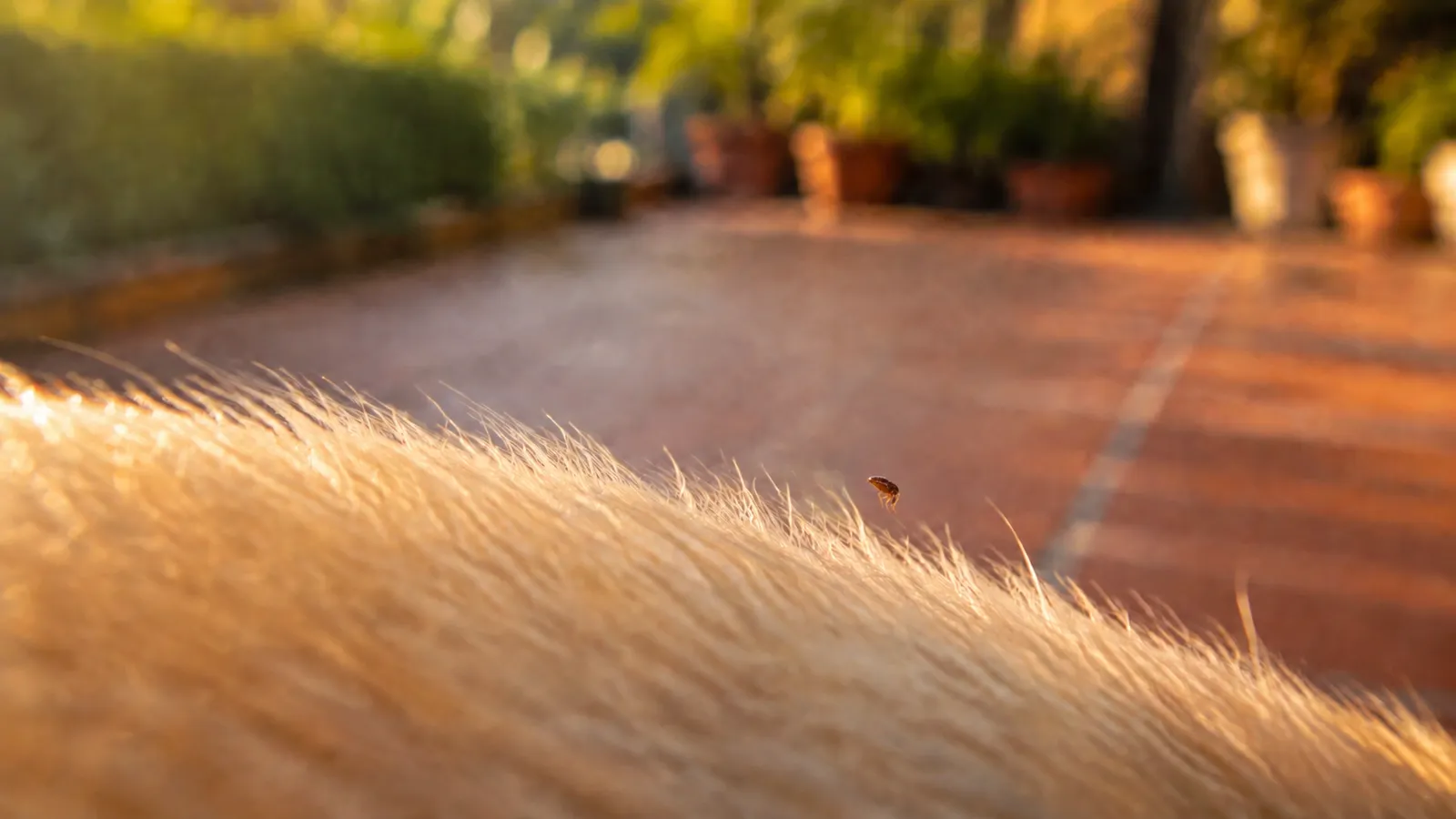
Why do fleas come back after treatment?
Because roughly 95% of a flea population is not the adults you see — it is eggs, larvae, and pupae in carpet, bedding, and shaded soil. Flea pupae are protected inside a cocoon that resists insecticide, and they can wait weeks before emerging, triggered by vibration and warmth. So a treatment that kills adults is followed by a fresh wave of emergence a week or two later. Breaking the cycle requires an insect growth regulator, thorough repeated vacuuming, treating the yard harborage, and having your veterinarian treat every pet in the household at the same time.
Service Overview
Fleas are a life-cycle problem, and the adults on your pet are the small visible end of it. The overwhelming majority of a flea population exists as eggs, larvae, and pupae down in carpet fibers, along baseboards, in pet bedding, and in shaded soil outdoors — and pupae are armored against insecticide, which is why an infestation seems to come back a week after it was handled. Real resolution takes three things happening together: the pet treated by your veterinarian, the interior treated with a growth regulator, and the outdoor harborage addressed. Skip any one and the cycle restarts.
Key Takeaways
- About 95% of a flea infestation is eggs, larvae, and pupae — not the adults on your pet.
- Pupae resist insecticide inside their cocoons, which is why fleas reappear one to two weeks after treatment; that rebound is expected, not a failed service.
- Vacuuming is genuinely part of the treatment — the vibration triggers pupae to emerge into treated surfaces.
- Every pet in the household needs veterinary flea treatment at the same time; treating the house alone will not hold.
- Southern California's mild winters mean fleas persist year-round rather than dying back seasonally.
- Ticks concentrate in specific outdoor harborage — tall grass, brush edges, leaf litter, and shaded trail-side vegetation — and are treated by targeting those zones.
Key Benefits
- ✓Growth regulators that stop eggs and larvae from reaching biting adults
- ✓Interior and exterior treatment, since fleas cycle between both
- ✓A clear prep and vacuuming schedule that materially improves results
- ✓Tick harborage treatment focused on the yard zones that actually hold them
Insect Growth Regulators
An adulticide alone leaves the eggs and larvae that make up most of the population. The growth regulator is what prevents the next generation from reaching biting age.
Coordinated With Your Vet
We do not treat animals — your veterinarian does, and they should. We time the property treatment around the pet treatment so the two are not working against each other.
Timed Follow-Up
The second visit is scheduled to the pupal emergence window rather than an arbitrary interval, which is the difference between a rebound and a resolution.
Our Decisive Process
Inspection & Prep Plan
We confirm fleas versus other biting insects, identify the hot zones — pet resting spots, carpet edges, shaded soil — and give you a specific prep list.
Interior Treatment
Carpet, baseboards, upholstery, and pet bedding areas treated with an adulticide plus an insect growth regulator to break the cycle.
Exterior Harborage
Shaded soil, under decks, crawl space entries, and yard perimeter — where outdoor fleas and ticks actually live, rather than open sunny lawn.
Follow-Up Visit
A second treatment timed to the pupal emergence window, which is what catches the wave that makes people think the first treatment failed.
What we need you to do — it genuinely matters here
Flea control is the service where homeowner participation most directly determines the outcome. None of this is busywork.
- ✓Have your veterinarian treat every pet in the household, on the same schedule
- ✓Vacuum daily for two weeks, including under furniture and along baseboard edges, and empty the canister outside
- ✓Wash all pet bedding in hot water, and human bedding if pets sleep on it
- ✓Clear floors and under-bed areas before the visit so treatment reaches the carpet
- ✓Expect to see some fleas after treatment — emerging pupae contacting treated surfaces is the mechanism working, not failing
Ticks are a different animal
Ticks do not infest a house the way fleas do. They wait on vegetation for a host to brush past, which means control is about specific outdoor zones rather than whole-yard coverage: tall grass, brush and fence lines, leaf litter, ivy, and the shaded margins where the yard meets open space. Western black-legged ticks in California can carry Lyme disease, and dog ticks are common in the region, so the practical advice matters as much as the treatment — check pets and people after hikes, and keep the play areas of a yard mowed and clear of leaf litter and brush piles.
Why fleas never really stop here
In colder climates a hard freeze knocks flea populations down every winter. Southern California does not get that reset. Mild coastal winters let the cycle continue year-round, outdoor populations persist in shaded soil, and urban wildlife — opossums, raccoons, feral cats, roof rats — keeps reintroducing fleas to yards regardless of how well your own pets are protected. That is why we treat flea control as a maintained condition rather than a one-time event.
Service FAQs
"How long does it take to get rid of fleas?"
Plan on three to six weeks for full resolution, with a noticeable drop in the first week. The timeline is set by the pupal stage, not by the treatment — pupae emerge over a period of weeks and have to contact treated surfaces. Daily vacuuming shortens it meaningfully by triggering earlier emergence.
"Do I need to leave the house during flea treatment?"
For interior treatment we recommend staying out until surfaces are fully dry, and we ask for extra caution — typically stepping out for a few hours — in households with children under two, anyone pregnant, or anyone with respiratory sensitivities. Your technician will give you the specific timeframe for what was applied.
"Can I treat fleas without treating my pet?"
It will not hold. An untreated pet keeps reseeding the house with eggs every day, faster than any property treatment can clear them. Your veterinarian handles the animal; we handle the environment. Both, at the same time, or neither really works.
"I saw fleas two days after you treated. Did it not work?"
Almost certainly it is working. Pupae are shielded inside cocoons that insecticide does not penetrate, so they keep emerging for weeks after treatment — and they emerge onto surfaces that are now treated. Continued vacuuming speeds this up. If you are still seeing significant activity after the follow-up visit, call us.
"I have no pets. Why do I have fleas?"
Usually urban wildlife or a previous occupant's animals. Opossums, raccoons, feral cats, and roof rats traveling a yard, attic, or subarea leave flea populations behind, and pupae can lie dormant for months before a vacant home is reoccupied — which is why fleas so often appear right after a move-in.
Specialists you
can count on.
Xtermicon was founded in 2015 with one focus: protect Southern California homes and businesses from the pests that threaten them. The name says it all — eXterminate TERmites & pest CONtrol — and that's exactly what we do. We're a family-owned team specializing in termite control, pest control, and rodent exclusion. From West LA and East LA to the beach cities and Orange County, we're local neighbors who treat your property like our own.