Flea-Borne Typhus in Los Angeles: Record Cases and What Homeowners Should Actually Do
LA County recorded its highest-ever case count in 2025, and a localized outbreak was announced in Pico-Union in July 2026. Here is what the public health data says, what it has to do with the rats and opossums in your yard, and where pest control genuinely helps.
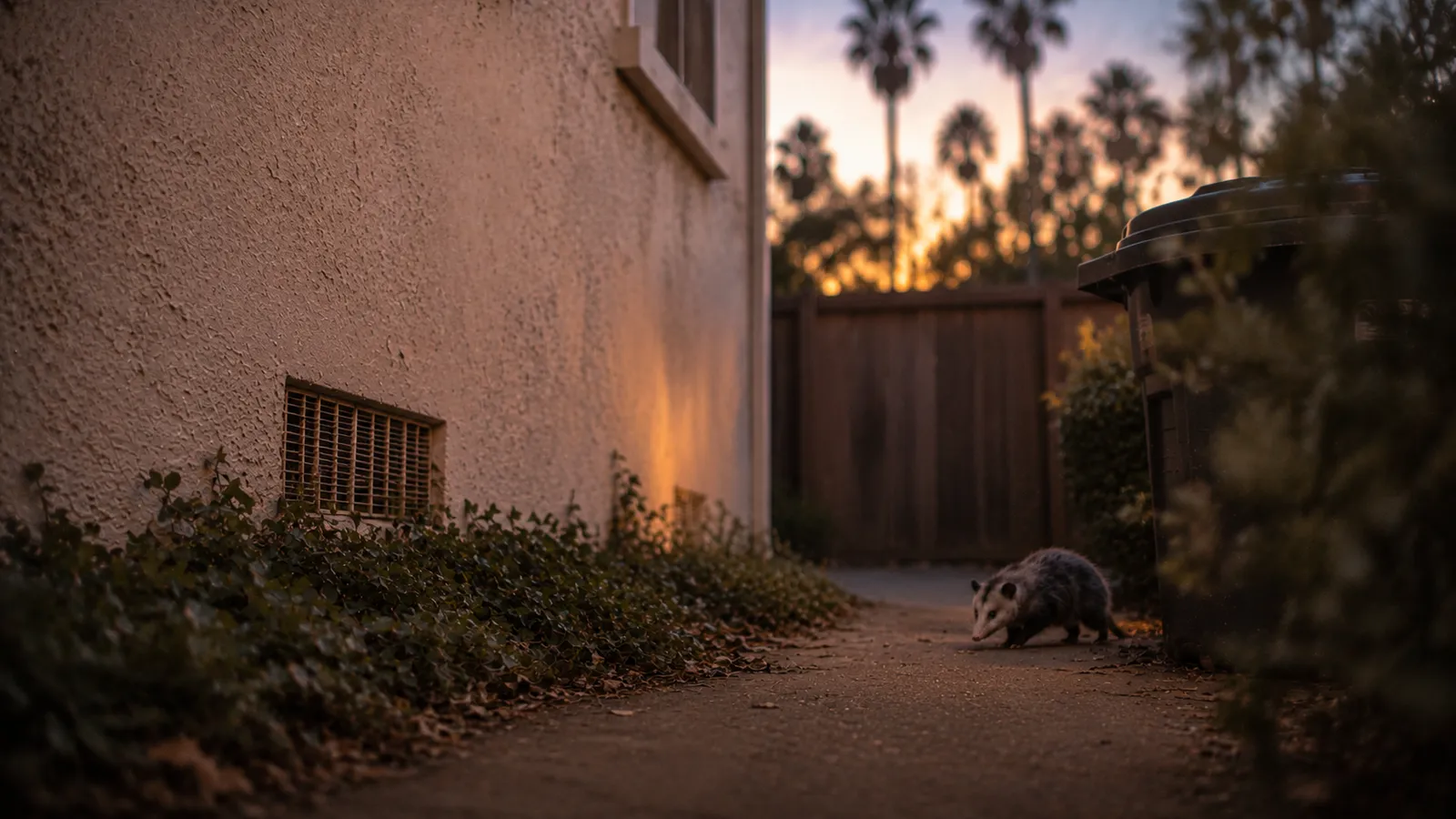
Yes — there is an ongoing flea-borne typhus problem in Los Angeles, and it is not a rumor or a slow news cycle. On April 2, 2026, the Los Angeles County Department of Public Health announced that 2025 produced the highest number of flea-borne typhus cases ever recorded in the county: 220, up from 187 the year before. Nearly nine out of ten of those patients required hospitalization. Then on July 29, 2026, the department issued a separate warning about a localized outbreak in Pico-Union, where five people were hospitalized. All five have since recovered.
We are a pest control company, not a medical practice, and nothing here is medical advice — if you think you may be sick, that conversation belongs with your doctor, today rather than next week. What we can speak to is the part of this that happens outdoors, at the property level: the fleas, and the rats, opossums, and free-roaming cats that carry them into Southern California neighborhoods. That is the piece homeowners actually have some control over, and it is worth understanding clearly rather than anxiously.
Is there a flea-borne typhus outbreak in Los Angeles right now?
Yes. Los Angeles County Public Health reported a record 220 flea-borne typhus cases in 2025 — the highest ever recorded in the county and up from 187 in 2024 — with nearly 9 in 10 patients hospitalized. In July 2026 the department announced a separate localized outbreak in the Pico-Union neighborhood, where five people were hospitalized and have since recovered. Cases have risen almost every year since 2010, when the county recorded 31. The disease is spread by infected fleas carried by rats, opossums, and free-roaming cats — not from person to person — and it is treatable with antibiotics when caught early.
The Short Version
- LA County recorded 220 flea-borne typhus cases in 2025 — an all-time high, up from 187 in 2024 and 31 in 2010.
- Roughly 9 in 10 of the 2025 cases were hospitalized. Patients ranged in age from 1 to 85.
- A localized Pico-Union outbreak was announced July 29, 2026 — five hospitalized, all recovered.
- The disease spreads through infected flea dirt getting into cuts, scrapes, or eyes. It does not spread person to person.
- The fleas ride on rats, opossums, and free-roaming cats, which show no signs of illness themselves.
- There is no vaccine, but antibiotics work well when treatment starts early — which is why recognizing the symptoms matters.
- At the property level, the lever is flea and rodent pressure: year-round pet flea control, rodent exclusion, and removing the food, water, and harborage that draw wildlife in.
The highest number ever recorded in the county, announced by Public Health on April 2, 2026. Up from 187 in 2024.
Nearly nine in ten people diagnosed in 2025 required hospitalization — this is not a mild illness for most people who get it.
The county recorded 31 cases in 2010. The trend has climbed almost every year since, tracking alongside rising urban rodent populations.
Public Health specifically noted the age spread to make the point that this is not concentrated in any one age group.
What the Numbers Actually Show
Flea-borne typhus, also called murine typhus, is caused by a bacterium (Rickettsia typhi) carried by fleas. It is endemic to Southern California, which means it has been here for a long time and is not going away. What has changed is the volume.
LA County counted 31 cases in 2010. By 2022 that had risen to 171 — a year that also brought three deaths, the county's first typhus deaths in nearly 30 years, all in adults with underlying medical conditions. 2024 brought 187 cases. 2025 brought 220. That is not a spike; it is a fifteen-year climb.
It is worth being precise about what "outbreak" means in the July 2026 Pico-Union announcement, because the word does a lot of work in a headline. Public Health uses it for a cluster of cases tied to a specific geographic area over a specific window — in this case five hospitalizations in one neighborhood. Five cases is a small number against a countywide total in the hundreds. What makes it notable is the clustering, because clustering points at a local reservoir of infected fleas and the animals hosting them, which is something that can be acted on.
On the honest read of these numbers
Some of the year-over-year rise is likely better detection — clinicians in LA are more aware of typhus now than they were in 2010, and awareness finds cases that would previously have been logged as an unexplained fever. But detection alone does not explain a seven-fold increase, and it does not explain the geographic clustering. The underlying rodent and urban-wildlife pressure across the LA basin is real, and it is the same pressure we see in residential rodent calls.
Where Cases Are Concentrated
Public Health reported cases across the county in 2025, but flagged three areas as most affected: Central Los Angeles City, the City of Santa Monica, and the unincorporated neighborhood of Willowbrook in South LA County. The July 2026 outbreak added Pico-Union to that list.
Long Beach runs its own health department separate from LA County, so its cases are counted separately and do not appear in the county figures. Long Beach reported 20 cases as of July 31, 2025, compared with 12 over the same period in 2024, with 75% of those patients hospitalized and all recovering. The city has pointed specifically to opossums and community cats as significant contributors locally, with clusters near Bixby Park and Junipero Beach.
For our service area, the two names that matter most are Santa Monica and Long Beach — both are places we work, and both are on the list. That said, the useful takeaway is not "avoid these neighborhoods." Cases are reported countywide. The named areas are where clusters were identified, not the boundary of the risk.
How It Actually Spreads — This Part Surprises People
The transmission mechanism is not what most people assume. It is not primarily the flea bite itself. Infected fleas pass the bacteria in their feces — what the industry unglamorously calls flea dirt, the dark specks you find in pet bedding and carpet. Infection happens when that material is rubbed into a break in the skin (often the scratch you just made scratching a flea bite) or into the eyes.
Two consequences follow from that. First, the scratching is part of the mechanism, which is genuinely useful to know if there are fleas in the house. Second, flea dirt in an environment matters, not just live fleas on a pet — which is one more reason the vacuuming step in a flea treatment is real work and not busywork.
Flea-borne typhus does not spread from person to person. You cannot catch it from a family member, a coworker, or a neighbor. It also is not caught by touching an animal directly — the animal is the vehicle for the flea, not the source of the bacteria.
Rats
Roof rats and Norway rats are the classic reservoir, and roof rat populations across the LA basin have been climbing for over a decade. This is the overlap between the typhus story and the ordinary rodent problem in an attic or a yard.
Opossums
Extremely common across Southern California yards and specifically named by both LA County and Long Beach health officials. They carry the fleas without appearing sick, and they are drawn in by pet food, fallen fruit, water, and accessible trash.
Free-roaming and community cats
Outdoor cats — strays, ferals, and indoor-outdoor pets — move between properties and carry fleas with them. Feeding stations for community cats also concentrate opossums and rats at the same spot, which is how a well-intentioned setup becomes a flea hub.
Your own pets, as the delivery route
A dog or indoor-outdoor cat that picks up fleas in the yard brings them inside. The pet is not the reservoir, but it is frequently how yard fleas become house fleas.
The critical detail in all of this: infected animals show no signs of illness. There is no sick-looking opossum to spot and avoid. A healthy-looking animal in your yard tells you nothing either way, which is why the guidance is about general avoidance and property conditions rather than watching for symptoms in wildlife.
Symptoms — and Why Early Treatment Matters So Much
Per LA County Public Health, symptoms typically appear one to two weeks after infection: high fever, headache, body aches and muscle pain, chills, rash, nausea, and vomiting. The reason the hospitalization rate is so high is not that typhus is unusually deadly — treated promptly with the right antibiotic, the fatality rate is under 1%. It is that the early presentation looks like a bad flu, so people wait it out, and by the time they seek care the illness has progressed. The 2022 deaths involved severe complications that developed along that path.
There is no vaccine. The whole game is catching it early. If you develop a fever with headache and body aches within a couple of weeks of possible flea exposure, tell your doctor about the flea exposure specifically — it is the detail that puts typhus on the list, and typhus is not the first thing most physicians reach for when someone presents with a fever.
To be direct about scope
We are a licensed pest control company. We are not qualified to diagnose anything, and we are not going to pretend otherwise. If you are unwell, call your doctor or the LA County Department of Public Health — current information is at ph.lacounty.gov/typhus. Everything below is about the property, which is the part we actually know.
What Actually Reduces Risk at a Property
Public health guidance and pest control practice converge almost completely here, because both come down to the same thing: fewer fleas, and fewer animals bringing fleas onto the property. Nothing on this list is exotic.
The property-level checklist
Where Professional Pest Control Fits — and Where It Does Not
Being straight about this matters more than making the service sound bigger than it is. No pest control company prevents typhus, and any company telling you otherwise is overselling. What professional work does is reduce flea populations and reduce the rodent pressure that sustains them, which lowers the exposure that the disease depends on. That is a real contribution and a limited one.
Concretely, there are three pieces of this we handle and one we do not:
Flea treatment, interior and exterior
Adulticide plus an insect growth regulator that breaks the life cycle, applied to carpet edges, baseboards, pet resting areas, and the shaded outdoor soil where fleas actually persist. Roughly 95% of a flea population is eggs, larvae, and pupae rather than adults — killing only the adults is why DIY sprays fail.
Rodent exclusion and control
Sealing the entry points that let rats into attics, crawl spaces, and subareas, then clearing the existing population. This is the durable part: exclusion holds after the treatment ends.
Conducive-conditions assessment
Walking a property and identifying what is drawing animals in — the fruit tree dropping into the side yard, the crawl space vent with a missing screen, the ivy against the foundation.
What we do not do: wildlife trapping
We do not trap or remove opossums, raccoons, or stray cats. That is animal control and licensed wildlife operators, not structural pest control. If an opossum is denning under your house, the correct sequence is to have the animal handled by the right party first, then seal the access so the next one cannot follow it in. We handle the sealing.
One more honest note: if you have pets, veterinary flea control is doing more work than we are. A house treatment with untreated pets is a temporary result, every time. We would rather tell you that up front than treat a house twice.
Seeing fleas, or rodent activity, at your property?
Xtermicon has been working across the South Bay and greater Los Angeles since 2015, including Santa Monica and Long Beach. If you are dealing with fleas in the house or yard, or you suspect rats or an animal living in a crawl space, we can come out, walk the property, and give you a straight assessment of what is actually going on. If what you need is animal control rather than pest control, we will tell you that too.
Flea-Borne Typhus FAQs
Common questions from Southern California homeowners about the current typhus situation. For anything medical, please talk to your doctor.
How worried should I actually be about flea-borne typhus in LA?
Keep it in proportion. 220 cases in a county of roughly 10 million people is a small individual risk, and the illness is treatable with antibiotics when caught early. At the same time, the trend has climbed steadily since 2010, nearly 90% of the 2025 cases were hospitalized, and there were three deaths in 2022. The reasonable posture is not alarm — it is doing the ordinary things: pets on year-round flea control, no food or water left out for wildlife, rodents kept out of the structure, and knowing the symptoms well enough to mention flea exposure to your doctor if you get a fever.
Can I get typhus from my own dog or cat?
Not from the animal itself. Pets are not the source of the bacteria — infected fleas are. But a pet that goes outdoors can bring fleas in from the yard, and those fleas can carry the bacteria if they came off a rat, opossum, or outdoor cat. That is exactly why the first recommendation from every health department is year-round veterinary flea control for every pet in the household. Your vet is the right person to advise on the product.
Does an infected opossum or rat look sick?
No — and this is the detail that catches people out. LA County Public Health specifically notes that infected animals typically show no signs of illness. There is no visual cue. A healthy-looking opossum crossing your patio tells you nothing about whether its fleas are carrying the bacteria, which is why the guidance is about general avoidance and removing what attracts them rather than watching for sick-looking animals.
I live in Santa Monica or Long Beach — should I do anything differently?
Both were named in reporting: Santa Monica was one of three areas LA County flagged as most affected in 2025, and Long Beach — which runs its own health department and counts separately — reported 20 cases through July 2025 against 12 in the same period the prior year, with clusters near Bixby Park and Junipero Beach. The steps do not change, but the case for staying on top of them is stronger. If you are in one of these areas with an outdoor pet, an accessible crawl space, or a yard that attracts opossums, that combination is worth addressing rather than deferring.
Will a pest control treatment protect my household from typhus?
It reduces exposure; it does not confer protection, and we will not claim it does. Flea treatment lowers the flea population in and around the home, and rodent exclusion removes the reservoir animals that keep reintroducing infected fleas. Both meaningfully reduce risk. But there is no vaccine, no treatment eliminates every flea in an outdoor environment, and the wildlife side of the equation is only partly controllable at a single property. Pest control is one layer alongside veterinary flea control, property sanitation, and knowing the symptoms.
There are opossums or stray cats on my property — can you remove them?
No, and we would not want you to hire anyone who says yes casually. Wildlife trapping and stray animal handling are the domain of animal control and licensed wildlife operators, not structural pest control. Contact your city or county animal control for the animal itself. What we can do is the part that keeps the problem from recurring: identify how they are getting under or into the structure, seal those access points, address the flea population they have left behind, and flag the conditions on the property that drew them in.
Why do fleas keep coming back after I treat for them?
Because about 95% of a flea infestation is eggs, larvae, and pupae rather than the adults you can see, and the pupae sit inside cocoons that resist insecticide and can wait weeks before emerging. A treatment that kills only adults gets followed by a fresh wave one to two weeks later. Breaking the cycle takes an insect growth regulator, daily vacuuming for a couple of weeks (the vibration triggers pupae to emerge onto treated surfaces), treating the outdoor harborage, and having every pet treated by a veterinarian at the same time. Skip any one of those and it restarts.
Is flea-borne typhus the same as the typhus from history books?
No. Epidemic typhus, the louse-borne disease associated with wars and refugee camps, is a different and far more severe illness caused by a different organism. Flea-borne typhus — also called murine typhus — is a distinct, generally milder disease that responds well to antibiotics when treated early. It is endemic to Southern California and Texas and has been present here for decades.
Related Reading
More on the fleas, rodents, and urban wildlife pressure behind this trend.
- Why are there rats in Southern California suddenly?The decade-long rodent population climb underneath the typhus trend.
- Fall rodent season — why rats and mice come indoorsThe seasonal push that moves a yard rodent problem into the structure.
- Our flea & tick control serviceGrowth regulators that break the flea life cycle, indoors and out.
- Our rodent control serviceExclusion-first rodent control that keeps the reservoir animals out.
- Flea pest libraryIdentification, life cycle, and behavior.
- Pest control in Long BeachServing Long Beach since 2015.
- Pest control in Santa MonicaOne of the areas flagged in the 2025 county data.
Sydney Pardey is the owner of Xtermicon, a family-owned pest control company serving the South Bay and greater Los Angeles area since 2015. All content is written from direct operational experience and reviewed against current California Structural Pest Control Board standards.
Specialists you
can count on.
Xtermicon was founded in 2015 with one focus: protect Southern California homes and businesses from the pests that threaten them. The name says it all — eXterminate TERmites & pest CONtrol — and that's exactly what we do. We're a family-owned team specializing in termite control, pest control, and rodent exclusion. From West LA and East LA to the beach cities and Orange County, we're local neighbors who treat your property like our own.