Earwigs in Southern California Gardens: Should You Be Worried?
The pincers look worse than they are, the ear thing is a myth, and the honest answer about your garden is more complicated than "bad bug."
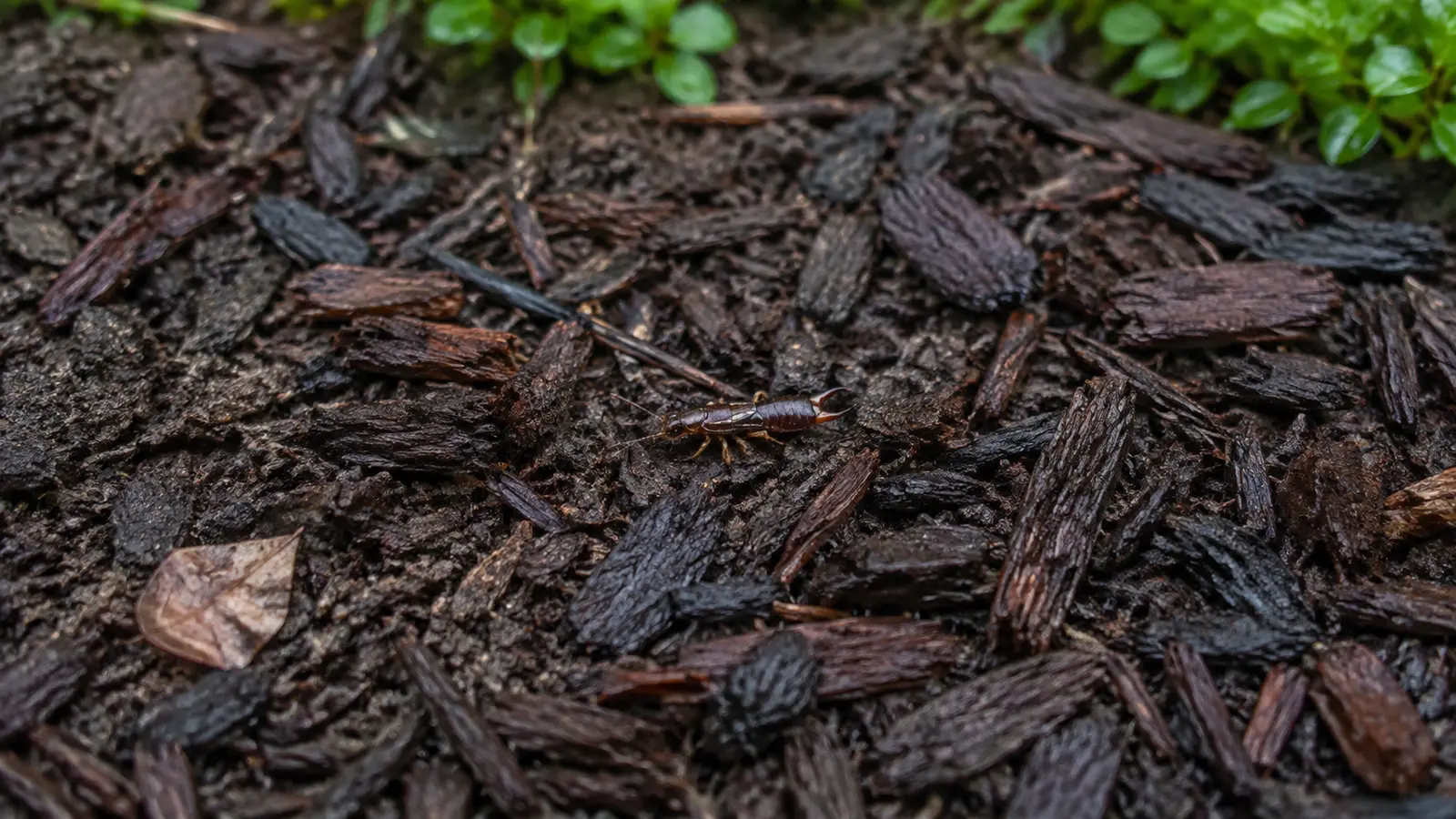
Almost nobody calls about earwigs because of damage. They call because they moved a potted plant, found something reddish-brown with a pair of forceps on its back end, and had a visceral reaction — and then, somewhere in the back of their mind, remembered a story about ears. The insect is genuinely unsettling to look at. Almost everything people believe about it is wrong, and the truthful version is more interesting than the myth.
Are earwigs dangerous, and do they crawl into your ears?
No to both. Earwigs do not crawl into ears — the name comes from old European folklore, not from behavior, and there is no basis for it. They are not venomous, they do not transmit disease, and they do not infest homes the way cockroaches or ants do. The pincers at the rear are used for defense against other insects, for handling prey, and in courtship; a large one can deliver a pinch if you handle it, but it does not break skin and there is no venom involved. In the garden they are genuinely mixed — they can damage seedlings and soft fruit in numbers, and they also eat aphids, mites, and decaying plant matter.
The Short Version
- The ear myth is entirely false. It comes from folklore and an old name, not from anything earwigs do.
- The pincers are for defense, prey handling, and courtship. A pinch is possible if you pick one up, but there is no venom and it does not break skin.
- They are moisture-driven, which is why they live in mulch, under pots, in leaf litter, and turn up in bathrooms and kitchens.
- The garden verdict is genuinely mixed — damage to seedlings and soft fruit on one side, aphid and mite predation on the other.
- Indoors they are accidental invaders. They do not breed inside or establish a household infestation.
- Persistent indoor numbers point at moisture and a ground-level entry gap rather than an earwig problem in itself.
What You Are Looking At
Earwigs are unmistakable once you know the profile. Adults run roughly half an inch to three quarters of an inch, with a flattened, elongated, segmented body in reddish-brown to nearly black, and slender antennae about half the body length. The defining feature is at the back: a pair of curved pincer-like appendages called cerci.
The cerci are worth a closer look because they tell you the sex. Males have pronounced, strongly curved pincers; females have straighter, more slender ones. It is one of the more easily observed differences in a common insect, and it is a good way to make a child less frightened of one — turning it into something to examine rather than something to flee.
Most species have wings folded under short leathery wing covers, and while many can technically fly, they very rarely do, so you will almost always see them running. And they run — quickly, and toward cover, which combined with the pincers is most of why people find them alarming.
The species you are most likely to encounter here is the European earwig, which is established throughout California and thoroughly at home in irrigated Southern California landscaping.
No basis in behavior. It derives from old folklore and the name itself, not from anything earwigs actually do.
Used against other insects, for handling prey, and in courtship. No venom, and a pinch does not break skin.
Damp mulch, leaf litter, under pots and stones. Indoor appearances almost always track dampness.
Dealing With the Ear Thing Directly
It is worth addressing head-on rather than skipping past, because it is one of the most searched questions about any insect and because a lot of people carry a genuine low-grade dread about it.
Earwigs do not crawl into ears to lay eggs, burrow into brains, or anything adjacent to that. The story is old European folklore, reflected in the name in several languages, and it predates any real understanding of the insect. There is no behavioral basis for it: earwigs seek dark, damp, tight spaces, and while essentially any small insect can end up in an ear canal by accident — this happens occasionally with a variety of insects and is not specific to earwigs — there is nothing about them that makes it a tendency.
They also do not lay eggs in people or animals. Earwigs are among the relatively few insects that show genuine maternal care: a female lays her eggs in a burrow in soil and then stays with them, cleaning them to prevent fungal growth and guarding the young after they hatch. It is a legitimately unusual behavior in the insect world and considerably more interesting than the myth.
On the pinch
A large male can pinch if you pick one up and hold on, and it can be startling. It does not break skin, there is no venom, and it does not require treatment beyond washing your hands. Earwigs are not aggressive toward people and will run for cover long before considering a defensive pinch.
Why They Are in Your Yard, and Sometimes Your Bathroom
Earwigs are nocturnal and strongly moisture-dependent, and everything about where you find them follows from those two facts. They spend daylight hours in dark, damp, tight spaces and come out at night to feed.
Mulch and ground cover
The classic habitat, and irrigated Southern California landscaping is close to ideal. Deep mulch beds hold moisture and give them cover at exactly the depth they prefer.
Under pots, stones, and pavers
Lift a potted plant that has been sitting on a patio and you will frequently find several. The damp ring underneath is a reliable spot.
Leaf litter and garden debris
Accumulated organic matter provides both shelter and food, since decaying plant material is part of their diet.
Woodpiles and stored materials
Anything sitting against the ground long enough to stay damp underneath.
Indoors near moisture
Bathrooms, kitchens, laundry rooms, and garages — the same rooms silverfish favor, and for the same reason. They come in seeking moisture, typically at ground level.
The important thing to understand about the indoor appearances: earwigs are accidental invaders. They do not establish breeding populations inside houses the way cockroaches and ants do, and an earwig in your bathroom came in from outside rather than emerging from an indoor colony. That is why the fix is almost entirely about the perimeter and the moisture rather than anything applied indoors.
Genuinely Mixed, Not Simply Bad
This is where earwigs deserve a more honest treatment than they usually get, because they are one of the clearer cases of an insect that is not straightforwardly a pest.
On the damage side: in sufficient numbers they chew irregular holes in leaves and flower petals, and they can do real harm to seedlings and young transplants, which are tender enough that a few nights of feeding sets them back or kills them. They also feed on soft fruit — strawberries, stone fruit, and berries — and on the silk of sweet corn. Their feeding damage is ragged and irregular, which distinguishes it from the cleaner cuts of caterpillars or the skeletonizing pattern of some beetles. Seedling beds and soft fruit are where a gardener genuinely has cause to act.
On the beneficial side, which is the part that gets left out: earwigs are omnivores and a meaningful part of their diet is other invertebrates. They prey on aphids, mites, insect eggs, and small larvae, and there is genuine agricultural research treating them as beneficial predators in some tree crops. They also consume decaying plant matter, contributing to the breakdown of organic material in a garden bed.
So the sensible posture is threshold-based rather than eliminationist. A handful of earwigs in mulch is part of a functioning garden and probably doing you more good than harm. Enough of them to visibly damage seedlings or fruit is a problem worth addressing — and the honest reason to address it is the specific damage, not the insect existing.
If they are damaging plants
Cultural changes do most of the work. Pull mulch back a few inches from plant stems and the foundation, since the mulch is the harborage rather than the plants. Clear leaf litter and garden debris where you can. Water in the morning rather than the evening so beds are drier overnight when earwigs are active. Lift pots onto feet so the damp ring underneath goes away. Protect seedlings specifically — they are the vulnerable stage, and collars or covers over a few weeks get transplants past it.
The classic low-effort trap works genuinely well and is worth knowing: a rolled-up damp newspaper, a short length of old hose, or a shallow container of oil left in the bed overnight. They gather in it by morning and can be disposed of. It is a decent way to gauge how many you actually have before deciding whether you have a problem at all.
When It Is Worth a Professional Visit
An occasional earwig indoors needs nothing beyond a tissue. The situations that warrant more:
Persistent numbers rather than occasional ones
Several a week, consistently, rather than one now and then. That is a pattern, and patterns have a cause worth finding.
Multiple rooms
Especially rooms away from an exterior door. That suggests they are getting in somewhere structural rather than walking through a doorway.
They keep coming back after you dry things out
If moisture reduction has not changed anything, the moisture source is probably somewhere you cannot see — a subarea, a wall cavity, a slow leak.
Alongside other moisture pests
Earwigs with silverfish, or with sowbugs and pillbugs, is a stronger signal than any one of them alone. Together they describe a damp building rather than three separate problems.
That last point is the genuinely useful one. Earwigs indoors are best read as a moisture and entry-point diagnostic. The reason to act is not that earwigs are dangerous — they are not — but that sustained dampness in a subarea or against a foundation is the precondition for problems that are considerably more expensive, subterranean termites and wood-decay fungus among them. An earwig is a cheap early warning.
The work itself, where it is warranted, is perimeter-focused: treating and sealing at ground level where they are entering, addressing the harborage in mulch and debris against the structure, and identifying the moisture condition. Broadcast interior treatment is not the answer for an insect that is not breeding indoors.
Finding them inside regularly?
That usually means a ground-level gap and a damp perimeter worth finding rather than an earwig problem as such. Xtermicon services the South Bay, Westside, and greater Los Angeles. Call (310) 370-0963 for a quote, over the phone, with no obligation.
Earwig FAQs
What people ask after finding one under a flowerpot.
Do earwigs really crawl into your ears?
No. This is folklore, reflected in the insect's name in several languages, and it has no basis in earwig behavior. They seek dark, damp, tight spaces in soil and vegetation, and there is nothing that draws them to ears specifically. Essentially any small insect can end up in an ear canal by accident on rare occasions, but that is a general fact about small insects rather than anything to do with earwigs, and they certainly do not lay eggs in people or burrow anywhere.
Do earwigs bite or sting?
Neither, in any meaningful sense. They have no stinger and are not venomous. The rear pincers are used against other insects, for handling prey, and in courtship — and a large male can deliver a pinch if you pick one up and hold on to it. It can be startling but it does not break skin and needs nothing beyond washing your hands. Earwigs are not aggressive toward people and will run for cover given any opportunity.
Are earwigs bad for my garden?
Genuinely mixed, which is an unsatisfying answer but the accurate one. They can damage seedlings, young transplants, flower petals, and soft fruit when numbers are high — and seedlings are the most vulnerable stage by a distance. They also prey on aphids, mites, and insect eggs, and break down decaying plant matter. A handful in mulch is part of a working garden. Enough to visibly damage plants is worth acting on. Judge it by the damage rather than by finding the insect.
Why are they in my bathroom?
Moisture. Earwigs are strongly moisture-dependent and come indoors seeking it, usually entering at ground level through door gaps, garage seals, or utility penetrations. Bathrooms, kitchens, laundry rooms, and garages are the humid rooms, so that is where they turn up. They are accidental invaders — they do not breed indoors and there is no colony in your wall — which is why the fix is about the perimeter and the dampness rather than anything sprayed inside.
How do I get rid of them without harming my garden?
Change the conditions rather than reaching for a product. Pull mulch back a few inches from stems and the foundation, since the mulch is the harborage. Clear leaf litter and debris. Water in the morning instead of the evening so beds are drier overnight when earwigs are active. Lift pots onto feet. For seedlings specifically, a collar or cover for a few weeks gets them past the vulnerable stage. The rolled damp newspaper or short hose length left out overnight is a genuinely effective low-tech trap and a good way to gauge numbers.
Is finding earwigs a sign of a bigger problem?
Sometimes, and that is the most useful way to read them. Persistent earwigs indoors — especially alongside silverfish, sowbugs, or pillbugs — usually describes a damp building and an open ground-level entry rather than an earwig problem. The reason to care is not the earwigs, which are harmless, but that sustained moisture in a subarea or against a foundation is the precondition for subterranean termites and wood-decay fungus. Treat them as a cheap early warning worth investigating.
Related Reading
The other moisture-driven pests, and the perimeter work that addresses all of them.
- Earwigs: species profileIdentification quick reference in the pest library.
- Silverfish in Southern CaliforniaThe other moisture-reading pest, and the one most often found alongside earwigs.
- Crickets in the houseAnother ground-level accidental invader with the same underlying causes.
- Landscaping habits that invite pestsMulch depth, irrigation timing, and what to keep back from the foundation.
- The Labor Day pest exclusion checklistSealing the ground-level gaps accidental invaders come through.
- The pest libraryIdentification guides for the other insects turning up in your yard.
Sydney Pardey is the owner of Xtermicon, a family-owned pest control company serving the South Bay and greater Los Angeles area since 2015. All content is written from direct operational experience and reviewed against current California Structural Pest Control Board standards.
Specialists you
can count on.
Xtermicon was founded in 2015 with one focus: protect Southern California homes and businesses from the pests that threaten them. The name says it all — eXterminate TERmites & pest CONtrol — and that's exactly what we do. We're a family-owned team specializing in termite control, pest control, and rodent exclusion. From West LA and East LA to the beach cities and Orange County, we're local neighbors who treat your property like our own.