The Labor Day Checklist: The Garage, Shed, and Weatherstripping Gaps Pests Use to Get In
Every pest that gets into a house comes through an opening somebody could have closed. Here is the long weekend version of finding them, in the order that actually matters.
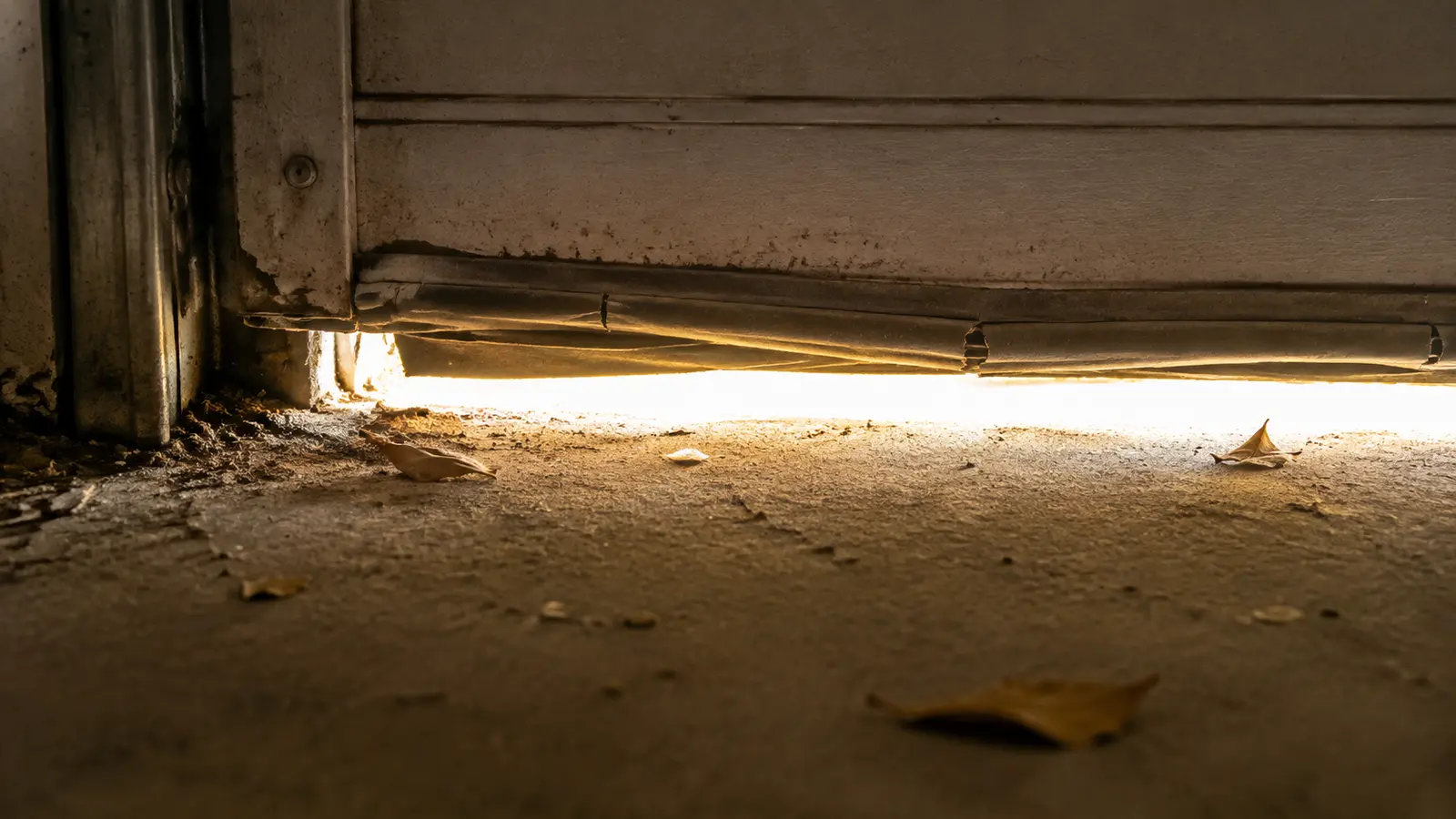
Almost every pest problem we get called about started as a gap somebody walked past a hundred times. Not a dramatic hole — a worn rubber seal at the bottom of a garage door, a dryer vent whose flap stopped closing years ago, a half-inch of daylight at the corner of a crawlspace screen. The pests did not force their way in. They found an opening that was already there, in a house that looked perfectly closed up from ten feet away. Labor Day weekend is a good time to go find yours, because the work is genuinely a weekend project and because what comes next in the calendar — cooling nights, the first rain — is exactly what drives things indoors.
How do you seal a house against pests?
Work the building envelope from the ground up, and start with the largest openings rather than the most visible ones. In practice that means the garage door seal and side jambs first, then utility and plumbing penetrations where pipes and conduit pass through exterior walls, then dryer and exhaust vents, then foundation and attic vent screening, then door sweeps and weatherstripping on every exterior door. A mouse needs roughly a quarter-inch gap and a rat about a half-inch, so the standard is smaller than most people assume. Use materials pests cannot chew through — copper mesh, hardware cloth, sheet metal — rather than expanding foam or steel wool on their own.
The Short Version
- Exclusion outperforms treatment for anything that has to travel in from outside. A sealed gap keeps working with no reapplication.
- Size the standard correctly: a house mouse fits through about a quarter inch, a rat through about a half inch. If a pencil fits, so does a mouse.
- The garage is the single highest-value hour of this whole checklist, and its door seal is the most commonly failed component on a house.
- Foam and steel wool alone are not exclusion — rodents chew through both. Use copper mesh or hardware cloth as the barrier and foam only to seal around it.
- Screening exists to be checked. Vent, dryer, and crawlspace screens fail quietly and are rarely inspected once installed.
- Some gaps are symptoms. A vent screen that keeps tearing open, or a sagging crawlspace access, usually means something structural rather than something to patch.
The Timing Is Not Arbitrary
Exclusion work is worth doing at any point in the year, but there is a reason this particular weekend is the one we point people at.
What follows it is the seasonal shift that produces our heaviest call volume. As nights cool through September and October, rodents that spent the summer perfectly comfortable in ivy, woodpiles, and palm crowns start testing structures for somewhere warmer. When the first real rain arrives, everything living in soil, mulch, and ground cover moves at once — ants, spiders, roaches, earwigs — and they move toward the nearest dry void. Both of those events find whatever openings your house has. Neither of them creates new ones.
So the gap you close in the first week of September is a gap that is not available in November, which is the entire point. Exclusion is the only part of pest control that gets more valuable the earlier you do it.
This is the structural half only
This checklist deliberately covers the building itself — gaps, seals, screens, penetrations. The other half of prevention is what is growing and stacked against the building, which is a genuinely different job with its own rules. That side is covered separately in our landscaping guide, linked at the end.
The Garage Is the Highest-Value Hour
If you only do one section of this list, do this one. More pests enter Southern California homes through the garage than through any other single part of the structure, and the reasons compound: it is the largest opening in the building, it opens and closes several times a day, its seal is a wear item that nobody replaces on a schedule, and it usually connects to the living space through a door that was never weatherstripped properly.
The bottom seal
Close the door fully and look along the bottom from inside with the lights off. Any daylight is an open door as far as a rodent is concerned. The rubber astragal hardens, cracks, and takes a permanent set over years — it is an inexpensive replacement part and the highest-return fifteen minutes on this list.
The side jambs and top
The vertical weatherstripping on both sides fails more often than the bottom seal and gets checked far less. Look for gaps at the top corners specifically, where the seal pulls away and leaves a triangular opening that is invisible from outside.
Under an uneven slab
Older driveways settle, leaving the concrete low in the middle or at one corner while the door closes flat. A threshold seal bonded to the slab handles the mismatch that a door seal alone cannot.
The door into the house
This is the one people skip because it is interior. It is not — it is the boundary between a space pests get into easily and one they should not. It needs a door sweep and intact weatherstripping exactly like an exterior door.
Where the walls meet the slab
Along the back and sides of the garage, check where the framing sits on the foundation, and check every point where a pipe, conduit, or wire passes through. Garages are where these penetrations are left unsealed, because the space is unfinished and nobody was looking.
Utility Penetrations and Vents
Once the garage is handled, walk the full perimeter of the house slowly and look at every point where something passes through an exterior wall. This is the category that produces the most surprise, because these openings were made deliberately by a trade that had no reason to care about pests.
Plumbing and gas line penetrations
Hose bibs, gas lines, irrigation supply, and any abandoned stub. The hole cut through the wall is almost always larger than the pipe running through it, and the gap around it is a direct route into the wall cavity.
Electrical and low-voltage conduit
Service entrances, exterior outlets, cable and fiber drops, and the holes left behind by equipment that was removed years ago. Communications installers are the most reliable source of an unsealed one-inch hole in an exterior wall.
Air conditioning line sets
Where the refrigerant lines enter the wall. The insulating sleeve degrades in sun and the sealant behind it cracks, leaving an opening at a height most people never inspect.
Dryer vents
The exterior flap is designed to close by gravity and reliably stops doing so once lint builds up behind it. A stuck-open dryer vent is a four-inch entrance into the house. Clean it, confirm the flap falls shut, and fit a purpose-made vent guard — never window screen, which traps lint and becomes a fire risk.
Kitchen and bath exhaust terminations
Same failure as the dryer vent, smaller opening, checked even less often. Both are usually reachable from a ladder in a few minutes.
Weep holes in masonry
These exist for drainage and must stay open, so this is a case where the fix is a purpose-made weep hole cover rather than sealing. Do not caulk them shut — that trades a pest problem for a moisture problem, and moisture problems are worse.
Foundation Vents, Crawlspaces, and the Attic
The subarea and the attic are where a small entry becomes a large problem, because both are quiet, undisturbed, and mostly unvisited. They are also where the damage that shows up on an inspection report is generated.
On a raised foundation, walk the perimeter and check every foundation vent. The original galvanized screening rusts through at the edges, and it is common to find a vent that looks intact from three feet away and has a fist-sized opening at one corner. The crawlspace access door is the other classic — they warp, the latch stops engaging, and they end up propped rather than closed.
Up top, the items worth looking at are the attic and gable vents, the ridge and eave venting, and the roof-to-fascia line. Roof rats are the relevant pest here and they are excellent climbers, so height is not protection. Anything that lets a tree branch, a fence top, or a utility line put an animal onto the roof turns every gap up there into a usable entrance. Check where different roof planes meet, and where the gutter meets the fascia board — gaps at those junctions are extremely common on older South Bay housing stock.
Materials matter more than effort
Expanding foam and steel wool are the two most commonly used exclusion materials and neither works alone. Rodents chew straight through cured foam, and steel wool rusts out within a season or two. Use copper mesh or hardware cloth as the actual barrier, packed tightly into the opening, and use foam or sealant only to hold it and close the remaining edge. The barrier has to be something with teeth that cannot be defeated.
The Finishing Pass
Last, because these are the smallest openings, but worth doing because they are the ones you interact with daily and therefore the ones that annoy you most when something gets through.
Door sweeps on every exterior door
The daylight test again — lights off inside, look at the bottom of each closed door. Sweeps wear at the ends first, so check the corners rather than the middle.
Weatherstripping on jambs
Compressed, cracked, or missing entirely on doors that get heavy use. The strike side is the usual failure.
Window screens
Small tears matter for flying insects specifically. Also check that the screen actually sits in the frame — a screen resting loose in a warped track is decorative.
Sliding door tracks
The corners where the track meets the jamb are a persistent gap on older sliders and a well-used entry point for ants in particular.
Pet doors
Worth naming honestly: a pet door is an intentional opening in your envelope, and there is a limit to how much exclusion can do around one. Electronic collar-activated models close that gap considerably if the rest of the house is sealed.
When a Gap Is a Symptom Rather Than a Fix
Most of this list is genuinely a homeowner job with a caulk gun, a roll of hardware cloth, and an afternoon. Some of it is not, and the difference is worth knowing before you spend a weekend sealing something that will reopen.
Treat it as a symptom rather than a gap when: a screen or vent keeps being torn open in the same place, which means something is actively working at it rather than passing by; the wood around an opening is soft, crumbling, or stained, which is a moisture or wood-destroying-organism question before it is an exclusion question; a crawlspace access or vent frame is sagging out of square; or you are finding droppings, gnaw marks, or insulation debris inside, which means the sealing decision is now about what you would be sealing in.
That last one deserves emphasis. Closing a structure that already has an active rodent population inside is the wrong order of operations, and it produces exactly the outcome nobody wants — animals dying in inaccessible wall voids. This is why our own rodent work prioritizes mechanical exclusion and trapping inside the structure rather than poison bait indoors, and why a proper exclusion job establishes what is currently inside before it starts closing things. Find out first, then seal.
Want the walkthrough done for you?
A professional exclusion assessment covers the same envelope with a ladder, a light, and access to the subarea and attic — the parts of this list that are hardest to check honestly from the ground. Xtermicon has worked South Bay, Westside, and greater Los Angeles housing stock since 2015. Call (310) 370-0963 for a quote; we can give you one over the phone with no obligation.
Pest Exclusion FAQs
What homeowners ask when they start sealing a house up for the season.
How small a gap can a mouse actually get through?
A house mouse can pass through an opening of roughly a quarter inch, and a rat needs about a half inch. The practical field test is a pencil: if a standard pencil fits into the gap, a mouse can use it. Both animals can also enlarge an opening that is close but not quite big enough, so a gap slightly under the threshold is not automatically safe. This is why exclusion standards look excessive to people doing it for the first time.
Is expanding foam good enough to seal a hole?
Not on its own. Cured foam is soft enough that a rodent chews through it without much effort, and steel wool — the other common choice — rusts apart within a season or two. The approach that holds is a barrier material with real resistance packed into the opening, meaning copper mesh or hardware cloth, with foam or sealant used only to lock it in place and close the edge. Foam is a finishing material, not a barrier.
Should I seal the foundation and attic vents shut?
No — screen them, do not close them. Those vents exist to move air through the subarea and attic, and blocking them creates trapped moisture, which invites subterranean termites and wood-decay fungus. You have then traded a pest you can see for two you cannot. The correct fix is intact, properly fastened screening in a mesh fine enough to exclude rodents while still letting the space breathe. The same logic applies to masonry weep holes.
What if I find droppings while I am doing this?
Stop sealing and find out what is living there first. Closing entry points on a structure that already has an active population inside traps animals in wall voids and attics, and the cleanup that follows is considerably worse than the original problem. Establish what is present and get it out, then close the envelope behind it. Order of operations is most of what separates exclusion that works from exclusion that creates a new job.
Does sealing the house actually replace pest control?
For anything that has to travel in from outside, exclusion is the most durable single thing you can do, and it keeps working with no reapplication. It does not cover everything, though. It does nothing for pests already established inside, nothing for a colony network that is going to keep pressure on the structure regardless, and nothing for wood-destroying organisms that enter below grade. The honest framing is that exclusion and treatment do different jobs, and exclusion is the half most often skipped.
How often should I re-check all of this?
Once a year for the full walkthrough is reasonable, and late summer or early fall is the natural time because of what follows it seasonally. The components that genuinely need more frequent attention are the wear items: the garage door bottom seal, door sweeps, and the dryer vent flap. Those are worth a two-minute look each season, since all three fail gradually and none of them announce it.
Related Reading
The yard side of prevention, and what to do when something is already inside.
- Landscaping habits that invite pestsThe other half of prevention — what is planted, stacked, and watered against the building.
- Fall rodent season in Southern CaliforniaWhat the cooling nights actually trigger, and why the timing of this checklist matters.
- Rats in the atticHow to tell what is up there, and what the noises mean.
- Our rodent control serviceExclusion-first work, including subarea and attic access.
- Roof rats: species profileThe climber this checklist is largely aimed at.
- Residential pest controlRecurring service across the South Bay, Westside, and greater Los Angeles.
Sydney Pardey is the owner of Xtermicon, a family-owned pest control company serving the South Bay and greater Los Angeles area since 2015. All content is written from direct operational experience and reviewed against current California Structural Pest Control Board standards.
Specialists you
can count on.
Xtermicon was founded in 2015 with one focus: protect Southern California homes and businesses from the pests that threaten them. The name says it all — eXterminate TERmites & pest CONtrol — and that's exactly what we do. We're a family-owned team specializing in termite control, pest control, and rodent exclusion. From West LA and East LA to the beach cities and Orange County, we're local neighbors who treat your property like our own.