What Actually Happens During Termite Fumigation (Tenting)? A Step-by-Step Guide
An inspector told you the house needs to be tented and handed you a prep list. Here is what the tent does, what the days actually look like, and what fumigation does and does not accomplish.
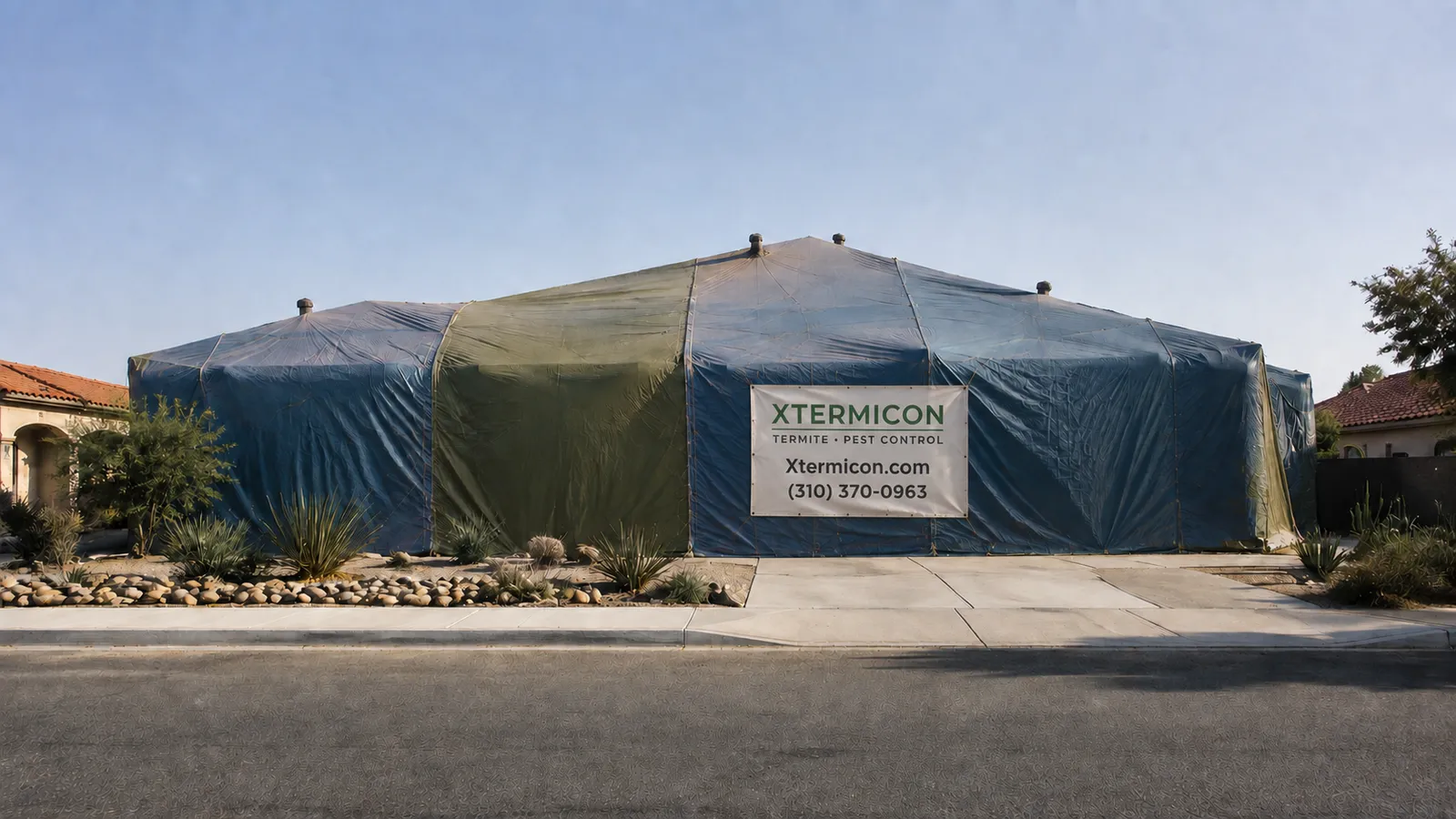
Nobody takes the news well. An inspector walks the house, finds drywood termites in more places than a spot treatment can reach, and says the structure needs to be tented — and then hands over a preparation list that runs to two pages and mentions bagging your food and boarding your pets. It sounds enormous, and the word "fumigation" does not help. In practice it is one of the most defined, procedural jobs in this trade, with a fixed sequence and a clear endpoint. Here is the whole thing, start to finish.
What happens during termite fumigation, and how long does it take?
The structure is covered in tarps and sealed, a measured dose of sulfuryl fluoride gas is released inside, and it is held at a lethal concentration long enough to reach termites living deep inside structural wood. Most jobs run roughly one to three days end to end depending on the size of the structure and the conditions, which includes the fumigation period plus aeration afterward. Nobody re-enters until the fumigator has aerated the building and measured the interior air with a clearance device to confirm it is safe. Before any of that, the occupants prepare: all people, pets, and plants out, and all food and medication either removed or sealed in the fumigation bags provided.
The Short Version
- Fumigation is for drywood termites that are widespread through a structure. Localized activity is usually handled with local or spot treatments instead.
- The fumigant used for structural work is sulfuryl fluoride. It is a gas, and it leaves no surface residue behind once the building is aerated.
- Expect roughly one to three days from tent-up to tent-down, depending on the size of the structure and conditions.
- The prep list is not optional. Food and medication get removed or sealed in the bags provided, and every living thing — people, pets, fish, houseplants — goes out.
- If the crew has to step onto a neighbor's property to raise the tarps, or the neighbor's plants grow onto yours, written consent from that neighbor is required first.
- Fumigation kills what is in the structure at that moment. It leaves no residual protection, so ongoing inspection still matters afterward.
Why Tenting, and Not Something Smaller
Drywood termites live entirely inside the wood they eat. There is no soil connection to interrupt and no central nest to find — a mature infestation can be several separate colonies in different structural members, some of them behind finished surfaces where nobody can reach them.
When the activity is confined and accessible, local or spot treatments are the right call: less disruption, lower cost, no need to leave the house. When an inspection finds activity in multiple areas, or in framing that cannot be reached without opening up walls, spot work starts guessing. Fumigation exists for that case. A gas fills the entire sealed structure and penetrates wood, which means it reaches colonies nobody has located — including the ones the inspection could only infer.
That thoroughness is the entire argument for it, and it is also why it is a bigger production than any other termite treatment. You are treating the whole building rather than the spots someone found.
Tent-up through aeration and clearance, varying with the size of the structure and conditions.
A gas that penetrates wood and dissipates completely during aeration, leaving no surface residue.
Fumigation is scheduled with a deposit, with the balance due on completion.
Your Preparation List, and Why Each Item Is There
This is the part homeowners actually have to execute, and the part where delays happen. Every item has a reason behind it, which makes the list easier to work through.
Remove or seal all food, feed, and medication
Anything intended for consumption — human or animal — either leaves the building or goes into the special fumigation bags provided, sealed per the product label. This includes the pantry, the refrigerator and freezer, pet food, and both prescription and over-the-counter medication. Unopened glass, metal, and plastic bottles and cans with the original factory seal intact generally do not need bagging, but check the list you are given rather than assuming.
Every living thing goes out
People, pets, and plants. Fish tanks and their pumps have to leave the building entirely rather than be covered. Arrange pet boarding early — it is the item that most often gets left to the last minute.
Move interior plants out, and expect exterior ones to be managed
Houseplants go with you. Outdoor plants and shrubs touching the structure may need to be trimmed back or relocated so the tarps can seal to the ground, and the soil and landscaping against the building is typically watered beforehand as a protective step.
Open the building up on the inside
Interior doors, cabinets, drawers, closets, and appliance doors get opened so the gas circulates evenly through the structure. A closed cabinet is a pocket the fumigation has to work harder to reach.
Notify your immediate neighbors
A courtesy in every case, and a requirement in some. On closely spaced lots, tarps often need clearance beyond the property line.
Get written neighbor consent if the tent crosses a property line
If the crew has to set foot on the neighbor's property — even a foot of it — to raise or secure the tarps, or if the neighbor's plants grow over onto your side, that neighbor has to sign a consent form before the job can proceed. This one blocks jobs more often than any other item, so start the conversation as soon as fumigation is scheduled rather than the week of.
Arrange gas shutoff and access
The gas company shuts off service to the structure before the tent goes up, and it is turned back on and appliances re-lit after clearance. The fumigator needs a way in, and the building gets secured with a secondary lock while it is under gas.
Clear the roof of anything fragile
Satellite dishes, loose tile, solar equipment, and anything else on the roof is worth flagging in advance. Tarps go over the roof and crews walk on it.
What the Crew Actually Does
Tarps go up and get sealed
The structure is covered in heavy tarps, seamed together and weighted down along the ground so the whole building becomes a sealed envelope. This is the physically demanding part of the job and the part that determines whether everything after it works.
The building is secured and posted
A secondary lock goes on and warning signage is posted at the entrances. From this point until clearance, the structure is legally and physically off limits to everyone but the licensed fumigator.
A measured dose is introduced
The dose is calculated for the volume of the structure, the temperature, and how long it will be held. This is not a fixed amount out of a can — it is a calculation, and it is the reason fumigation is a specialty license rather than a general pest treatment.
A warning agent goes in with it
Sulfuryl fluoride has no odor, so a separate warning agent is introduced alongside it. It causes immediate tearing and irritation, which is what makes an unsafe building obvious to anyone who might otherwise enter it.
The concentration is held and monitored
The gas has to stay above a lethal concentration long enough to penetrate wood and reach termites inside it. This exposure period is the actual treatment.
Aeration
The tarps come off and the structure is opened and ventilated. Sulfuryl fluoride dissipates into the atmosphere and does not linger on surfaces, which is why aeration rather than cleaning is what makes the building safe again.
Clearance testing, then release
The fumigator measures the interior air with a clearance device and does not release the structure until readings confirm it is safe to re-enter. Nobody goes in on a schedule — they go in on a reading.
This is not the fumigant you have read about in the news
Worth saying plainly, because it causes real anxiety. Structural fumigation for drywood termites uses sulfuryl fluoride inside a sealed building. That is a different product and a completely different application from the agricultural soil fumigants that periodically make the news over drift and buffer zones near farmland and schools. Those are injected into open ground across acreage; this is a measured dose inside a tarped structure that is then aerated and instrument-tested before anyone re-enters. If a news story about fumigation has been sitting in the back of your mind, it is almost certainly not about this.
Re-Entry, and the First Day Back
Once the clearance readings pass, the structure is released and you can go back in. A few practical things people ask about that first day.
You do not need to wash every dish, wipe every counter, or launder the bedding. Sulfuryl fluoride is a gas that leaves no surface residue — it is not a spray that settled onto things. Plenty of people wash a few items anyway for peace of mind, which is fine, but it is reassurance rather than decontamination. Mattresses, sofas, and clothing left in the house are unaffected and do not need special handling.
Unbag your food and medication and put it away. Turn the gas back on if that has not already been arranged, and confirm pilot lights and appliances are relit. Expect a faint smell in the first hours from the building having been closed up rather than from the fumigant. And take a look at your landscaping — plants against the structure occasionally show stress from being covered, watered heavily, or trimmed back, and it is easier to address early.
What Fumigation Does Not Do
This is the part that gets undersold, and it matters more than anything else in this article.
Fumigation kills every termite in the structure at the time of treatment. It is extremely effective at that. What it does not do is leave anything behind. There is no residual, no barrier, and no protection against the next drywood alate that flies in through an attic vent on a warm evening in September and starts a new colony in your fascia. The gas dissipates entirely — that is precisely why it is safe to re-enter — and with it goes any ongoing protection.
The practical consequence: a fumigated house is a clean slate, not a permanent solution. Periodic inspection still matters, screening attic and subarea vents still matters, and correcting the conditions that made the structure attractive still matters. Anyone implying that tenting is a one-and-done for the life of the house is overselling it.
It also does nothing for subterranean termites. Those live in the soil and enter through mud tubes, and a gas inside the structure does not touch a colony in the ground outside it. If a property has both — which happens — they are two separate treatments.
Been told your house needs tenting?
Get a second look before you commit to it. Fumigation is the right call when drywood activity is widespread, and it is a lot of production for a problem that a local treatment could have handled. Xtermicon has worked on termites across the South Bay, the Beach Cities, and greater Los Angeles since 2015. Call (310) 370-0963 and we will inspect the structure and tell you plainly which of the two you are actually looking at.
Termite Fumigation FAQs
What homeowners ask in the weeks between being told they need tenting and the tarps going up.
How long do I have to be out of the house?
Plan on one to three days depending on the size of the structure and the conditions, and treat the upper end as your working assumption when you book somewhere to stay. The timeline covers tent-up, the exposure period the gas has to be held for, and then aeration and clearance testing afterward. The release is not scheduled in advance — the fumigator measures interior air with a clearance device and only opens the building when the readings confirm it is safe, so a job occasionally runs longer than planned.
Do I have to throw out my food, or wash everything when I get back?
Neither, if you prepare correctly. Food and medication either leave the building or go into the fumigation bags you are provided, sealed per the label — bagged items are fine to use afterward. Once the structure is aerated and cleared, there is no surface residue to wash off, because sulfuryl fluoride is a gas that dissipates rather than a spray that settles. Dishes, counters, bedding, and clothing do not require special cleaning. Many people wipe a few things down anyway, and that is a comfort decision rather than a safety one.
Will tenting damage my roof, my landscaping, or my house?
Damage is uncommon but not impossible, and the two places to pay attention are the roof and the plants. Crews walk on the roof and tarps go over it, so brittle or aging tile, satellite dishes, and rooftop equipment are worth flagging before the job rather than discovering afterward. Landscaping against the structure sometimes shows stress from being covered, cut back, or watered heavily as part of the protective prep. Interior finishes, furniture, and electronics are unaffected — the gas does not interact with them.
Does fumigation kill subterranean termites too?
No. Subterranean termites live in the soil and travel into a structure through mud tubes, and a gas held inside a tented building does not reach a colony in the ground outside it. Fumigation is a drywood termite treatment. If an inspection finds both species on one property — which does happen here — they are two separate treatments on two separate approaches, and the soil-side work has to be handled on its own.
How long does the protection last after fumigation?
It does not provide ongoing protection at all, and this is the most important thing to understand about it. Fumigation kills everything living in the structure at the moment of treatment and then dissipates completely — which is exactly why re-entry is safe, and also why nothing is left behind to stop a new colony starting. A drywood alate can fly in and begin a new infestation the following swarm season. That is not a failure of the treatment; it is the nature of it. Periodic inspection afterward is what catches the next one early.
What if my neighbor will not sign the consent form?
Then the job cannot proceed as planned, which is why it is worth raising early rather than the week of. Written consent is required if the crew must step onto the neighbor's property — even a foot of it — to raise or secure the tarps, or if their plants grow over onto your side. On tightly spaced lots this comes up often. Most neighbors sign once they understand what is being asked and how long it takes. Where they will not, the options are re-approaching the tenting plan or reconsidering whether a different treatment approach fits the findings.
Is there an alternative to tenting?
Sometimes, and it depends entirely on what the inspection finds. Where drywood activity is limited to accessible areas, local or spot treatments are a legitimate alternative and far less disruptive. Where activity is found in several separate areas, or in framing behind finished surfaces, spot work becomes guesswork about the colonies nobody has located. The honest version is that the extent of the infestation decides this, not preference — which is why it is worth having the structure inspected properly before committing either way.
Related Reading
The identification and inspection context around a fumigation decision.
- Drywood vs. subterranean termitesWhy only one of the two is ever treated by tenting, and how to tell which you have.
- Termite inspection when buying or selling a homeHow fumigation findings show up in escrow, and what a Section 1 clearance involves.
- When do termites swarm in Southern California?The swarm calendar that explains how a fumigated house can be reinfested later.
- Our termite control serviceLocal and spot treatments through to fumigation, matched to the inspection.
- Drywood termite pest libraryBiology, evidence, and why they live entirely inside the wood.
- Pest control in Manhattan BeachTermite work across the Beach Cities since 2015.
Sydney Pardey is the owner of Xtermicon, a family-owned pest control company serving the South Bay and greater Los Angeles area since 2015. All content is written from direct operational experience and reviewed against current California Structural Pest Control Board standards.
Specialists you
can count on.
Xtermicon was founded in 2015 with one focus: protect Southern California homes and businesses from the pests that threaten them. The name says it all — eXterminate TERmites & pest CONtrol — and that's exactly what we do. We're a family-owned team specializing in termite control, pest control, and rodent exclusion. From West LA and East LA to the beach cities and Orange County, we're local neighbors who treat your property like our own.