Termite Inspection When Buying or Selling a Home in California — What to Expect
The termite (or "WDO") report is one of the most misunderstood steps in a California home sale. Here's what Section 1 and Section 2 findings actually mean, who pays, and how to keep it from derailing your escrow.
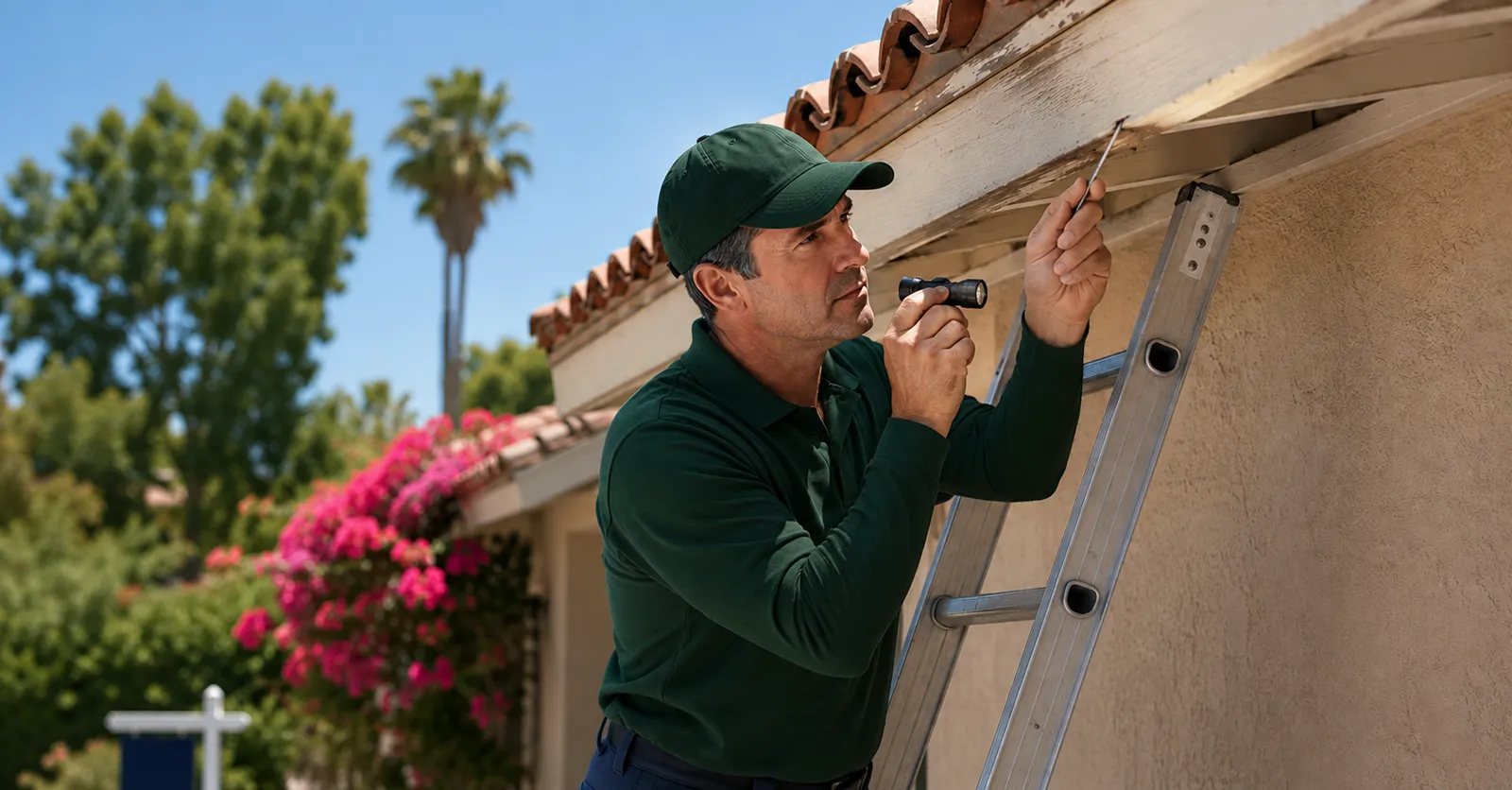
The escrow is moving along, everyone's getting comfortable — and then the termite report lands in the inbox. It's several pages, there's a diagram of the house covered in markings and codes, and somewhere in there are the words "Section 1" next to a dollar figure. The buyer's stomach drops. The seller gets defensive. And a routine, expected part of nearly every California home sale suddenly feels like a crisis. It almost never needs to.
The termite report — properly called a Wood-Destroying Organisms, or "WDO," inspection report — is one of the most misunderstood documents in a California real estate transaction. Understood correctly, it's not a bomb going off in your escrow; it's a structured checklist that tells you exactly what a licensed inspector found and sorts it into what needs to be fixed versus what's worth watching. This guide explains what the report is, what Section 1 and Section 2 actually mean, who typically pays, and how to keep the whole thing from derailing your deal.
What is a termite inspection in a California home sale?
It's a Wood-Destroying Organisms (WDO) inspection performed by a company licensed by the California Structural Pest Control Board. A licensed inspector examines the accessible areas of the home for wood-destroying pests and organisms — drywood and subterranean termites, wood-boring beetles, and wood-decay fungus ("dry rot") — and files a report that classifies findings into Section 1 (active infestations or existing damage) and Section 2 (conditions likely to lead to a problem, but with no current evidence). California doesn't legally require the report to sell a home, but lenders often do — VA loans and many FHA loans typically require Section 1 items to be cleared before funding. Who pays for the inspection and any corrections is negotiable in the purchase contract, not fixed by law. Once required work is completed and verified, a clearance (a "Notice of Work Completed") is issued.
The Short Version
- The report is a WDO inspection, performed by a company licensed by the California Structural Pest Control Board (a Branch 3 license).
- Section 1 = active infestation or existing damage (the findings lenders care about). Section 2 = conditions likely to lead to a problem, with no current evidence.
- A termite report is not required by state law to sell a home — but lenders often require one, and VA and many FHA loans require Section 1 cleared before funding.
- Who pays for the inspection and the work is negotiable in the purchase contract — there is no fixed legal rule.
- Filed WDO reports are public and searchable on the Structural Pest Control Board website for two years.
- In SoCal, drywood termites are extremely common, so a Section 1 finding is routine and treatable — it rarely means the sale falls through.
What a Termite (WDO) Inspection Actually Involves
A real estate termite inspection in California has to be performed by a company holding a Structural Pest Control Board license in the wood-destroying-pests category (Branch 3). The inspector examines the accessible parts of the home — the attic, the subarea or crawlspace, the garage, the eaves and exterior, and interior wet areas like bathrooms and under sinks — looking for evidence of the organisms that damage wood. That covers more than just termites: the "wood-destroying organisms" category includes drywood termites, subterranean termites, wood-boring beetles, and wood-decay fungus, commonly called dry rot.
The result is a written report with a diagram of the structure. Findings are keyed to the diagram and sorted into sections, and any areas the inspector couldn't access are flagged for "further inspection." In Southern California, one finding is so common it's almost expected: drywood termites. Our dry, mild climate is ideal for them, and they infest sound, dry wood above ground — eaves, attic framing, trim, fascia — which means WDO reports across the South Bay and greater LA flag them routinely. A drywood finding on a SoCal home is not a sign the house was neglected; it's a sign the house is in Southern California.
The Distinction That Matters Most: Section 1 vs. Section 2
Almost everything that causes confusion and anxiety around termite reports comes from not understanding these two categories. Get this distinction and the whole report becomes readable.
Section 1 — active or existing problems
Section 1 items are active infestations or existing damage from wood-destroying organisms — evidence of a problem that is present right now. Visible drywood termites or their droppings (pellets), subterranean termite mud tubes, a wood-boring beetle infestation, fungus damage from a chronic leak, and the damaged wood these cause all fall under Section 1. These are the findings lenders focus on, and clearing the Section 1 items is what produces a "clear" report or a Section 1 clearance. When people talk about needing a "termite clearance" to close, they're almost always talking about Section 1.
Section 2 — conditions likely to lead to problems
Section 2 items are conditions that are likely to lead to an infestation or infection, but where there's no visible evidence of active organisms yet. Think of them as risk factors: earth-to-wood contact, excessive moisture or a plumbing leak, faulty grade that drains toward the structure, cellulose debris (wood scraps) in the crawlspace, or form boards left in place under the house. Section 2 items are recommendations — smart to address to prevent future problems — but they're often not required for a clearance the way Section 1 items are. They frequently become the buyer's future maintenance list.
Infestations or damage present now — live termites, mud tubes, beetle activity, fungus damage. The findings lenders require cleared for a termite clearance.
Conditions that invite future problems with no current evidence — earth-wood contact, moisture, cellulose debris. Recommended, often not required to clear.
The Structural Pest Control Board license category required to perform WDO inspections and issue reports in California. Verify your inspector holds it.
Filed WDO reports are searchable on the SPCB website for two years — buyers and agents can look up a property's recent report history.
Who Pays for the Inspection and the Work?
This is the question that generates the most friction, and the answer surprises people: in California, there is no law dictating who pays for the termite inspection or the corrective work. It's entirely negotiable, and it's spelled out in the purchase contract. What people think of as "the rules" are really just customs, and customs vary by market and shift with whether it's a buyer's or seller's market.
That said, some patterns are common. Traditionally, sellers have often paid to correct Section 1 items — the active problems — because a lender won't fund until they're cleared and the seller wants the deal to close, while buyers more often take on the optional Section 2 items as future maintenance. But none of that is guaranteed; in a competitive market a buyer might agree to handle everything, and in a slow one a seller might cover it all. There's also an important loan-specific wrinkle: for VA loans, the buyer (the veteran) typically cannot pay for the termite inspection or the Section 1 work — it usually has to be covered by the seller or another party. The single most important thing is that whatever the arrangement, it should be written explicitly into the purchase agreement so there's no dispute later.
Is a termite report legally required to sell?
No — California does not legally require a termite/WDO report to sell a home. What drives it is the lender and the contract. Many mortgage lenders require a report, and VA and often FHA loans require Section 1 items cleared before they'll fund. Even in an all-cash deal with no lender, buyers routinely request a WDO inspection as a contingency because it's the standard way to know the condition of the wood. So while it's not a state mandate, in practice it's part of nearly every financed sale.
How Section 1 Findings Get Corrected and Cleared
Once Section 1 items are identified, correcting them depends on what was found — and for the SoCal-classic drywood termite finding, there's more than one path.
Drywood termites — fumigation or local treatment
For a widespread drywood infestation, tent fumigation treats the entire structure at once and is the most thorough option; it typically takes a couple of days start to finish. For a limited, well-defined infestation, local or "spot" treatments can address specific areas without tenting. Which is appropriate depends on how extensive the infestation is.
Subterranean termites — soil treatment or baiting
Subterranean termites, which come up from the soil, are treated with liquid termiticide applied to the soil around and under the structure, or with in-ground baiting systems. These play out over a longer period than fumigation.
Wood-decay fungus and damage — repair plus moisture fix
Fungus (dry rot) findings require repairing or replacing the damaged wood and, critically, fixing the moisture source that caused it — a leak, poor drainage, or ventilation problem. Treating the wood without fixing the water just delays a repeat.
After the corrective work is done, the company re-inspects and issues documentation that the work is complete — commonly a "Notice of Work Completed" and, where applicable, a Section 1 clearance. That clearance is typically what the lender and escrow are waiting on. Because tenting and repairs take time and have to be coordinated with the escrow timeline, this is a step you want to start early rather than discover at the last minute.
What Sellers Should Know
Consider inspecting before you list
Getting a WDO inspection before listing removes the biggest source of last-minute escrow surprises. You learn what's there on your own timeline, can get competitive bids on any work, and can present a clean or cleared report as a selling point rather than scrambling mid-escrow.
You generally choose the company
As the seller arranging the inspection, you typically select the licensed company — which lets you work with an inspector you trust to be honest rather than one incentivized to over-call findings.
Disclose what you know
California's disclosure obligations mean known termite history and prior reports should be disclosed to buyers. A recent, documented report and any completed work support your disclosures.
What Buyers Should Know
Read the report and the diagram
Don't just look at the total. Read what's Section 1 versus Section 2, and where it is on the diagram. A single localized drywood finding is a very different situation from widespread subterranean damage.
You can order your own inspection
You're not obligated to accept the seller's report. Buyers can — and sometimes should — hire their own licensed inspector for an independent second opinion, especially if the findings seem unusually heavy.
Clarify who pays in the contract
Make sure the purchase agreement spells out who pays for the inspection and for Section 1 (and, if relevant, Section 2) work. Assumptions are where deals go sideways.
Treat Section 2 as your maintenance list
The Section 2 items usually become yours after closing. They're not emergencies, but correcting earth-wood contact, moisture, and debris protects the home from the future problems the report is warning about.
Look the report up yourself
You can search the property's recent WDO report history on the Structural Pest Control Board website, since filed reports are public for two years.
A note on honest reporting — and a necessary disclaimer
Not every operator writes an honest report; some over-call findings to sell more fumigation and treatment. A report that flags aggressive, expensive work on a home with minimal evidence is worth a second opinion from an independent licensed inspector. Separately: this article is general information to help buyers and sellers understand the process, not legal or real-estate advice. Who pays, what your loan requires, and your disclosure obligations depend on your contract, your lender, and current rules — confirm the specifics with your agent, your lender, and a licensed Branch 3 inspector.
Need a straight WDO inspection or clearance in the South Bay or LA?
Xtermicon has provided honest termite inspections and treatment across the South Bay and greater Los Angeles since 2015. We report what we actually find — no inflating findings to sell a tent — and we handle the corrective work and clearance so your escrow stays on track. Whether you're listing, buying, or just want to know where your home stands before it becomes a transaction, we'll give you the real picture.
California Termite Inspection FAQs
Common questions from South Bay and greater LA buyers and sellers about the termite/WDO report.
Is a termite inspection required to sell a house in California?
Not by state law — California doesn't mandate a termite/WDO report to sell a home. In practice, though, it's part of nearly every financed sale because the lender or the purchase contract requires it. Many mortgage lenders require a report, and VA loans and often FHA loans require Section 1 items cleared before they'll fund. Even in all-cash deals, buyers commonly request a WDO inspection as a contingency. So while it's not legally required, you should expect one to be part of the transaction.
What's the difference between Section 1 and Section 2 on a termite report?
Section 1 covers active infestations and existing damage — live termites, mud tubes, beetle activity, fungus damage — problems present right now. These are what lenders require cleared, and clearing them produces a termite clearance. Section 2 covers conditions likely to lead to a problem but with no current evidence — earth-to-wood contact, excessive moisture, cellulose debris, faulty grade. Section 2 items are recommendations to prevent future problems and are often not required for a clearance; they typically become the buyer's maintenance list after closing.
Who pays for termite work when buying a home — the buyer or the seller?
It's negotiable and spelled out in the purchase contract; there's no fixed legal rule in California. Traditionally, sellers have often paid to correct Section 1 items (since the lender won't fund until they're cleared) while buyers take on optional Section 2 items, but that varies with the market and the deal. One important exception: for VA loans, the buyer usually cannot pay for the termite inspection or Section 1 work — it typically falls to the seller. Whatever you agree to, get it written explicitly into the purchase agreement.
How long is a termite/WDO report valid?
The report reflects the home's condition on the date of inspection, so lenders generally want a recent one — often within a few months of closing — and a re-inspection may be required if too much time passes. Separately, filed WDO reports are kept in the public record on the Structural Pest Control Board website for two years, so a property's recent report history is searchable there. If your report is getting old relative to your closing timeline, expect that an updated inspection may be needed.
Does a Section 1 finding mean my home sale will fall through?
Almost never. Section 1 findings are routine in California — especially in Southern California, where drywood termites are extremely common and infest the eaves, attic, and trim of otherwise sound homes. The standard path is straightforward: the Section 1 items get corrected (fumigation or local treatment for drywood, soil treatment or baiting for subterranean, repair plus moisture fix for fungus), the company re-inspects and issues a clearance, and the sale proceeds. It's a step to manage, not a deal-killer.
Related Reading
Go deeper on the termites behind most WDO findings and the conditions Section 2 flags.
- 7 signs you have termites — and what each one meansHow to recognize the evidence a WDO inspector looks for, before it's in a report.
- Drywood vs. subterranean termites — what every SoCal homeowner needs to knowThe two termite types behind most Section 1 findings, and how treatment differs.
- Landscaping habits that invite pestsThe earth-wood contact and moisture conditions that show up as Section 2 items.
- Our termite control serviceInspection, treatment, and clearance work for drywood and subterranean termites.
- Drywood termites pest libraryThe species behind most SoCal WDO findings — how it lives and why it's so common here.
- Termites pest libraryThe full termite category for Southern California homeowners.
Reference Guides
Undated reference documents on this topic — built to be bookmarked rather than read once.
Sydney Pardey is the owner of Xtermicon, a family-owned pest control company serving the South Bay and greater Los Angeles area since 2015. All content is written from direct operational experience and reviewed against current California Structural Pest Control Board standards.
Specialists you
can count on.
Xtermicon was founded in 2015 with one focus: protect Southern California homes and businesses from the pests that threaten them. The name says it all — eXterminate TERmites & pest CONtrol — and that's exactly what we do. We're a family-owned team specializing in termite control, pest control, and rodent exclusion. From West LA and East LA to the beach cities and Orange County, we're local neighbors who treat your property like our own.