Keeping Pests Out of Your Halloween Decorations (and Off Your Porch Pumpkins)
The fake spiders are part of the fun. The real ones in the storage bin, and the fruit flies on the jack-o'-lantern, are not.
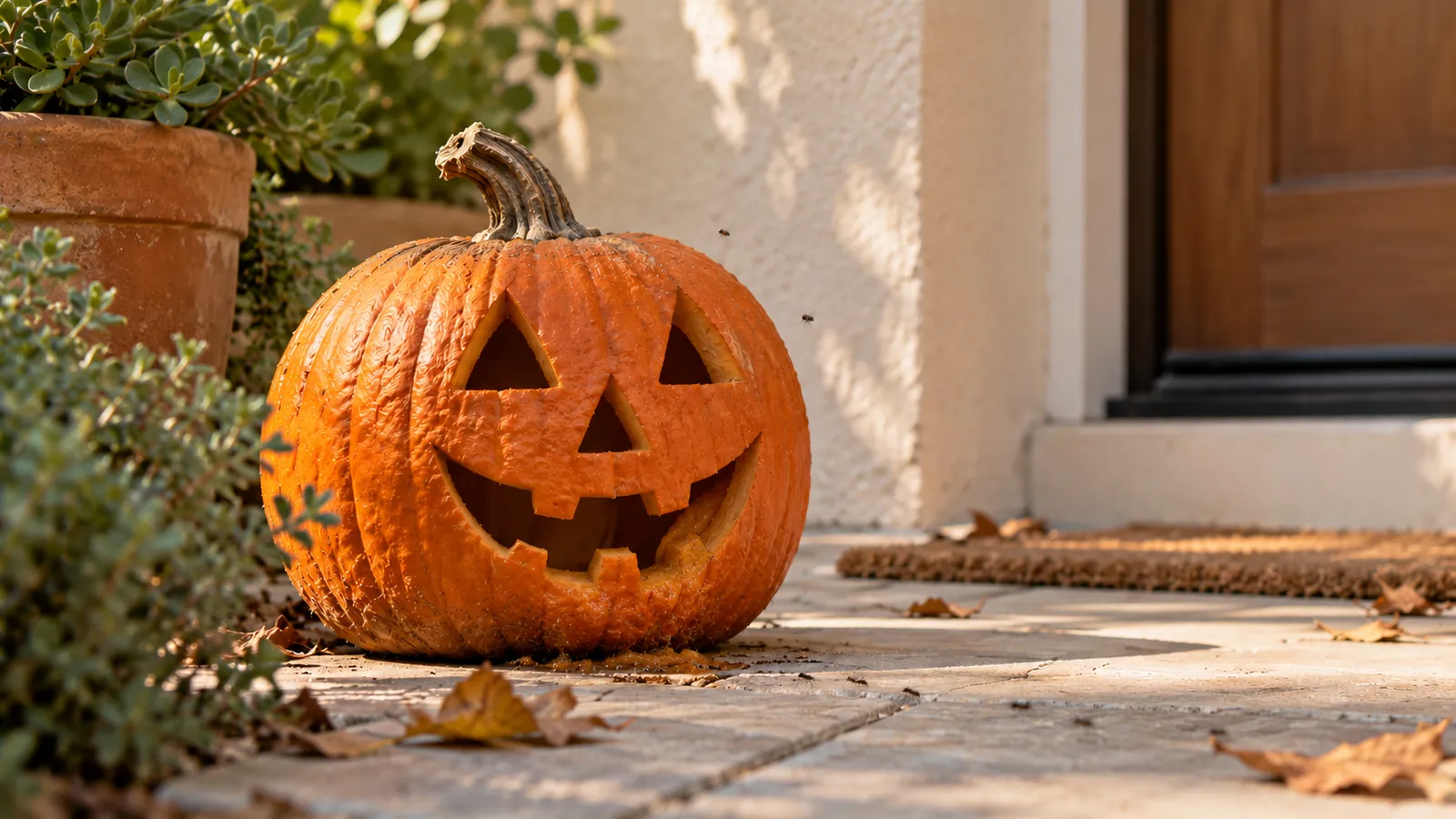
A storage bin makes a particular sound when you open it for the first time in eleven months, a tired little sigh of trapped garage air. Out comes the fake cobweb, the light-up skeleton with one dead bulb, the witch hat that has been flattened in the same spot for three years, and occasionally a black widow who has been living very comfortably in the corner of the bin since last November. Halloween is a holiday about pretending to be scared of creepy crawlies. It would be nice if the real ones stayed out of it.
How do I keep bugs out of my Halloween decorations and pumpkins?
Open stored decorations outside or in the garage, with gloves on, and look them over before they come into the house. Bins kept in a garage, shed or attic can hold spiders, cockroaches, silverfish and fabric pests, especially if natural-fiber costumes or straw props went in with them. Pumpkins are fine until they soften; then fruit flies, ants and eventually rodents move in. Carve close to Halloween, use battery lights instead of candles, keep pumpkins off the ground, and toss them at the first soft spot or sign of mold.
The Short Version
- Wear gloves when you open bins that spent the year in the garage. Black widows like undisturbed corners.
- Wool, felt, feathers and fur in costumes can host carpet beetles and clothes moths if they went into storage dirty.
- Straw bales, dried corn and gourds look great and attract bugs and rodents. Keep them outside and away from the house.
- Carved pumpkins rot much faster than whole ones, warm SoCal afternoons speed that up, and candles cook them from the inside.
- Throw pumpkins out at the first soft spot, not after they have collapsed into the planter.
- Clean decorations before they go back into sealed plastic bins, so next October is less exciting.
Opening the Bins: What Might Have Moved In
Decorations spend most of the year somewhere dark and undisturbed: the garage rafters, a shed, the back of a closet, the attic. That also happens to be an exact description of where a lot of pests like to live. A bin that hasn't been opened since last fall is less a storage container than a small apartment with a very long lease.
Black widows
They like undisturbed corners near the ground, and a stack of bins on a garage floor suits them perfectly. Look for a messy, irregular web and a round, glossy black spider tucked into a corner or under the rim of a lid.
Cockroaches
Cardboard boxes are a favorite. They hold moisture, the glue is food, and the corrugations make perfect hiding spots.
Silverfish
Paper decorations, cardboard and anything with starch or glue. Damp garages and closets suit them well.
Mice
Fabric, stuffing and shredded paper make excellent nesting material. Droppings, chewed edges and a little nest of shredded material are the giveaways.
Crickets and earwigs
Usually just sheltering, but a sign the bins are sitting somewhere damp.
So open bins outside or in the open garage, not on the living room rug. Wear gloves. Lift lids slowly, look under the rim and in the corners, and shake fabric items out before they come inside. If you find droppings and want to know what left them, our droppings identification guide will help.
Garage-stored bins are prime black widow territory. Open them outside, with your hands covered.
Once a pumpkin starts to soften, fruit flies, ants and rodents are not far behind.
A candle slowly cooks the inside of a carved pumpkin and speeds up the rot.
Costumes, Fake Fur and the Fabric Pests
Costumes are the decorations most likely to get eaten, because they are often made of exactly what fabric pests want: a wool cape, a felt hat, a feather boa, real fur trim on a vintage coat. They also tend to go into storage the way most costumes do, worn for one long evening and then stuffed into a bag with whatever makeup, sweat and fun-size candy residue came home with them.
That combination is ideal for carpet beetle and clothes moth larvae. We covered those two in detail in our fabric pests article, so here is the short version: natural fibers, plus residue, plus months of being left alone, equals holes. Fully synthetic costumes and polyester fake cobwebs aren't much of a meal on their own, although they can still pick up spiders and other hitchhikers in storage.
If a costume or fabric decoration comes out with small holes, papery shed skins or silky webbing on it, bag it, keep it away from your closets, and clean or freeze it before it goes anywhere near your regular clothes.
Straw Bales, Corn Stalks and Gourds
The harvest look is great. It's also a lot of free food and shelter for bugs and rodents.
Straw and hay bales
Outdoors, a bale holds moisture and quickly fills up with earwigs, pillbugs, crickets and spiders, and rodents love straw for nesting. Keep bales away from the house wall, don't store them in the garage between seasons, and get rid of them when the season is over.
Corn stalks
Dry and mostly harmless, but they shelter insects at the base and break down quickly once they get wet. Stand them away from doors and toss them after the holiday.
Dried corn
The kernels are actual grain, and grain draws pantry pests and rodents. Keep decorative ears outdoors, or at least off the kitchen counter, and don't pack them away for next year.
Gourds and mini pumpkins
They look like they will last forever and then quietly rot from the bottom. Check the underside every few days.
Anything you bring in from outside for a table display, like branches, leaves or pine cones, can carry insects in with it. Give it a shake and a once-over outside first.
When the Fake Webs Get Real Tenants
Fall is when garden spiders are at their biggest. The orb weavers that started the year as specks have spent all summer growing, and by October their big wheel-shaped webs are strung across paths, between shrubs and over doorways. Drape a sheet of stretchy fake cobweb over the same shrubs and you have built them scaffolding. Within a few nights, real webs tend to appear right in the middle of the fake ones.
That's mostly harmless and occasionally hilarious. Orb weavers aren't aggressive and aren't considered a medical concern. It does mean the decorations come down with residents in them, so take outdoor webbing down with gloves on, shake it out away from the door, and don't stuff it straight back into the bin. The same goes for props that sat in shrubs or ground cover for a month: lift them, look underneath, and give them a shake. And if the eaves and entry have collected more real webs than fake ones by November, dewebbing, the physical removal of webs and egg sacs, is a quick one-off job.
Lighting plays a part too. Strings of bright white lights around the door pull in moths and other night-flying insects, which pull in spiders, which tend to make themselves known at the worst possible moment, right as you open the door to a group of trick-or-treaters. Warm-toned or orange bulbs, which suit the theme anyway, draw noticeably fewer bugs.
Why Your Porch Pumpkin Turns Into a Bug Magnet
A whole, uncut pumpkin with a healthy stem can sit on a porch for weeks. The moment you carve it, you have turned it into an open wound. All that exposed flesh starts drying on the surface and breaking down underneath, and mold and rot follow. Southern California's version of October makes it worse. A string of warm afternoons, or a few days of hot, dry wind, can take a jack-o'-lantern from crisp to collapsing faster than people expect.
Then add a candle, which sits inside and gently cooks the pumpkin every evening. It looks wonderful. It also creates a warm, damp, sugary chamber that rots quickly and smells like dinner to half the neighborhood's insects.
Who shows up
Fruit flies
The first to arrive and the easiest to bring indoors. They breed in soft, fermenting produce, and a softening pumpkin by the front door is a short flight from your kitchen.
Ants
Argentine ants find sugary juice fast and will trail across the porch to a leaking pumpkin, and from there, sometimes, under the front door.
Yellow jackets
In warm fall weather, yellow jackets go after sweet, rotting fruit. A collapsing pumpkin can draw a few, which matters with kids coming up the steps.
Rodents
Rats and mice will gnaw on pumpkins overnight, especially for the seeds. Chewed edges in the morning are a clue that there is rodent activity close to the house.
Snails and slugs
A pumpkin sitting directly on damp soil or in a planter gets grazed from below.
Getting more good days out of a jack-o'-lantern
Carve close to the day
A day or two before Halloween instead of a week before.
Scrape it clean
Remove all the stringy pulp and seeds and scrape the inside walls smooth. Less loose material means less to rot.
Use battery lights
LED tea lights or a battery puck light give the same glow without cooking the inside.
Keep it shaded and dry
Out of the afternoon sun, out of the sprinklers, and up on a tray or stand rather than directly on soil or a doormat.
Keep most pumpkins whole
Display uncarved pumpkins and save the carving for one or two. Check the bottoms for soft spots.
Toss it at the first soft spot
Not after it has caved in. Bag it and follow your city's rules for food and yard waste.
The Fruit Fly Problem Inside
A table centerpiece of mini pumpkins, gourds and apples is lovely, and it's also how plenty of houses end up with fruit flies in late October. Check the bottoms of everything every few days and get rid of anything soft. If fruit flies have already arrived, find the source first: the soft gourd, the forgotten potato, the recycling bin with a sticky bottle in it, or a kitchen drain that needs a scrub. A small dish of cider vinegar with a drop of dish soap will catch a few and tell you whether they are still around, but it won't fix the source.
If fruit flies keep coming back after the produce is long gone, the source is usually somewhere less obvious, like a drain, a trash area or the space under an appliance. That is where a professional look can save you a lot of vinegar.
Packing It Up So Next October Is Boring
The best time to prevent next year's surprise is the week after Halloween, while everything is out anyway.
Clean and dry everything
Wipe down props, wash costumes, and let anything damp dry completely before it is packed.
Swap cardboard for plastic
Lidded plastic bins keep out most insects and rodents and don't soak up moisture.
Don't store anything edible
Dried corn, gourds and real pumpkins should not go into storage. Same for candy, which seems obvious, but somebody always finds a bag of it in February.
Get bins off the floor
Shelves beat stacking on concrete, and a few inches between the bins and the wall makes it harder for spiders and rodents to settle in.
Check the garage itself
A garage door seal with gaps at the corners, or daylight under the side door, means your bins are sharing space with whatever wanders in from outside.
Bins full of more than decorations?
If you open the garage and find droppings, webs or chewed fabric, take a look at the garage itself. Xtermicon is a family-owned pest control company serving the South Bay, the Westside and greater Los Angeles. Call (310) 370-0963 for a quote; quotes are free over the phone, with no obligation.
Halloween Pest FAQs
Why are there so many fruit flies around my pumpkin?
Because it's starting to ferment. Fruit flies are drawn to soft, decaying produce and breed in it, and a carved pumpkin reaches that stage quickly in warm weather. Move it away from the door, check it for soft spots, and toss it once it starts to break down. If the flies have followed it inside, look for other produce or a drain that might be keeping them going.
How long will a carved pumpkin last in Southern California?
It depends heavily on the weather and how it is displayed. In a warm spell, a carved pumpkin sitting in the sun with a candle inside can start softening within a few days. A cleaned-out pumpkin kept in the shade, up off the ground and lit with a battery light lasts noticeably longer. Whole, uncarved pumpkins outlast carved ones by a wide margin.
Do black widows really hide in decoration bins?
They can, especially in bins stored on the garage floor or under shelves, where it is dark and nothing disturbs them for months. That's why gloves and a slow lid lift are worth the bother. Our article on where black widows hide covers the other spots worth checking.
Can I compost my old jack-o'-lantern?
Yes, if you have a compost setup that can handle it. Break it into pieces, bury it in the pile rather than leaving it on top, and keep the compost well away from the house. A whole pumpkin sitting on an open pile is an invitation to rodents and flies. Otherwise, follow your city's rules for food and yard waste.
Related Reading
For the pests that turned up in the bins and on the porch.
- Carpet beetles vs. clothes mothsThe two fabric pests behind holes in stored costumes and sweaters.
- Where black widows hideThe garage corners and storage spots worth checking with gloves on.
- Pantry pests in flour and cerealThe grain-loving insects that dried corn decorations can attract.
- The Labor Day exclusion checklistThe garage and weatherstripping gaps that let pests into storage.
- Identifying droppingsWhat that little pile in the bin actually is.
- Fly controlFor fly problems that outlast the produce.
Sydney Pardey is the owner of Xtermicon, a family-owned pest control company serving the South Bay and greater Los Angeles area since 2015. All content is written from direct operational experience and reviewed against current California Structural Pest Control Board standards.
Specialists you
can count on.
Xtermicon was founded in 2015 with one focus: protect Southern California homes and businesses from the pests that threaten them. The name says it all — eXterminate TERmites & pest CONtrol — and that's exactly what we do. We're a family-owned team specializing in termite control, pest control, and rodent exclusion. From West LA and East LA to the beach cities and Orange County, we're local neighbors who treat your property like our own.