Termite Damage Repair for HOAs: What Property Managers Should Expect After an Inspection
The inspection report says there is damage, and the board wants to know what happens next. A plain-language guide to treatment, repair, and the order they go in.
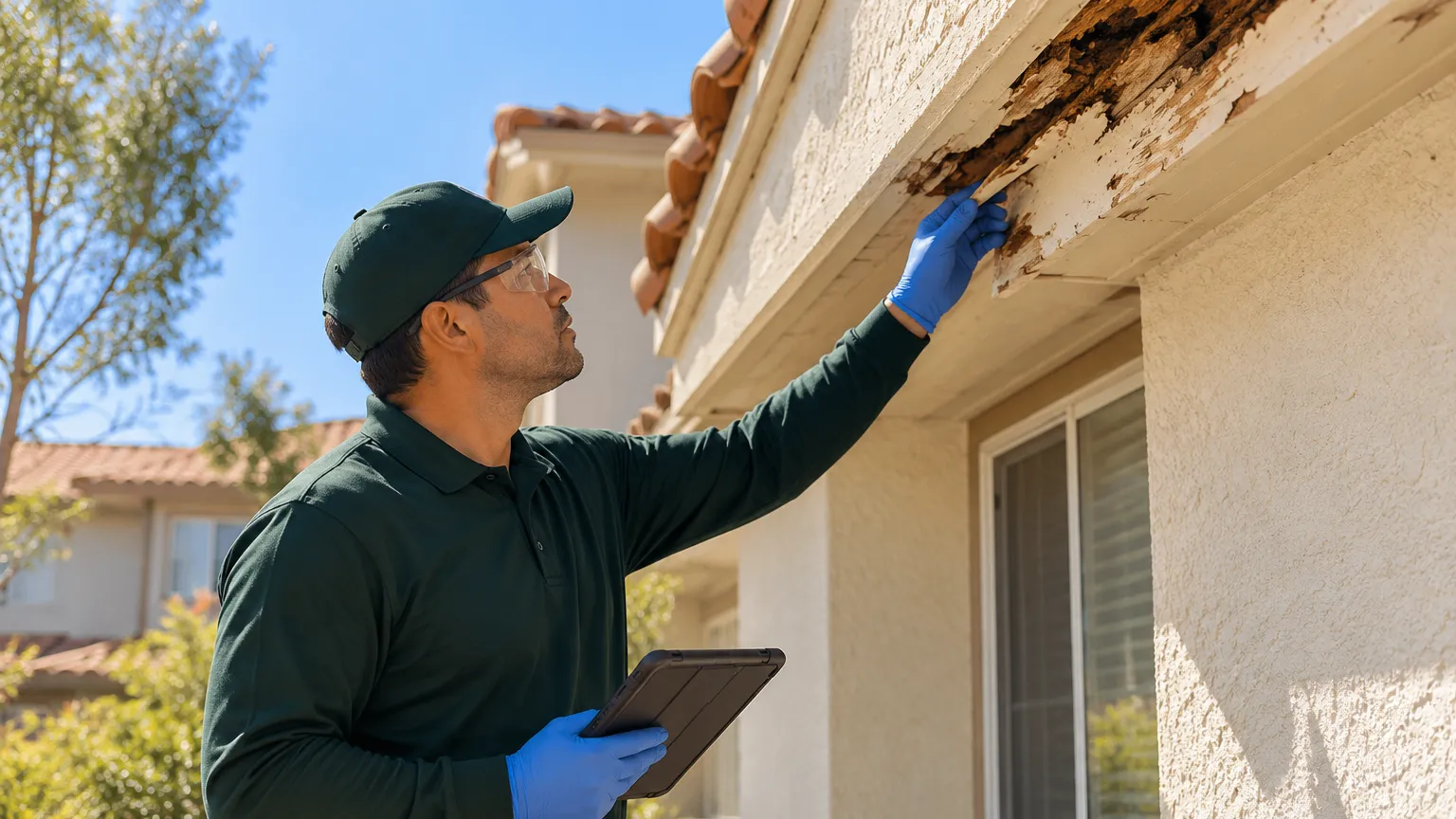
An inspection report with termite findings tends to land on a property manager's desk with very little context. It names buildings and unit numbers, maybe a balcony or a carport, and a list of findings that sound alarming in the passive voice: evidence of infestation noted, damaged wood members observed, further inspection recommended. Then the board meets, and someone asks the reasonable question. So do we fumigate, or do we fix the wood? The usual answer is both, roughly in that order, and they aren't the same job.
What happens after an HOA termite inspection finds damage?
Two separate things: treatment and repair. Treatment deals with the live termites, whether through local or spot treatment, fumigation of a building, or treatment at the soil for subterranean termites. Repair deals with the wood they have already damaged, replacing or reinforcing affected framing, trim and other structural members. Treatment generally comes first or alongside the repair, because new wood next to an active colony is just more food. How long it takes depends on how much damage was found and how many buildings are involved, so expect a plan built around your findings rather than a standard package.
The Short Version
- Treatment and repair are different jobs. One stops the termites; the other fixes what they have already eaten.
- Treat first, or at least alongside. Repairing wood next to an active colony doesn't solve anything.
- In a community, damage often shows up in shared exterior wood: fascia, eaves, trim, balconies, stairways, carports and fencing.
- Scope and timing depend on the extent of the damage and the number of buildings, so no responsible timeline comes before the findings.
- Who is responsible for what is set by your governing documents and California law, not by the pest control company.
- Xtermicon's termite damage repair is handled by our own in-house team, scoped to termite damage, as part of our HOA and community-association service.
Treatment and Repair Are Not the Same Service
It helps to separate the two clearly, because boards often treat them as a single decision and residents almost always do.
Treatment is about the termites. Its job is to deal with the active colony, or colonies, so that no further damage happens. How that is done depends on the species and the extent. Drywood termites, which live inside the wood itself, are handled with local or spot treatments when an infestation is contained and accessible, and with fumigation of the structure when it is widespread or hidden where it can't be reached. Subterranean termites, which live in the soil and travel up into the building, are treated where they are getting in, at the soil. Our termite inspections are done by a licensed Branch 3 operator, and the treatment recommendation follows from what that inspection finds.
Repair is about the wood. Over years, especially in the parts of a community nobody looks at closely, termites can hollow out trim, fascia, rafter tails, posts and framing. Treatment stops the eating. It doesn't put the wood back. Damaged members still need to be replaced or reinforced, and until they are, they are weaker than they look. On balconies, stairs and walkways, that matters for more than appearance.
Why the order matters
If an active colony is still in the building, replacing damaged wood just gives it new wood to eat, and drywood colonies are often in neighboring members that weren't part of the visible damage. Treatment generally needs to happen before repair, or be coordinated so the two happen together. Where a building needs fumigation, fumigation comes first. Where local treatment is appropriate, it can sometimes be coordinated with the repair work, since opening up damaged areas can expose more of the problem.
Getting the order wrong is one of the more frustrating mistakes an association can make: paying for new fascia that shows up on the next report.
The reverse mistake
Treating without repairing is a half-finished job too. A colony that has been dealt with leaves weakened wood behind, and weakened wood in a balcony, a stair stringer or a carport beam is still a problem whether the termites are there or not.
Stop the colony, then fix the wood it damaged. Not the other way around.
Fascia, eaves, balconies, stairs, carports, fencing and trim across common areas.
Depends on the extent of the damage and how many buildings are involved.
How California Termite Findings Are Usually Organized
Termite inspection reports in California sort findings into categories, and knowing the categories makes a report much easier to discuss in a board meeting. Broadly, findings fall into three buckets.
Active infestation or damage
Live termites, or damage from termites or other wood-destroying organisms, that the inspector found. These are commonly referred to as Section 1 items.
Conditions likely to lead to infestation
Things like wood in contact with soil or excess moisture, where no infestation was found yet but conditions invite one. These are commonly referred to as Section 2 items.
Further inspection
Areas the inspector couldn't access, such as enclosed decks, finished ceilings, stucco-covered framing or locked units, where the report recommends opening up or gaining access before anyone can say what is there.
The findings are the inspector's factual record of what was found and where. They are what any treatment and repair plan is built from, and the first conversation with a board is usually about sequencing: what has to be treated, what has to be repaired, and what needs a closer look before either.
Don't park the further-inspection items
These are the ones that surprise boards later. A further-inspection note on an enclosed balcony or a sealed soffit means nobody knows yet what is inside. It may be fine. It may be where the colony has been all along. Getting access to those areas early, rather than leaving them for the repair crew to discover, makes the overall plan far more accurate.
What Repair Looks Like Across a Community
In a single-family home, termite damage tends to turn up in a handful of places. In a community association, it is spread across many buildings and a long list of shared wood elements, many of them exterior, weathered and rarely examined up close.
Rooflines
Fascia boards, rafter tails, eaves and barge rafters.
Exterior trim
Window and door trim, wood siding, corner boards and decorative elements.
Elevated wood
Balcony framing and decking, walkway members, stair stringers and treads, and railings.
Covered parking
Carport posts, beams and roof framing.
Site wood
Fencing, gates, trash enclosures, planter boxes and pergolas.
Repair, in general terms, means removing and replacing damaged members, or reinforcing them where replacement isn't necessary, with sound material. Replaced exterior wood also has to be protected, primed and painted or sealed, to hold up, so finishes are part of the conversation. The exact scope depends on what the inspection and the opening-up of further-inspection areas reveal.
Why multi-building jobs take coordination
Much of the real work in a community repair project isn't carpentry, it is logistics. Residents need notice and, for some work, access to their units, balconies or patios. Carports may need to be cleared. If any buildings need fumigation, residents of those buildings have to relocate temporarily, and that has to be sequenced around everyone else. Exterior work also depends on the weather, and with a wet winter in the forecast, it is worth getting exterior repairs scheduled before the rain rather than squeezed between storms.
We work with the manager and the board to find a sequence that is as little disruptive for residents as we can make it. We don't promise a fixed timeline up front, because it depends on what turns up when damaged areas are opened and on how many buildings are involved.
Why Our Termite Repair Is Done In-House
Xtermicon's termite damage repair is handled by our own in-house team, not a subcontractor. The team is scoped specifically to termite damage repair, not general carpentry or remodeling, and it is offered as part of our HOA and community-association service.
For a property manager, the practical benefit is fewer handoffs. The same company that inspected and treated can also handle the repair, and the people opening up the wood understand what termites do to it. If they find active galleries or more damage behind a board, it goes straight back to the termite side of the company instead of turning into a disagreement between two contractors.
We're also upfront about the edges of that scope. If findings call for work beyond termite damage repair, such as broader structural, waterproofing or remodeling work, that falls outside what our repair team does, and the association will need the right specialist for it.
Who Pays for What
This is usually the question that takes up most of the board meeting, and it isn't one a pest control company answers. Responsibility for termite treatment and repair in a community association depends on the association's governing documents, including the CC&Rs and any maintenance responsibility chart, and on California law for common-interest developments. Generally there is a distinction between common areas the association maintains and portions individual owners are responsible for, and termite damage can straddle that line.
Your association manager and legal counsel are the right people to sort that out. This is general information, not legal advice.
What we can do is make billing workable once responsibility is decided. Billing can be consolidated to the association, or set up so exterior and common-area work goes to the association with any interior work agreed separately. Our article on what California law actually requires of property managers covers more of the compliance side.
Good Questions to Bring to the Next Board Meeting
Whoever does your inspection, these questions tend to turn a confusing report into a workable plan.
Which findings are active, and which are conditions?
Separating live infestation and damage from conducive conditions tells you what is urgent and what is preventive.
Which species, and where?
Drywood and subterranean termites call for different treatment, and one community can easily have both.
Does any building need fumigation?
If so, it shapes the whole schedule, including when residents need to relocate.
What can't be seen yet?
Ask for a clear list of further-inspection areas and what access each one needs.
What has to happen in what order?
Treatment, opening up, repair and finishes, building by building.
Which items involve load-bearing or elevated wood?
Balconies, stairs, walkways and carport framing deserve priority over cosmetic trim.
What Boards Can Do to Keep the Next Report Smaller
Inspect on a schedule
Regular inspections catch activity while it is still local. Our article on monthly inspections versus reactive calls makes the budget case.
Fix the conditions
Wood-to-soil contact, irrigation that soaks walls and fences, clogged gutters and poor drainage all show up as conducive conditions, and they are far easier to fix than the damage they lead to.
Plan for it in reserves
Exterior wood repairs tend to come up again over time, so they are worth raising with your reserve specialist.
Make it easy for residents to report
Piles of wings, small pellets on a windowsill, mud tubes, or soft, blistered trim are worth reporting through the manager rather than leaving for the next inspection.
Get access to further-inspection areas
Arrange access to locked units and enclosed areas early, so the findings are complete from the start.
Managing a community with termite findings?
Xtermicon works with HOAs and community associations across the South Bay, the Westside and greater Los Angeles, from inspection through treatment and, where needed, repair of termite damage by our own in-house team. Call (310) 370-0963 to talk through your findings; quotes are free over the phone, with no obligation.
HOA Termite Repair FAQs
Should we repair termite damage before or after treatment?
After, or at the same time, but not before. Repairing damaged wood while an active colony is still in the building gives the termites fresh wood, and drywood colonies may already be in neighboring members. Where a building needs fumigation, it comes first. Where local treatment is appropriate, it can sometimes be coordinated with the repair work.
Does fumigation repair termite damage?
No. Fumigation deals with drywood termites throughout a structure, but it doesn't restore wood they have already damaged. Damaged members still need to be replaced or reinforced afterward, which is why treatment and repair are planned as two separate steps.
Why did the repair work uncover more damage than the report showed?
Because some damage is hidden. Inspectors report what they can see and access, and they flag areas they couldn't reach for further inspection. When damaged wood is removed or an enclosed area is opened up, it is common to find the damage extends further than was visible from outside. Getting access to further-inspection areas early helps reduce those surprises.
How long does termite damage repair take for an HOA?
It depends on how much damage was found, where it is, how many buildings are involved, whether any buildings need fumigation first, and the weather for exterior work. A few trim repairs on one building is a very different project from balcony and carport framing across a large community. Any timeline should come after the findings, not before.
How should residents report signs of termites?
Through the association's manager or whatever reporting process the board has set up. Useful things to report include discarded wings near windows, small piles of pellets on sills or floors, mud tubes on foundations or walls, and soft, blistered or hollow-sounding wood. Our article on the seven signs of termites is a good one to share with residents.
Related Reading
For boards and managers planning the next steps.
- Why HOAs should budget for monthly inspectionsThe case for catching problems early instead of reacting to them.
- Pest control compliance for California property managersWhat the law actually requires, in plain language.
- 7 signs you have termitesA good one to share with residents so they know what to report.
- What happens during termite fumigationA step-by-step guide for buildings that need tenting before repair.
- HOA pest controlOur programs for HOAs and community associations.
- Multifamily and property managementPest programs for managed residential properties.
Sydney Pardey is the owner of Xtermicon, a family-owned pest control company serving the South Bay and greater Los Angeles area since 2015. All content is written from direct operational experience and reviewed against current California Structural Pest Control Board standards.
Specialists you
can count on.
Xtermicon was founded in 2015 with one focus: protect Southern California homes and businesses from the pests that threaten them. The name says it all — eXterminate TERmites & pest CONtrol — and that's exactly what we do. We're a family-owned team specializing in termite control, pest control, and rodent exclusion. From West LA and East LA to the beach cities and Orange County, we're local neighbors who treat your property like our own.