Bed Bugs and Secondhand Furniture: What to Check Before You Bring It Home
The perfect couch from the marketplace listing can come with passengers. A flashlight, a credit card and ten minutes will tell you most of what you need to know.
The couch was perfect. Mid-century, the right shade of green, barely worn, and the seller was moving out of state on Friday, so it had to go this week. You borrowed a friend's truck, brought a blanket to protect it, and had it in the living room by dinner. What nobody thinks to bring to a furniture pickup is a flashlight, and that is the one thing that would have mattered.
How do I check used furniture for bed bugs?
Inspect it before it goes in your car, with a bright flashlight and a thin card. Look in the seams, tufts, piping and folds of anything upholstered, under cushions and dust covers, and in the joints, screw holes and cracks of wood frames. You are looking for live bugs (flat, oval, reddish-brown, about the size of an apple seed), pale shed skins, tiny white eggs, and clusters of small dark spots that look like marker dots. Mattresses and box springs are the highest-risk secondhand items and are best avoided. Anything you do bring home should stay out of bedrooms until you have checked it again.
The Short Version
- Bed bugs hitchhike in furniture, especially upholstered pieces, mattresses and box springs, and especially anything that came out of a bedroom.
- Inspect before you load. Once a piece is in your car or your house, whatever was hiding in it came too.
- Look for live bugs, shed skins, tiny eggs and dark spotting in seams and joints. A flashlight and a credit card do most of the work.
- Skip secondhand mattresses and box springs. They are the hardest to inspect and the most likely to carry bed bugs.
- Keep any new-to-you piece in a garage or hard-floored room, away from beds, until you have checked it a second time.
- A clean inspection lowers the odds a lot. It doesn't take them to zero, which is why the second look matters.
Why Used Furniture Is Such an Easy Way In
Bed bugs don't fly, jump or travel far on their own. They get from place to place by hiding in things people carry: luggage, bags, clothing and furniture. Furniture suits them especially well because it is where they already live. Bed bugs settle close to where people rest for long stretches, which means beds first, then couches, recliners, upholstered chairs, nightstands and anything else near a sleeping person.
So a piece that spent time in a bedroom, or a couch somebody regularly slept on, is the highest-risk thing you can bring home. Bed bugs can also survive a long time between meals, often months, so a piece that has been sitting in a garage or a storage unit isn't automatically clear.
The way furniture changes hands adds to the risk. Curb finds, apartment move-outs, estate sales, marketplace pickups and thrift stores all move a lot of furniture quickly, often from places where nobody was looking closely. Sometimes, though certainly not always, a nice-looking couch on the curb is there precisely because someone found bed bugs in it. In the parts of Los Angeles with lots of apartments, roommates and frequent moves, a great deal of furniture is in motion at any given time.
It isn't only furniture
The same logic applies to other secondhand things that spent time near a bed. None of them are reasons to stop thrifting, just reasons to look first.
Bedding and linens
Wash and dry on high heat before they go anywhere near a bed.
Clothing and textiles
Keep them bagged until they go straight into the washer and dryer.
Rugs
Inspect the edges, the binding, any fringe, and the underside.
Frames, books and small electronics
Bed bugs can tuck into the backs of picture frames, along book spines, and into the seams of things that sat on a nightstand for years.
Moving blankets and boxes
Shared moving pads and reused cardboard boxes pass through many homes. Check them, or keep them away from bedrooms.
What Bed Bug Evidence Actually Looks Like
You are unlikely to see a parade of bugs. What you are more likely to find is the evidence they leave behind, tucked into seams and joints.
Live bugs
Adults are flat, oval, reddish-brown and wingless, about the size of an apple seed. After feeding they look plumper and redder. Young bed bugs are smaller and paler, almost translucent, and easy to miss.
Shed skins
Pale, amber, hollow casings in the shape of the bug, left behind as they grow.
Eggs
Tiny, pearly white and about the size of a pinhead, often in small clusters deep in crevices.
Dark spotting
Clusters of small black or dark brown dots, like marks from a fine-tipped marker, that soak into fabric and smear if rubbed with a damp cloth. This is the most common sign.
Rusty stains
Small reddish stains on mattresses or upholstery from bugs that were crushed.
Flat, oval and reddish-brown, and thin enough to tuck into a seam.
Bed bugs can go a long time without feeding, so storage doesn't clear a piece.
Folds, tufts, piping, joints and screw holes: anywhere a card edge fits.
The look-alike
Not every small bug in old furniture is a bed bug. Carpet beetle larvae in particular turn up in upholstery and stored textiles and get mistaken for bed bugs, and some people get itchy bumps from their bristles. They are fuzzy and banded rather than smooth and flat. Our article on carpet beetles and clothes moths covers them, and they're one reason a bed bug inspection starts with confirming what the insect is.
Checking a Piece Before You Take It
Do this before the furniture goes in your car. Once it is in the vehicle, and certainly once it is in your house, anything hiding in it came with you. Daylight helps, and so does doing it over a pale surface, like a driveway rather than a dark carpet.
Bring the right tools
A bright flashlight, an old credit card or thin putty knife for probing seams, disposable gloves, and a white sheet or towel to set cushions on.
Start with the seams
Run the card edge along every seam, welt, piping and fold of anything upholstered, and look into the creases around buttons and tufts. Hold the light at a low angle.
Lift and look underneath
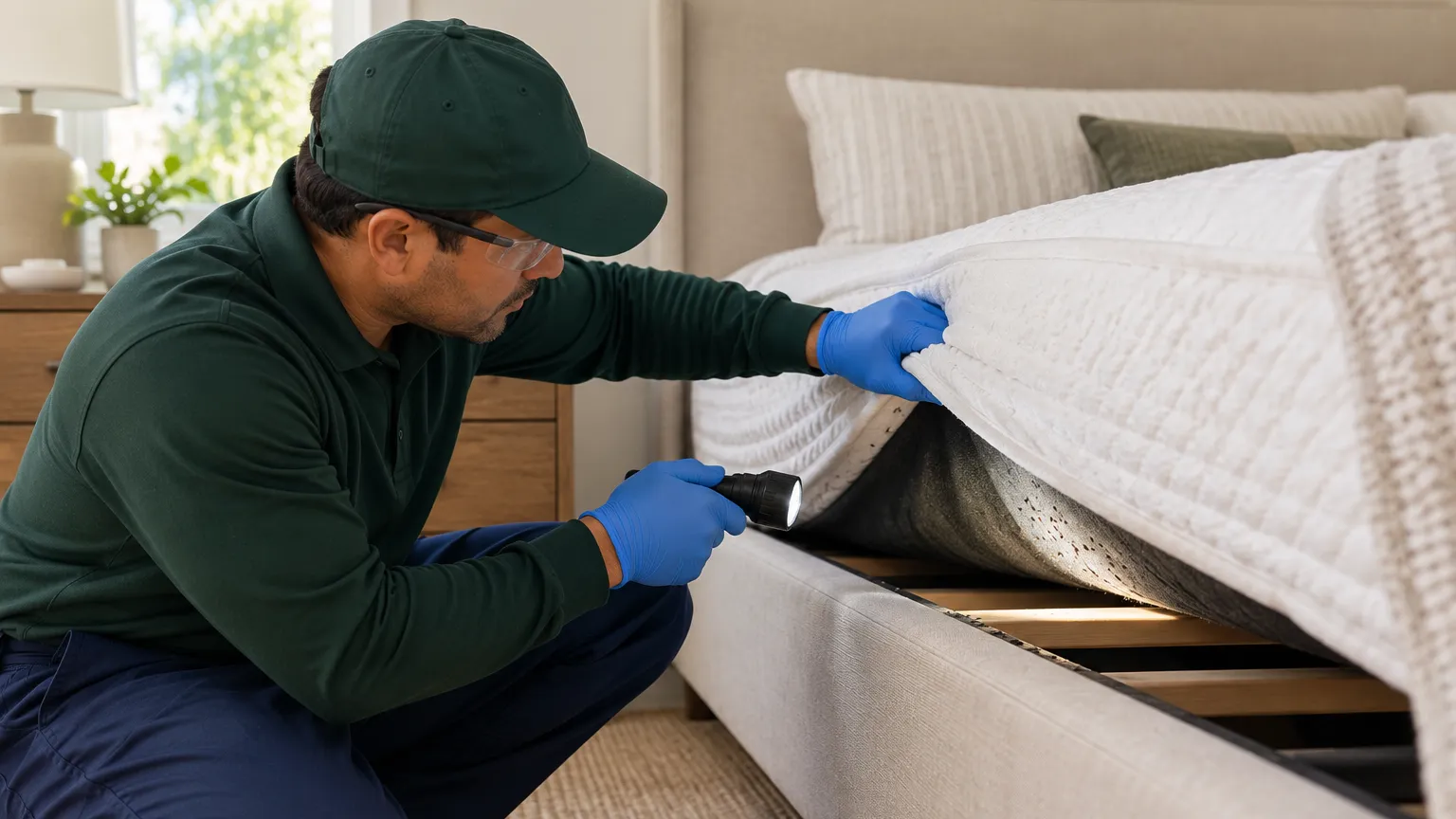
Pull out every cushion and check the deck beneath, the zippers and the cushion corners. Tip the piece and look at the thin fabric dust cover stapled to the bottom, especially along staples and edges. If it is torn, look inside.
Work the wood
Check joints, corners, screw holes, drawer runners, cracks and the backs of panels. On bed frames, look closely where the rails meet the posts and along the slats.
Pull out the drawers
Look inside the drawer cavities and on the underside of each drawer. Bed bugs like the rough, unfinished wood back there.
Ask a few questions
Where was it kept? Was it in a bedroom? Has anyone in the household had unexplained bites? You won't always get a straight answer, but how the questions land can tell you something.
Walk away if you find anything
One shed skin or one patch of dark spotting is enough. It isn't worth it.
Mattresses and Box Springs: Don't Bring Them Home
The one firm rule: don't bring home a secondhand mattress or box spring. They are where bed bugs are most likely to be, and they are the hardest items to inspect properly. Mattress seams, tags, handles and tufting give bugs endless hiding places, and a box spring is a hollow wooden frame wrapped in fabric, full of staples, corners and dark spaces you can't see into without taking it apart.
Upholstered headboards, sleeper sofas and recliners are close behind. A sleeper sofa hides a whole mattress inside, and a recliner mechanism is a maze of joints and hollows. If you are tempted by one of these, inspect extra carefully or pass.
If you have already ended up with a secondhand mattress or box spring, a zippered encasement made for bed bugs, fully closed and left on, will trap any that are inside and make new ones easy to spot on the smooth surface. It isn't a treatment, but it is a sensible precaution.
A Simple Quarantine Routine
If a piece passed inspection and you still want to be careful, which is entirely reasonable, this routine keeps it away from where you sleep while you take a second look.
Protect the car
Wrap the piece in plastic sheeting or stretch wrap for the trip, or lay a tarp in the trunk or truck bed. Don't set it directly on your car seats.
Look again outside
Repeat the inspection in daylight in the driveway or garage before it comes inside.
Vacuum every seam
Use a crevice tool on all seams, folds and joints, then empty the vacuum outdoors into a sealed bag and put it in the trash.
Launder what comes off
Wash removable covers and fabric on the hottest settings the fabric can take, then dry on high heat. The dryer heat is what does the work.
Keep it away from bedrooms
Leave the piece in the garage or a hard-floored room, away from beds, for a week or two, and check it again before it moves into the main living space.
What quarantine can and can't do
Setting a piece aside doesn't kill bed bugs. They can go months without feeding, which is longer than any reasonable waiting period. What quarantine does is keep a piece away from where you sleep while you get a second, closer look, and keep any bugs that do turn up contained in one place. It is about distance and a second inspection, not starving them out.
If You Think You Brought Them Home
First, don't panic, and don't start moving things around. Dragging the piece through the house, or sleeping on the couch to get away from the bedroom, spreads bed bugs to new rooms. Leave things where they are.
Second, skip the bug bombs and foggers. They don't reach bed bugs hiding in seams and cracks, and they tend to scatter them deeper into walls and into neighboring rooms, which makes a contained problem much harder to treat.
Third, get it confirmed. Our bed bug process starts with an inspection, partly to confirm it really is bed bugs and not a look-alike such as carpet beetles. If it is, the household does laundering and preparation using our prep guide, and treatment is done over three visits covering furniture, mattresses and perimeters. We don't offer heat treatment. Effective heat means holding a space at 120 to 140 degrees for hours, which puts electronics and wiring at real risk, and we have chosen not to take that risk with people's homes.
If you decide to get rid of an infested piece instead, wrap it in plastic before carrying it out, and make it obviously unusable, by slashing the upholstery or clearly marking it as having bed bugs, so nobody else takes it home.
Worried something came home with the couch?
An inspection comes first, so you know whether it's bed bugs or a look-alike before anything gets treated. Xtermicon is family-owned and licensed, and we work across the South Bay, the Westside and greater Los Angeles. Call (310) 370-0963; quotes are free over the phone, with no obligation.
Bed Bug and Used Furniture FAQs
Can bed bugs live in wood furniture?
Yes. They prefer fabric seams and folds near where people sleep, but they readily hide in the joints, cracks, screw holes and unfinished surfaces of wooden furniture, especially nightstands, dressers and bed frames. Wood pieces are easier to inspect than upholstered ones, but they still need a careful look.
How long can bed bugs survive in furniture without a host?
A long time, often months, depending largely on temperature; they last longer in cooler conditions. That is why a piece that has been sitting in storage or on a curb for a while shouldn't be assumed to be clear.
Is it risky to buy furniture from a thrift store?
Somewhat, as with any secondhand source. Many thrift stores look over donations, but nobody can inspect every seam of every piece. Inspect anything upholstered or wooden yourself before you buy it, and skip mattresses and box springs entirely.
Will a steam cleaner kill bed bugs in a couch?
Steam can kill bed bugs and eggs it contacts directly at the surface, but it doesn't penetrate deep into cushions, frames or joints, and it is easy to miss spots. It can be part of cleaning a piece, but it is no substitute for a proper inspection, or for professional treatment if bed bugs are confirmed.
Should I throw out furniture if I find bed bugs?
Not necessarily. Many pieces can be treated as part of a professional bed bug treatment, and throwing things out can spread bed bugs if it isn't done carefully. If you do discard a piece, wrap it in plastic first and make it clearly unusable so nobody else takes it home.
Can I tell bed bug bites from other bites?
Not reliably. Bed bug bites vary a lot from person to person, and some people don't react at all. Bites alone aren't enough to confirm bed bugs; finding the bugs, skins or spotting is. For any bite or rash that concerns you, see a physician. Our bite identification guide has more.
Related Reading
The other ways bed bugs get in, and what happens if they do.
- How to prevent bed bugs when travelingThe other common way bed bugs get into a home: in the luggage.
- Bed bug controlHow our inspection-first, three-visit process works.
- Bed bugsIdentification notes and photos in the pest library.
- Bed bug treatment prepWhat the household does before treatment, step by step.
- Carpet beetles vs. clothes mothsThe fabric pest most often mistaken for bed bugs.
- What bit me?A guide to common bites, and when to see a doctor.
Sydney Pardey is the owner of Xtermicon, a family-owned pest control company serving the South Bay and greater Los Angeles area since 2015. All content is written from direct operational experience and reviewed against current California Structural Pest Control Board standards.
Specialists you
can count on.
Xtermicon was founded in 2015 with one focus: protect Southern California homes and businesses from the pests that threaten them. The name says it all — eXterminate TERmites & pest CONtrol — and that's exactly what we do. We're a family-owned team specializing in termite control, pest control, and rodent exclusion. From West LA and East LA to the beach cities and Orange County, we're local neighbors who treat your property like our own.