Hosting Thanksgiving? A Pest Check for the Kitchen, Pantry and Garage Before Guests Arrive
The week before a big meal, your kitchen holds more food than at any other time of year, and the garage turns into a second pantry. A walk-through for the places ants, roaches and mice notice first.
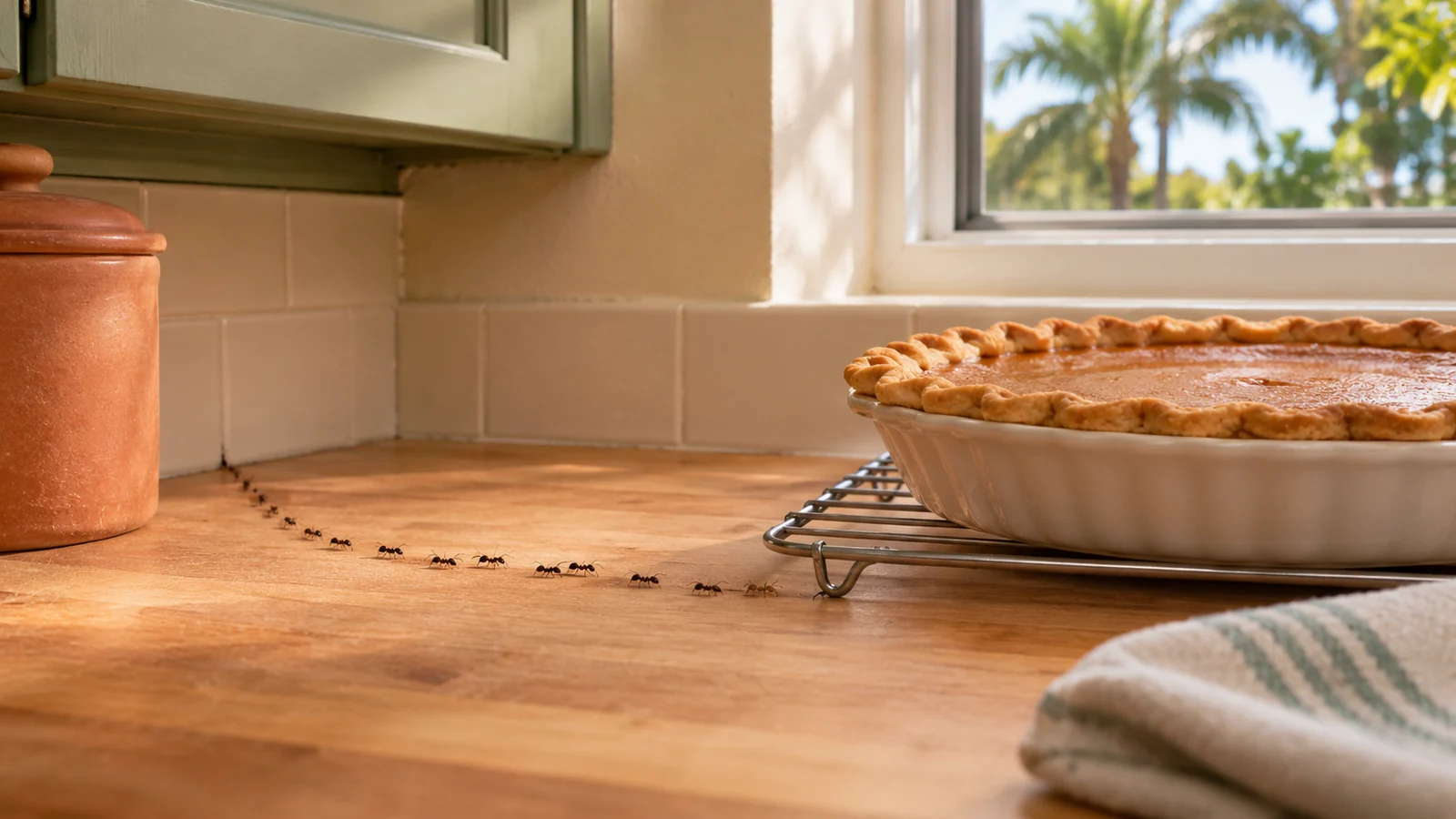
By the Tuesday before Thanksgiving, most kitchens look the same. Pies cooling on every flat surface, a turkey taking up a whole shelf of the fridge, a bag of potatoes on the floor because there's nowhere else to put it. The garage has quietly become a second pantry: cases of sparkling water, a spare bag of rice, the extra folding chairs, a cooler that still smells faintly of last summer. None of that is a problem for the people coming to dinner. It is a very good week, though, for anything that has been living behind your stove or along your garage wall and waiting for the food supply to improve.
How do I keep bugs and mice away from food when I'm hosting Thanksgiving?
Clean under and behind the appliances a few days ahead, not just the counters, because crumbs and grease in those gaps are what feed cockroaches and draw ants. Get food in the garage off the floor and into sealed containers on shelves, since cases of drinks and bags of produce on concrete give mice cover and a meal. Keep the trash sealed and outside until pickup, and get leftovers into the fridge within two hours, which is also the USDA's food-safety rule. If ants show up, wipe the trail with soapy water rather than spraying near food, and if you see a roach or a mouse, note where it was so the source can be found after the holiday.
The Short Version
- Ants, roaches and mice don't care about clean counters. They care about crumbs under the fridge, grease behind the stove and water under the sink.
- The garage is the weak spot during the holidays. Drink cases and food on the floor give mice both shelter and a meal.
- Eating outside? Cover dishes, clear plates promptly and keep trash bags away from the back door.
- Leftovers go in the fridge within two hours (one hour if it's over 90°F), and trash goes out, sealed, the same night.
- If a roach or mouse turns up mid-meal, don't reach for a spray can near the food. Note where it was and deal with the source afterward.
Start Under the Appliances, Not on the Counters
Most people clean a kitchen for guests from the top down: counters, stovetop, sink, floor. That makes the room look good. The places that matter to pests are the ones nobody sees, and a few days before a big meal is the right time to get to them, because anything living there is about to have a very good week.
German cockroaches, the small tan roaches that live indoors, spend their days in warm, tight spaces close to food and water. The motor housing under the fridge, the gap beside the stove, the hinge side of the dishwasher and the cabinet under the sink are all classic spots. Argentine ants come in looking for sugar, grease and water, and they find a sticky spot on a cabinet door faster than you do. Mice follow food and stay close to it. None of them need much. A ring of syrup under the oil bottle or a skin of grease on the side of the range is enough.
A few days before
Pull the stove out if you can
Sweep and wipe the floor and the side panels. The gap between the range and the counter collects years of drips and crumbs.
Get under the fridge
Pop off the front grille and vacuum underneath. Warm, dark and close to food is exactly what cockroaches look for.
Empty and wipe the sink cabinet
Look for slow drips, damp cardboard and gaps where pipes come through the wall. Water draws ants and roaches as much as food does.
Wipe the sticky things
Oil and syrup bottles, the honey jar, the bottom of the spice rack and the cabinet doors near the coffee maker.
Clean the small appliances
Shake out the toaster and wipe under the microwave and coffee maker, where crumbs collect out of sight.
Check the pet bowls
A bowl of kibble left out overnight is a buffet. Feed pets on a schedule this week and store the bag in a sealed bin.
The trash and the sink
Holiday cooking produces more wet trash than a normal week: peels, giblet wrappings, grease, carcass bones. Use a can with a lid that closes, take bags out every night rather than letting them sit by the back door, and run the garbage disposal with plenty of water after you use it. Rinse cans and bottles before they go into recycling, because a sticky recycling bin by the kitchen door is one of the most common places ants and flies find their way in.
UC pest guidance says house mice can get in through openings as small as a quarter inch.
House mice seldom travel more than about 30 feet from their nest and food, per UC guidance. Food on the garage floor is close enough.
USDA guidance: refrigerate leftovers within two hours, or one hour when it's over 90°F.
The Pantry, Briefly
Holiday baking means opening flour, cornmeal, nuts and spices that may have been sitting since last year. If something in there has small moths, webbing or tiny beetles, that's a separate problem with its own fix, and our article on pantry pests covers it in detail. For this week, two quick habits help: open and look at anything that has been in the cupboard for months before it goes into the stuffing, and put opened bags into sealed containers instead of rolling the top down and clipping it.
The Garage Is Your Second Pantry This Week
This is where holiday prep most often goes wrong. Cases of water and soda, bags of potatoes and onions, the 25-pound bag of rice, extra paper goods and the pet food all end up on the garage floor because it's the only space left. To a mouse, a stack of cardboard against a wall is shelter, and a bag of anything edible on concrete is dinner. The two together, a few feet from a worn garage door seal, are about as inviting as a garage gets.
Mice don't need much of a gap. UC pest management guidance says house mice can squeeze through openings as small as a quarter inch, and that they rarely travel more than about 30 feet from where they nest and feed. A mouse that finds a reliable meal in your garage has every reason to stay close to it, and the door between the garage and the kitchen is only a few steps away.
Get it off the floor
Put drink cases and bulk food on shelves or a sturdy table, not stacked against the wall on the concrete.
Use bins with lids
Potatoes, onions, rice, pet food and birdseed belong in hard containers with tight lids, not in bags or cardboard.
Leave a gap at the wall
A few inches between stored items and the wall lets you see droppings and takes away a sheltered runway.
Look at the door seal
Check the bottom of the roll-up door, especially the corners. If you can see daylight, a mouse can get in.
Check the door to the house
The door between the garage and the kitchen needs a sweep at the bottom, just like an exterior door.
While you're out there, take a quick look along the walls and behind anything that has been stored for a while. Small dark droppings, shredded paper or chewed corners on boxes are worth knowing about before the holiday rather than after. Our droppings identification guide will help you tell what left them.
If Dinner Moves to the Patio
Plenty of Southern California Thanksgivings end up outside, especially when late November turns warm. That changes the guest list a little. Argentine ants find a dropped piece of pie on the patio within minutes, flies arrive when food sits uncovered, and on a warm afternoon a yellow jacket or two may come looking for something sweet.
Keep serving dishes covered
Use lids, foil or mesh food covers between servings, and keep the main spread indoors if you can, carrying plates out.
Pour drinks into cups
Open cans and bottles left on the table are an easy target for yellow jackets, and it's easy to take a sip without looking.
Clear plates as people finish
Half-eaten plates on the table are what bring flies and ants in. A bus tub by the door helps.
Put a lidded bin outside
Give guests somewhere to throw things away that isn't an open bag leaning against the slider.
Watch the threshold
If ants find the patio food, they'll follow the crumbs back toward the door. Sweep the threshold before the evening ends.
Leftovers, Trash and the Day After
The end of the meal is when most of the food is out at once and everyone is too full to deal with it. Food-safety guidance and pest prevention line up neatly here. The USDA says to get leftovers into the fridge within two hours, or within one hour if it's over 90°F, and to use shallow containers so they cool quickly. It also suggests carving the turkey off the bone before storing it, and using most cooked leftovers within three to four days. Every one of those habits also means less food sitting out for ants and roaches overnight.
The trash deserves the same attention. Thanksgiving week produces a lot of it, and it smells. Double-bag anything with meat scraps or grease, tie it tight, and get it into the outdoor bin with the lid closed the same night. Keep the bins a few steps away from the back door rather than right against the wall. Many cities shift trash collection during holiday weeks, so check your pickup day. A full bin sitting an extra day in a warm side yard is an open invitation for flies and rodents.
The day after is a good time for one more sweep under the table and around the chairs, and a wipe of the floor where the serving dishes sat. Crumbs in the dining room carpet and under the couch cushions are easy to forget once the dishes are done.
If Something Shows Up While Guests Are Here
It happens. Someone opens the pantry and a roach runs across the shelf, or a guest says, very calmly, that something small and gray just went under the stove. The instinct is to grab whatever is under the sink and spray. With food out and people in the room, that's the wrong move, and it usually makes the problem harder to fix later.
A cockroach
German cockroaches hide during the day, so one out in the open in the middle of a party is worth taking seriously. Make a note of exactly where it was and when. Retail sprays and foggers tend to push roaches deeper into wall voids rather than solving anything, so don't fight it with a spray can near the turkey. Squash it or catch it if you can, and deal with the source once the guests have gone. Our article on what attracts cockroaches to a clean house explains why tidy kitchens still get them.
A mouse
Don't chase it. A mouse that's chased will go into the wall or behind an appliance and stay there. Close the kitchen door if there is one, get the food covered or into the fridge, and keep pets and kids out of the area. Once the house is quiet, look for droppings along the walls and in the cabinets closest to where it was seen. One mouse in the kitchen is rarely the only mouse, and the place it's coming from is usually the garage or a gap where pipes come through the wall.
An ant trail
Ants are the easiest of the three to handle on the day. UC pest guidance suggests wiping the trail with soapy water, which removes the scent trail the ants are following, and notes that spraying ants indoors won't stop more from coming in. Wipe the trail, find where it starts if you can, and put away whatever they were heading for.
Put the spray can down
Store-bought sprays near food are a bad combination, and they don't fix the source anyway. Retail repellent sprays can split an Argentine ant colony into more trails, and sprays and foggers push cockroaches deeper into the walls. A damp soapy cloth for ants, a note of where the roach or mouse went, and a call afterward will do more.
When One Sighting Means More
A stray ant trail after a big meal isn't a crisis. What deserves a closer look is anything that keeps happening once the holiday is over: ants coming back in the same spot after you've cleaned, cockroaches seen more than once, droppings in the garage or the kitchen cabinets, or scratching in the walls at night.
That's when a professional visit is worth it. A typical appointment runs about 30 minutes to an hour and a half, and the technician inspects first, looking at the kitchen and other areas of concern, the outside of the house and the places pests are getting in, then treats based on what they find. For cockroaches and ants, treatment is chosen by the species and the inspection. For mice, inside trapping, outside bait stations or both, with any sealing work bid separately. If you're on a recurring plan, which is what we recommend for most ongoing pest problems, re-treatments between scheduled visits are free when pests show up.
Saw something run behind the stove?
If something turned up during the holiday, the week after is a good time to find out where it's coming from. Xtermicon is a family-owned, licensed pest control company working across the South Bay, the Westside and greater Los Angeles. Call (310) 370-0963 and tell us what you saw; quotes are free over the phone, with no obligation.
Holiday Kitchen Pest FAQs
How do I get rid of ants in the kitchen before guests arrive?
Wipe the trail with soapy water, which removes the scent the ants are following, and find and clean whatever drew them, often a sticky bottle, a pet bowl or a drip under the sink. Seal the spot where they are coming in if you can see it. Avoid spraying near food. If the ants keep coming back after a day or two of cleaning, the colony outside is the real source, and that's worth a professional look after the holiday.
Is one cockroach in the kitchen a sign of an infestation?
Not always, but it's worth taking seriously. The small tan German cockroach lives indoors and hides in tight, warm places during the day, so seeing one out in the open often means there are more somewhere nearby. A large reddish-brown roach is more likely an American cockroach that wandered in from outside or a drain. Note where you saw it and look under the sink and behind the fridge for droppings or more roaches.
Will mice come into the garage for stored food and drinks?
Yes. Cases of drinks, bags of potatoes, rice and pet food on a garage floor give mice both shelter and food. House mice can get through gaps as small as a quarter inch, and a worn garage door seal is one of the most common ways in. Move food onto shelves and into lidded containers, and check the door seals before the holiday.
How long can Thanksgiving leftovers sit out?
The USDA says to refrigerate leftovers within two hours, or within one hour if the temperature is above 90°F, using shallow containers so they cool quickly, and to eat most cooked leftovers within three to four days. Getting food put away promptly also means less sitting out overnight for ants and cockroaches.
Can I spray for bugs in the kitchen right before a party?
We wouldn't. Store-bought sprays near food and cooking surfaces are a poor idea, and they tend to scatter ants and push cockroaches deeper into walls rather than solving the problem. If you want professional treatment before the holiday, schedule it early in the week: treated areas need about three hours to dry, and you'll want the kitchen back well before the cooking starts.
Related Reading
For the pests that like a full kitchen as much as your guests do.
- Pantry pests in flour and cerealThe moths and beetles that turn up in holiday baking supplies.
- What attracts cockroaches to a clean house?Why a tidy kitchen can still have roaches, and where they hide.
- The Argentine ant guideThe tiny trailing ant behind most kitchen ant problems in Southern California.
- Identifying pest droppingsTell mouse, rat and roach droppings apart.
- Cockroach controlHow we find and treat cockroaches at the source.
- General pest controlRecurring service for ants, roaches and the other everyday pests.
Sydney Pardey is the owner of Xtermicon, a family-owned pest control company serving the South Bay and greater Los Angeles area since 2015. All content is written from direct operational experience and reviewed against current California Structural Pest Control Board standards.
Specialists you
can count on.
Xtermicon was founded in 2015 with one focus: protect Southern California homes and businesses from the pests that threaten them. The name says it all — eXterminate TERmites & pest CONtrol — and that's exactly what we do. We're a family-owned team specializing in termite control, pest control, and rodent exclusion. From West LA and East LA to the beach cities and Orange County, we're local neighbors who treat your property like our own.