How Often Should You Really Get Pest Control? Comparing One-Time, Quarterly, and Monthly Plans
Most households need quarterly. A few genuinely need monthly. And some problems are fine with a single visit. Here is how to tell which one you are, without being sold up.
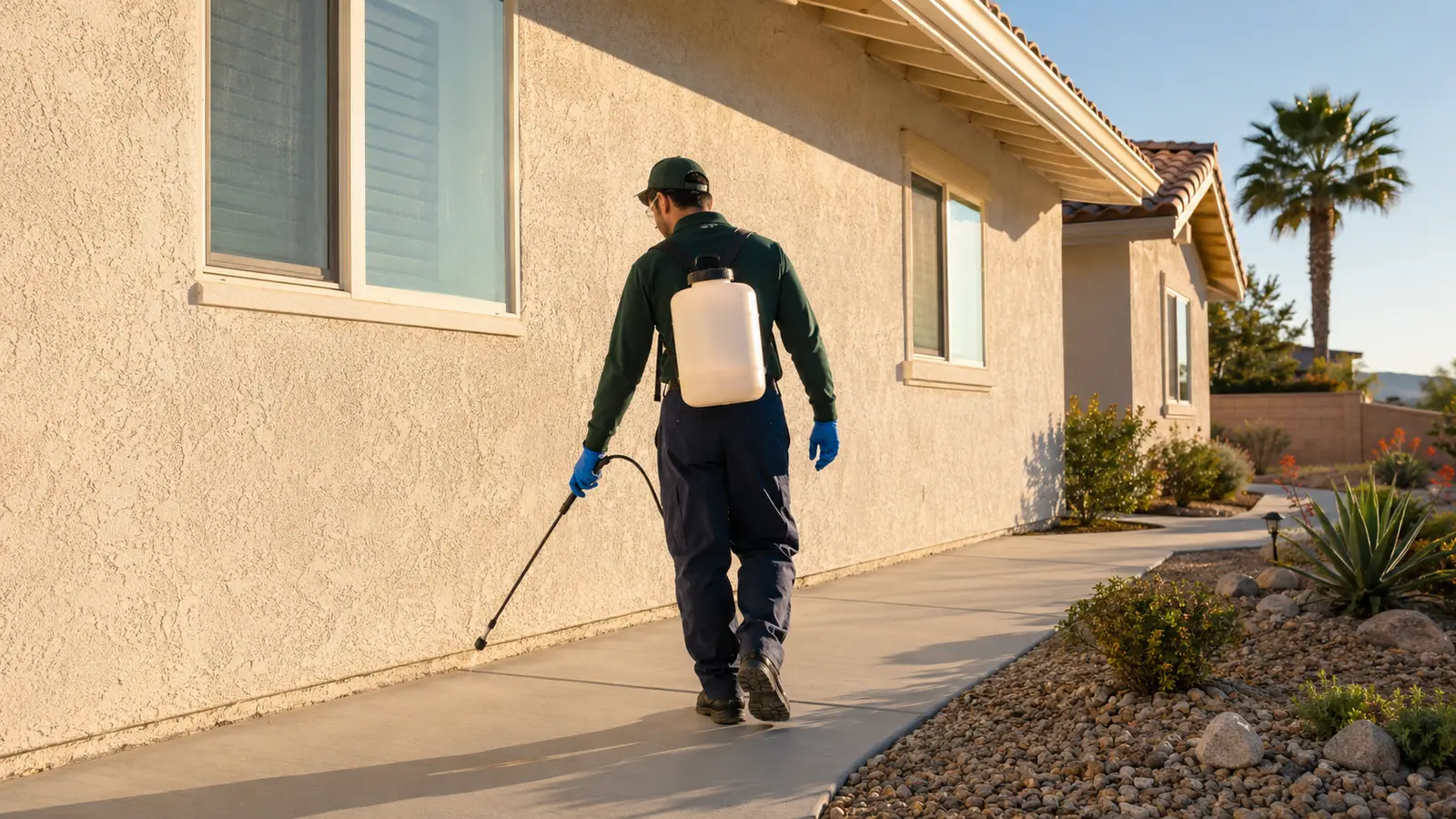
Ask three pest control companies how often you need service and you will get three answers, and there is a reasonable chance all three are monthly. So it is worth saying plainly at the top: most Southern California households do not need monthly service, quarterly is the right fit for the large majority, and a single visit is genuinely sufficient for some problems. What follows is how to work out which category you are in — including the cases where monthly really is the correct answer, because those exist too.
How often should you get pest control?
For most households, quarterly — four scheduled visits a year — is the right cadence and the general recommendation. It keeps the perimeter and known interior problem areas from going untreated long enough for populations to fully re-establish, and it puts a technician on the property often enough to catch new activity early. A one-time visit makes sense for an isolated, contained problem such as a single wasp nest or an occasional invader. Monthly is worth stepping up to for specific situations rather than as a default: mosquito control, where trap systems need regular servicing and population pressure rebuilds quickly, and severe or persistent ant problems that quarterly visits are not keeping up with. Southern California's mild, largely frost-free climate is why recurring service tends to outperform seasonal one-offs here.
The Short Version
- Quarterly is the general recommendation for most households, and the honest default answer.
- One-time service is legitimate for isolated, contained problems — but it carries no service guarantee, precisely because a single visit cannot promise a durable result against ongoing pressure.
- Monthly is the right tool for specific situations: mosquito programs, and severe or persistent ant pressure. It is not generically better.
- Some pests are only effectively handled with a multi-visit approach regardless of your plan — that is treatment biology, not plan structure.
- Southern California barely has a dormant season. Pests are not knocked back by winter here the way they are elsewhere, which is why recurring beats seasonal.
- Cadence should follow the pest and the property. A company that quotes monthly before inspecting is quoting a plan, not diagnosing a problem.
Why the Usual Advice Does Not Transfer Here
Most general advice about pest control frequency was written for climates with real winters, and it does not survive the trip west.
In a region with sustained freezing temperatures, a great deal of pest pressure simply stops for several months. Insect activity collapses, colonies go dormant, and populations are knocked back hard every year by something nobody had to pay for. Seasonal treatment makes sense in that context, because there is a genuine off-season to treat around.
Coastal Southern California does not work that way. The climate is mild and largely frost-free, and the practical consequence is that pests here are rarely fully dormant. Ant colonies stay active year-round. Rodent pressure shifts seasonally but never stops. Cockroaches are indoors and unaffected by outside temperature regardless. Termites work on a schedule of their own. Mosquito activity thins in winter without ending.
So the thing recurring service is buying here is different from what it buys elsewhere. It is not bridging you to a winter that will do the work for free. It is applying repeated pressure to a population that has no natural interruption — which is exactly why a one-off treatment gets overwhelmed here faster than the same treatment would in a colder place, and why we would rather explain that than let someone conclude the product failed.
What Each Cadence Is Actually For
One-time service
A single visit is a legitimate purchase and we sell them without trying to talk anyone out of it. It fits a specific shape of problem: contained, identifiable, and not driven by continuous outside pressure. A wasp nest under an eave. A single occasional invader that got in. A cricket problem after a cool snap. A one-off cleanout situation. In those cases the problem has a defined edge, and treating it once handles it.
What we will tell you honestly is that our one-time general pest visits carry no service guarantee, and that is not a technicality. It is us declining to promise a durable outcome that a single visit cannot deliver against ongoing pressure. If ants come back three weeks after a one-time treatment, that is not a failure of the work — it is the predictable result of treating a continuously replenishing population once. We would rather set that expectation before taking your money than argue about it afterward.
Quarterly service — the default answer
Four visits a year, and the right fit for the large majority of households here. The logic is straightforward: a treated perimeter and known interior problem areas hold for a meaningful stretch, and a roughly three-month interval lands before the pressure has fully re-established rather than after.
The underrated half of quarterly is not the treatment, it is the inspection. Four times a year somebody who knows the property walks it and notices things — a new rodent entry at the roofline, a leak starting under a sink, mulch built up over a slab line, a wasp nest getting established, early termite evidence on a fascia board. Those catches are frequently worth more than the application itself, because they are the difference between a small fix and a large one.
Quarterly also tracks the seasonal cycle usefully, since each visit lands in a different part of the year with different pressure — spring ant emergence, summer heat driving foraging indoors, fall rodent movement, winter rain pushing everything toward dry voids.
Monthly service — for specific situations
Monthly is a real answer to real problems and we recommend it where it fits. What it is not is a universally better version of quarterly that everyone should aspire to, and we would rather name the two situations where it genuinely earns its place than imply it is the premium tier.
The first is mosquito control. Our mosquito program uses insect growth regulator trap systems, and the product in those traps needs refreshing on a regular cycle to keep working — that is simply how the service functions rather than a scheduling preference. Mosquito populations also rebuild quickly, since a generation can complete in about a week in summer heat, so pressure returns fast between visits. Households on mosquito service are typically on a monthly cadence for that reason, usually paired with a general pest plan.
The second is severe or persistent ant pressure. Where quarterly service is being followed by activity returning well before the next visit is due — not seasonal fluctuation, but a genuine failure to hold — that is a real signal that the interval is too long for the pressure on that property. Monthly is the right tool there. What it is not is the answer to every ant problem, and if your ant issue is seasonal and quarterly is holding it, monthly is not buying you much and we will say so.
Multi-unit and commercial properties are a separate case with their own logic — shared structure, common areas, and a trash enclosure are continuous pressure points, and monthly is the usual standard there for reasons covered in our property management material.
Four visits a year. The general recommendation, and what most Southern California homes settle on.
Mosquito programs, severe or persistent ant pressure, and multi-unit or commercial property.
A single nest or an isolated invader. Legitimate, but carries no service guarantee.
Some Pests Need Multiple Visits Regardless
Worth separating from the plan question entirely, because it gets conflated and it is a fact about biology rather than a sales structure.
Certain pests cannot be resolved in one visit no matter what plan you are on, because their life cycle or their behavior defeats a single treatment. Bed bugs are the clearest example — the process runs inspection, substantial customer-side laundering and preparation, and multiple treatment visits covering furniture, mattresses, and perimeters, because eggs and hiding behavior mean one pass never gets everything. German cockroaches similarly require follow-up, since sanitation, bait rotation, and monitoring over successive visits are what actually collapses a population. Ant work involves returning to check bait uptake and adjust placements as the colony responds.
This is not the same thing as a recurring plan, and it should not be sold as one. It is the correct treatment protocol for that specific pest, and a company that tells you a bed bug problem is a one-visit job is either inexperienced or not being straight with you.
How to Work Out Which One You Need
Is the problem contained or continuous?
A nest, a single intruder, a one-off event is contained — one visit fits. Ants, rodents, and anything driven by conditions outside your property line is continuous, and continuous pressure wants a recurring answer.
Has this happened before?
A recurrence is the most useful diagnostic you have. A problem that has come back two or three times is telling you the underlying conditions have not changed, which is a recurring-service situation rather than another one-time treatment.
What does the property look like?
Heavy landscaping against the structure, mature trees touching the roofline, a raised foundation with a damp subarea, dense neighbors, or a history of activity all argue for a shorter interval. A dry, clear perimeter on a well-sealed slab house argues for a longer one.
Are you dealing with mosquitoes?
That one has its own answer. Trap systems need regular servicing, so monthly is how the service works rather than an upsell.
Is quarterly currently holding?
If you are already on quarterly and activity returns well before the next visit, that is the specific signal to step up. If it holds between visits, you are on the right plan and there is nothing to change.
The thing we would push back on hardest: any company quoting you a cadence before they have inspected the property. Frequency should follow what the inspection found — the species, the conditions, the entry points, the history. A number produced over the phone before anyone has looked at the building is a package being sold, not a recommendation being made.
This piece is deliberately about plan structure rather than price. If cost is the question you are actually trying to answer, we have written about that separately and it is linked below.
Not sure which one fits?
Tell us what you are seeing and we will tell you honestly what cadence it warrants — including when the answer is that you do not need a recurring plan at all. Xtermicon has served the South Bay, Westside, and greater Los Angeles since 2015. Call (310) 370-0963 for a quote over the phone, with no obligation to go ahead.
Service Frequency FAQs
What people ask when deciding what to sign up for.
Is monthly pest control better than quarterly?
Not inherently — it is better for specific situations and unnecessary for most. Monthly earns its place with mosquito programs, where trap systems need regular servicing and populations rebuild in about a week, and with severe or persistent ant pressure that quarterly is failing to hold. For a typical household with ordinary seasonal pressure, quarterly does the job and monthly is buying frequency you do not need. Any company that recommends monthly for every property is describing their pricing, not your problem.
Can I just call when I have a problem instead of signing up for a plan?
You can, and for isolated problems it is genuinely the right choice. The trade-off is that reactive service always begins after a population is established and visible, which means more work to resolve, and our one-time visits carry no service guarantee for that reason. The other thing you lose is the inspection — the value of a recurring plan is substantially about somebody noticing a new entry point or a leak before it becomes the reason you are calling.
Why does quarterly work if the treatment does not last three months?
Because the goal is not maintaining an unbroken chemical barrier — it is preventing populations from fully re-establishing between visits. Treated surfaces degrade gradually rather than switching off, and a quarterly interval lands while pressure is still building rather than after it has peaked. Add the inspection component and each visit is also catching new conditions early. If activity is genuinely returning well before the next visit on your property, that is the signal the interval is wrong for your situation.
Do I still need service in winter here?
Yes, and this is where Southern California differs most from general advice. Without sustained freezing temperatures, pests here are not knocked back the way they are in colder regions — ant colonies remain active, rodent pressure shifts indoors rather than stopping, and winter rain drives ground-dwelling pests toward dry voids in structures. A winter visit is doing real work. Pausing service over winter is importing a seasonal logic that does not apply to this climate.
What if I only have one specific pest, like a wasp nest?
Then a one-time visit is very likely the right answer and we will tell you so rather than steering you into a plan. A single nest, a contained occasional-invader issue, or a one-off situation has a defined edge and treating it once handles it. Where the recommendation changes is if it is the third nest this year, or the problem keeps returning — a recurrence means the conditions producing it have not changed, and treating the symptom again will produce the same result.
How much does each plan cost?
That depends on the property, the pest, and the scope, so a real number requires a quote rather than a published rate — and this article is deliberately about which cadence fits rather than what it costs. Quotes are free, we can give you one over the phone, and there is no obligation to proceed. We have also written separately about what actually drives pest control pricing in Southern California, which is linked below if the budget question is the one you are really working on.
Related Reading
The pricing question, the plans themselves, and why recurring service works the way it does.
- How much does pest control cost in Southern California?The price side of this question — what actually drives a quote.
- Why ant problems get worse in the heatThe clearest single case for why recurring service beats a one-time treatment.
- How long does pest control take to work?What is normal in the days and weeks after a visit.
- Why your pest control is not workingWhen the issue is the approach rather than the frequency.
- Residential pest controlWhat our recurring plans cover for homes.
- What to expect from your serviceThe full sequence, from the first call through the follow-up visit.
Sydney Pardey is the owner of Xtermicon, a family-owned pest control company serving the South Bay and greater Los Angeles area since 2015. All content is written from direct operational experience and reviewed against current California Structural Pest Control Board standards.
Specialists you
can count on.
Xtermicon was founded in 2015 with one focus: protect Southern California homes and businesses from the pests that threaten them. The name says it all — eXterminate TERmites & pest CONtrol — and that's exactly what we do. We're a family-owned team specializing in termite control, pest control, and rodent exclusion. From West LA and East LA to the beach cities and Orange County, we're local neighbors who treat your property like our own.