Redondo Beach vs. Torrance vs. Manhattan Beach: How Pest Pressure Differs Across the South Bay
Three cities inside a fifteen-minute drive, and three genuinely different pest profiles. The variable is not distance — it is foundation type, lot size, and how far the marine layer reaches.
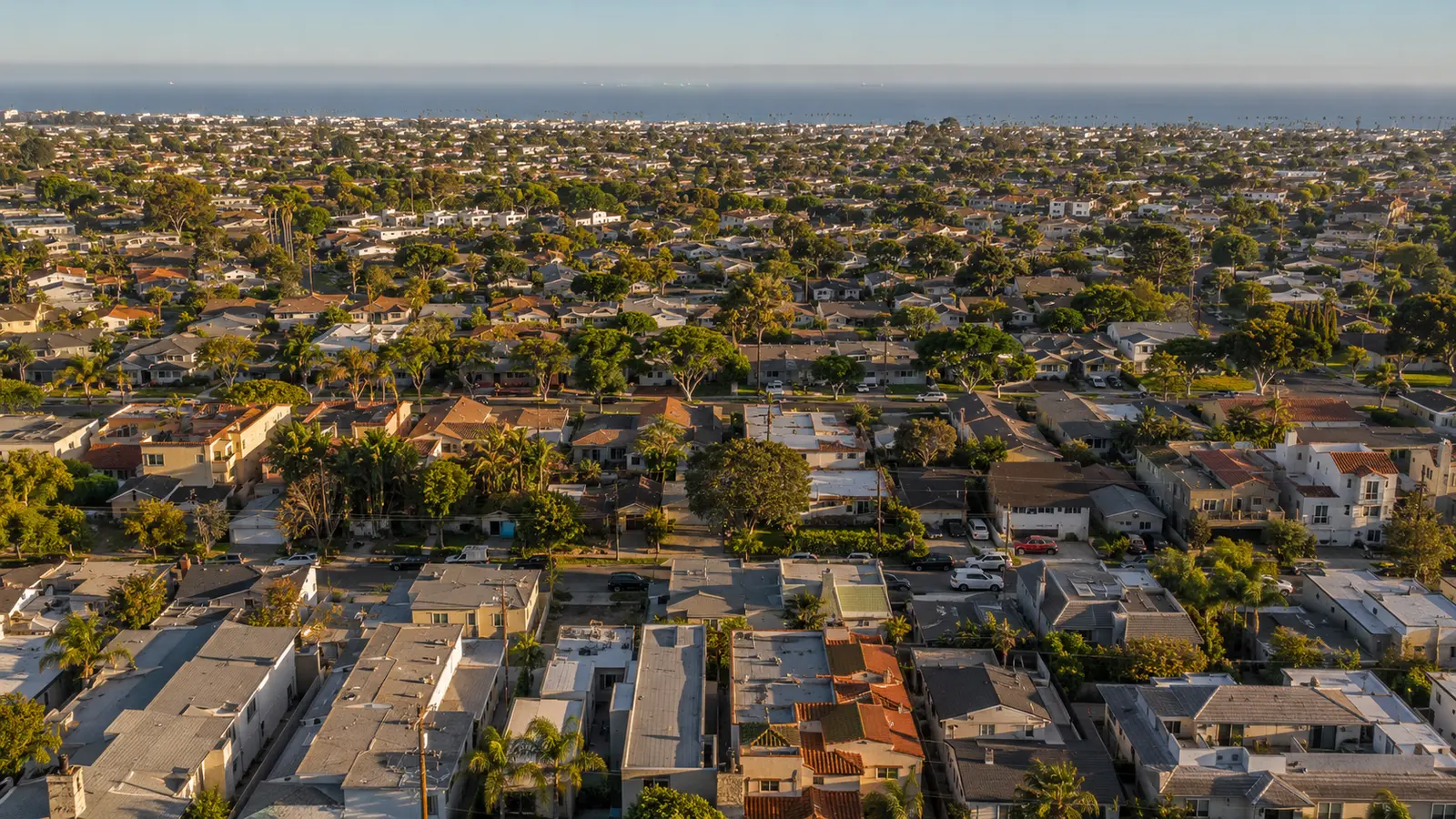
We can drive between all three of these cities in under twenty minutes, and we do it most days. What is genuinely surprising to people who have not worked across them is how differently they behave. A Sand Section house in Manhattan Beach and a tract home off Hawthorne Boulevard in Torrance are eight miles apart and generate almost entirely different service calls. It is not the mileage doing that. It is that the two houses sit on different foundations, on lots of wildly different size, at different distances from the water — and those three variables predict pest pressure in the South Bay better than anything else, including how well anybody keeps house.
Why do pest problems differ between South Bay cities?
Three structural factors do most of the work. Foundation type is the biggest: raised foundations with crawl spaces hold cool damp air and favor subterranean termites and moisture-following pests, while slab construction pushes the problem toward ants exploiting expansion joints and slab-to-stucco seams. Lot density is second — houses built close together let rodents and ants circulate between properties, so a problem is rarely confined to one address. Distance from the coast is third: the marine layer keeps humidity elevated near the water, supporting silverfish and both termite types, while more inland areas run warmer and drier and see ant and cockroach activity extend later into fall.
The Short Version
- Foundation type predicts more than city does. Raised foundation and crawl space means subterranean termites and moisture pests; slab means ants at expansion joints and slab edges.
- Manhattan Beach has the smallest lots in the South Bay, and that density is why rodent and ant problems there move between properties rather than staying at one address.
- Redondo Beach is effectively two cities — the hillside south end on raised foundations, and flatter, denser North Redondo on slabs — with different profiles in each half.
- Torrance covers far more ground than either, and its profile shifts as you move inland: warmer, drier, and ant and cockroach activity running later into fall.
- Drywood termites do not respect any of these boundaries. Salt air degrades exterior paint and caulking everywhere near the water, and they need no soil contact at all.
- Torrance has something the beach cities do not: Madrona Marsh, a genuine seasonal wetland, which changes the mosquito picture for nearby properties.
Three Variables, Not Three Cities
Before the city-by-city part, it is worth naming the actual mechanism, because it travels. If you can identify these three things about a property, you can predict most of its pest pressure without knowing the address.
Foundation type
A raised foundation creates a crawl space — a cool, dark, poorly ventilated volume in direct contact with soil. That is the entry route for subterranean termites, which need soil contact, and it is a moisture reservoir that supports spiders, silverfish, and occasional invaders. A slab has no crawl space, but it has expansion joints, a perimeter seam where concrete meets stucco, and plumbing penetrations coming up through it — which is precisely how Argentine and pavement ants get into kitchens and bathrooms.
Lot size and density
On tightly packed lots, a pest problem is a neighborhood condition rather than a household one. Rodents displaced by a teardown relocate rather than disappear, and ant colonies span multiple properties, so treating one address in isolation is working against the block. On larger lots, there is more buffer, but also more mature landscaping making contact with the structure.
Distance from the water
The marine layer holds relative humidity up near the coast, which favors moisture-dependent species year-round and accelerates the breakdown of exterior paint and caulking that drywood termites exploit. Move inland and it runs warmer and drier, which suppresses some species and extends the active season for others — particularly ants and cockroaches, which stay busy well into fall in the heat.
Redondo Beach: Two Cities in One
This is where we are based, so it is the housing stock we know best, and the thing worth understanding about Redondo is that a single city name covers two quite different building patterns.
South Redondo and the Hollywood Riviera climb a slope above the water, and the older bungalows there are frequently on raised foundations. That means crawl spaces — and a crawl space this close to the ocean stays cool and damp more or less permanently. Those are good conditions for subterranean termites working up through soil contact, and for the spiders and moisture-following invaders that come with a damp subarea. The hillside lots also carry mature hedges and fruit trees, and limbs that reach the roofline are the single most common way roof rats get into an attic on that side of town. The rats are not climbing the walls; they are walking across a branch.
North Redondo is a different problem. Flatter, denser, mostly post-war tract homes on slabs, with a steady layer of newer townhome infill toward Artesia. Slab construction changes the picture entirely — the termite risk shifts, and the ant risk rises sharply. Pavement and Argentine ants work expansion joints, cracked driveways, and the seam where the slab meets the stucco, then follow plumbing lines directly into kitchens and bathrooms.
What runs across both halves is drywood termites. They need no soil contact whatsoever, so foundation type gives no protection, and they readily colonize eaves, fascia, and attic framing wherever salt air has broken down the paint and caulking. That is a citywide condition rather than a neighborhood one.
Manhattan Beach: Density Is the Whole Story
Manhattan Beach sits on some of the smallest residential lots in the South Bay, and almost everything distinctive about its pest pressure follows from that.
In the Sand Section, houses are built nearly lot line to lot line, frequently three levels over a subterranean garage. That combination — shared property lines, below-grade concrete, and steady marine-layer moisture — is what keeps rodents and ants circulating between properties rather than settling at one. The practical consequence is worth stating plainly: a rat that loses its harborage to a teardown two doors down does not leave the neighborhood, it relocates within it. On lots this size, the block is the relevant unit, not the parcel. Argentine ants trail up out of irrigated planters and follow plumbing lines and slab edges into kitchens, and they are worst when mornings stay damp and afternoons turn dry.
The Tree Section behaves like a different city. Larger lots, mature canopy, dense foundation planting — which means more wood-to-soil contact, more shaded ground that never fully dries, and branches close enough to the roofline to give roof rats a bridge into the eaves. Silverfish turn up in bathrooms, closets, and garages wherever the coastal humidity keeps things damp. And older framing near the water draws both termite types at once: subterranean entering through soil contact, drywood quietly colonizing eaves and attic framing with no ground contact needed.
Torrance: Big Enough to Have Its Own Weather
Torrance covers far more ground than any other South Bay city, and the pest profile genuinely changes as you move across it — enough that treating "Torrance" as one thing is a mistake.
The older grid around Old Town has smaller lots and aging wood framing, much of it on raised foundations with original eaves and fascia. Those are the first parts of a structure drywood termites colonize, since they need no soil contact and can enter through weathered cracks in exterior wood. Move out into the post-war tract housing across the rest of the city and it is mostly slab-built, with generous yards and decades of mature landscaping. That shifts the problem toward ants exploiting slab edges and expansion joints, and toward subterranean termites wherever irrigation keeps soil wet against a foundation or a planter bed has been built up over the slab line.
The bigger difference is climate. Sitting further inland than the beach cities, Torrance runs warmer and drier through summer, and that heat extends ant and cockroach activity well into fall — a genuine seasonal difference from what we see three miles west. Homeowners here are still dealing with active ant pressure at a point in the year when coastal properties have started to quiet down.
And Torrance has one feature no beach city does: Madrona Marsh Preserve, a genuine seasonal wetland. Properties near it see meaningfully more mosquito activity through the warm months — as does any yard anywhere holding standing water in plant saucers, clogged gutters, a birdbath, or an unused pool, since a mosquito can go from egg to biting adult in about a week in that heat.
Crawl space, soil contact, trapped moisture — subterranean termites and moisture-following pests.
Expansion joints, slab-to-stucco seam, plumbing penetrations — Argentine and pavement ants into kitchens and baths.
No soil contact required. Salt air degrades paint and caulking near the coast regardless of what the house sits on.
What Actually Distinguishes Them
Compressed into the differences that change what we do on a job:
Rodent entry route
Manhattan Beach: between properties on dense lots, and via canopy in the Tree Section. Redondo: overhanging limbs onto hillside rooflines in the south, more conventional ground-level entry in the flatter north. Torrance: mature landscaping and outbuildings across larger lots.
Dominant ant driver
Slab construction in all three, but concentrated in North Redondo, the Sand Section, and the Torrance tract areas. Irrigated planters against the structure are the common ignition point everywhere.
Termite type to expect
Drywood across all three near the water, wherever exterior wood has weathered. Subterranean concentrates where there is soil contact and retained moisture — hillside crawl spaces in South Redondo, foundation planting in the Tree Section, over-irrigated tract yards in Torrance.
Moisture pests
Highest close to the water. Silverfish in Manhattan Beach and coastal Redondo bathrooms, closets, and garages; less of a driver as you move inland into Torrance.
Season length
Torrance runs hotter and holds ant and cockroach activity later into fall. Coastal Redondo and Manhattan Beach moderate earlier, but never fully stop — nowhere here gets a hard freeze.
Mosquito pressure
Elevated near Madrona Marsh in Torrance. Elsewhere it is almost entirely about standing water on the property itself, which is within a homeowner's control.
What this changes about a service visit
The reason any of this matters practically is that it determines where a technician looks first. On a South Redondo hillside bungalow, the subarea and the roofline get checked early. On a Sand Section property, the questions are about the neighbors and the below-grade garage. On a Torrance tract house, it is the irrigation, the planter beds against the slab, and how much water is sitting in the yard. Every job opens with an inspection for exactly this reason — the building tells you where to look, and a company running the same routine in all three cities is not really inspecting any of them.
Anywhere in the South Bay
Xtermicon is based in Redondo Beach and technicians are across these cities daily. Family-owned since 2015, with South Bay roots going back to 1960, and California Structural Pest Control Board Company License No. 10100. Call (310) 370-0963 — we can quote over the phone, and there is no obligation to book.
South Bay Pest Pressure FAQs
What South Bay homeowners ask when comparing their situation to a friend a few miles away.
Which South Bay city has the worst pest problems?
None of them, and the framing is the wrong one. Pressure differs in kind rather than degree — Manhattan Beach density produces rodent and ant movement between properties, coastal Redondo crawl spaces produce subterranean termite and moisture conditions, and inland Torrance heat extends the ant and cockroach season. A house in any of the three can be almost entirely trouble-free or a persistent problem depending on its foundation, its landscaping, and how well its envelope is sealed. Those factors vary more within each city than between them.
Does living closer to the beach mean more pests?
It means different ones. Proximity to the water raises humidity, which supports moisture-dependent species like silverfish and accelerates the weathering of exterior paint and caulking that drywood termites exploit. It does not raise pest pressure across the board — some species do better in the drier, hotter conditions further inland, which is why ant and cockroach activity runs later into fall in Torrance than it does in Hermosa or Manhattan Beach.
Why do my neighbors have ants when I do not?
Usually irrigation and structural contact rather than anything either household is doing indoors. Argentine ants trail out of watered planters and follow slab edges and plumbing penetrations, so a property with beds built up against the foundation and daily irrigation is a much easier route in than one with a dry, clear perimeter. On dense lots, though, this is partly a matter of timing — you and your neighbor are frequently sharing the same colony network, and you are just not currently the path of least resistance.
I am on a raised foundation. Should I be worried about termites?
It is worth having inspected, not worth worrying about. A crawl space in contact with soil is the route subterranean termites use, and coastal crawl spaces stay damp enough to suit them, so the risk is genuinely higher than on a slab. That said, drywood termites affect both foundation types and are extremely common near the water regardless. The practical answer for either is a periodic inspection by a licensed Branch 3 operator, and keeping soil, irrigation, and stored wood away from contact with the structure.
Do you service all of these cities, and does it change what you charge?
We service all three and the surrounding South Bay daily from our Redondo Beach base. What changes between properties is the scope of work rather than a city rate — a hillside bungalow with a crawl space and a heavy roofline requires a different inspection than a slab townhome. The way to get an accurate answer is a quote, which we can give over the phone with no obligation, at (310) 370-0963.
Are mosquitoes really worse near Madrona Marsh?
Properties near a seasonal wetland do see more pressure, yes — it is genuine standing water on a scale no yard produces. But it is easy to over-attribute. Across the South Bay generally, the dominant driver is standing water on the property itself: plant saucers, clogged gutters, birdbaths, tarps, unused pools, and corrugated drain pipe. A mosquito can go from egg to biting adult in about a week in summer heat, and a bottle cap of water is enough, which is why a weekly walk of your own yard does more than proximity to the marsh explains.
Related Reading
The wider regional picture, and the city pages for each of these.
- South Bay vs. Westside vs. ValleyThe region-level version of this comparison, across greater Los Angeles.
- Areas we serveCity-by-city pest profiles across the South Bay, Westside, and greater LA.
- Pest control in Redondo BeachThe hillside-versus-flatland split, in detail.
- Pest control in TorranceOld Town framing, tract slabs, and the Madrona Marsh factor.
- Pest control in Manhattan BeachSand Section density and Tree Section canopy.
- Drywood vs. subterranean termitesWhich one your foundation type actually exposes you to.
Sydney Pardey is the owner of Xtermicon, a family-owned pest control company serving the South Bay and greater Los Angeles area since 2015. All content is written from direct operational experience and reviewed against current California Structural Pest Control Board standards.
Specialists you
can count on.
Xtermicon was founded in 2015 with one focus: protect Southern California homes and businesses from the pests that threaten them. The name says it all — eXterminate TERmites & pest CONtrol — and that's exactly what we do. We're a family-owned team specializing in termite control, pest control, and rodent exclusion. From West LA and East LA to the beach cities and Orange County, we're local neighbors who treat your property like our own.